


Your Website Has Two Audiences. Only One Has a Pulse.
For thirty years we built websites to seduce people and let search engines point the way. Now a machine reads first, decides whether we’re credible, and only then lets a human arrive to be charmed, which means every page has to do two entirely different jobs at once.
Every time we run one of our PR for Robots webinars, we spend most of the time on the same unglamorous point: third-party endorsement is what the machines actually believe. Earned media. Independent citation. Other people’s sentences about you. This is the point of our thesis and why PR has emerged as a more vital discipline in the age of AI.
And every time, somebody asks the same question. So what about our own channels?
Awkward pause. Because the honest answer is: to a robot, your social feed, influencer campaign, content strategy, brand campaign, etc. is merely decoration.
But to a human being, those channels are still where persuasion happens. Which leaves us here — marketing has quietly bifurcated. We now market to two brains. One organic, one synthetic. One wants to be moved, the other wants to be sure. Both have to be served, and only one of them decides whether the other ever shows up.
One important battleground is the website.
For thirty years we pared websites down. Less copy. Bigger hero. Five words and a button. Beautiful. And now the fastest-growing reader on earth turns up, doesn’t even have eye and wants everything we deleted.
The mistake would be to overcorrect and build for the robots alone — a spreadsheet with a logo. The purpose of a website hasn’t changed at all: credibility and information. We just have to fashion it for two audiences at once.
The First Visitor to Your Website Isn’t Human Anymore
Roughly 58.5% of US Google searches already end without a single click, and when an AI Overview appears the zero-click rate reaches about 83%. In May 2026, Google AI Mode became the default experience for over a billion monthly users, which means the synthesized answer, not the ten blue links, is now the front door to your business.
ChatGPT, Gemini, Claude and Perplexity don’t admire your clever tagline or beautiful images. They assemble evidence, deliver a verdict and move on. Your homepage was one exhibit among many.
Your Marketing Has Split in Two
Semrush’s 2026 AI Visibility Index analyzed 126 million US prompts and reached a conclusion that should be tacked above every creative director’s desk: brands now compete not only to be found, but to be accurately understood. Their own framing for the era is “building brands for humans and machines.”
Which is precisely the problem, because the two want opposite things.
Humans respond to emotion, story, surprise and personality. Machines respond to entities, structure, dates, definitions and evidence.
Robots have joined the target-audience roster alongside customers, media and stakeholders. They are also the only audience most marketers have never surveyed: 45% of marketing leaders admit they cannot measure how their brand appears in AI answers at all.
Most Of You Never Finished the Last Homework Assignment
Two decades into SEO, a startling number of company websites still can’t be crawled properly. Only 43% of marketers are actively implementing GEO — up from near zero a year ago, which tells you how new the panic is. And only 14% track whether AI mentions them at all, meaning 86% are being described to buyers daily by a system they have never once checked.
Nobody gets to skip a grade, either. Google’s AI Mode draws exclusively from Google’s own index, so a page that doesn’t rank can’t be cited. GEO is built on SEO, not instead of it.
So what actually changed? SEO was a competition for position. You wanted to be the first blue link, and everything — keywords, backlinks, page speed — served that one ambition. GEO is a competition for inclusion. There is no position to win, because there’s no list; there’s a paragraph, and you’re either in it or you don’t exist. SEO asked “can Google find me?” GEO asks “can a machine understand me well enough to recommend me?” The first was a popularity contest. The second is a reference check.
The distinction that matters most is the unit being judged. SEO judged the page. GEO judges the sentence. AI doesn’t retrieve pages; it retrieves passages. One study of 153,000 citations found the average cited sentence ran about nine words, and that roughly 77% of cited URLs weren’t in the organic top ten at all — which means the thing being judged isn’t your site. It’s your sentences, one at a time, out of context, without your logo anywhere near them.
Every sentence you publish is now traveling alone.
Why Websites Suddenly Matter Again
Search engines once merely helped humans find your site. AI reads your site so humans never have to. That inverts the entire purpose of the page and, inconveniently, makes it more important rather than less.
The traffic proves it. Generative AI platforms grew referrals roughly 796% year over year across 2.3 billion sessions, and those visitors convert several times better than classic organic. Adobe’s data shows AI traffic to US retail sites up 1,324% and to travel sites up 2,215% between October 2024 and May 2026.
The Great Website Irony
Princeton’s GEO research found structured, fact-dense content achieves up to 40% higher visibility in AI answers than prose-heavy pages covering identical ground.
Everything we spent ten years deleting — the FAQ, the leadership bios, the specifications, the dull page nobody visited — turns out to be exactly what the machine came for. We stripped the house to the studs for the sake of elegance, and the new buyer wanted the wiring diagram.
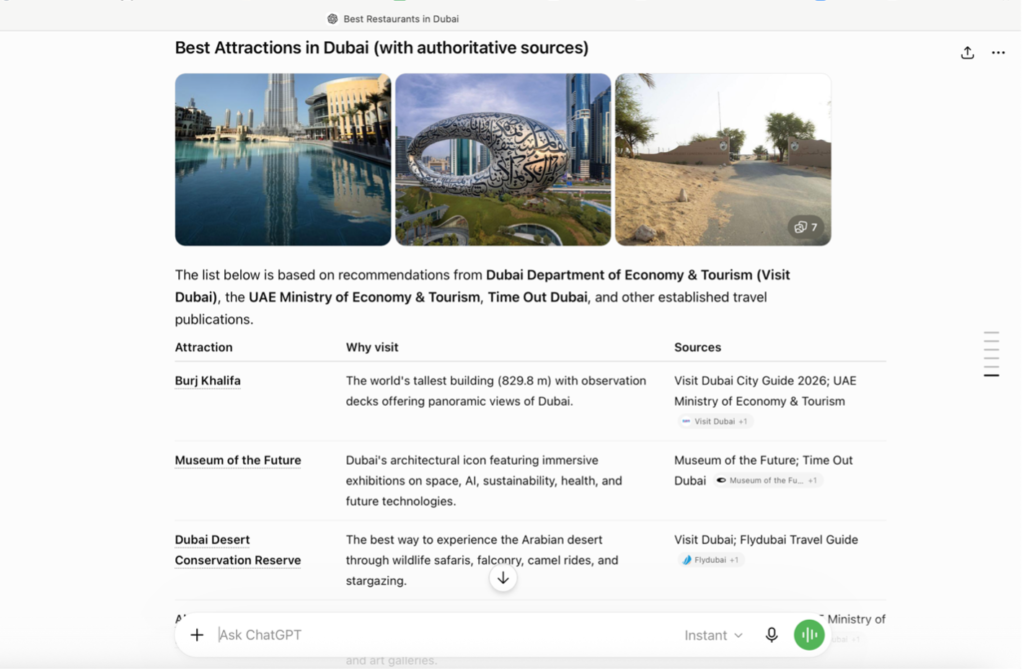
Nobody has ever called Wikipedia beautiful. Yet ChatGPT cites an average of fifteen sources per response and leans on Wikipedia and Reddit constantly. Structure beats decoration, which is an unpleasant thing to tell a creative director. I’ve been one for decades. I’m telling you anyway.
The Website Becomes the Source of Truth
Consistency is the whole game. AI cross-checks your description of yourself against every other channel it can reach, which gives the website a new job, and a better one. It is the only channel you fully own, so it should hold the canonical vocabulary: the founder, the expertise, the locations, the services, the awards. Fix the language there, then make LinkedIn, Crunchbase, the directories and every press release echo it verbatim. One dictionary. Every channel spelling your name the same way.
Not to get too technical, but it’s important to understand that Schema.org markup, meanwhile, has graduated from SEO housekeeping to AI infrastructure. Organization, Person, Article and FAQPage do the identity work, the grammar a machine needs to parse you correctly. Google’s own research shows this pays off: pages carrying rich structured data saw an 82% higher click-through rate for Nestlé and a 25% higher click-through rate for Rotten Tomatoes — real brands, real before-and-after numbers, published by Google itself.
PR Becomes the Independent Witness
Here is the part that vindicates our entire industry. Around 85% of brand mentions in AI responses originate from third-party pages rather than owned domains, and roughly 48% of citations come from community platforms. The machine has, without being taught to, arrived at the oldest principle in public relations: consider the source.
Your website makes the claim. The press, the interviews, the reviews and the directories confirm it. Testimony and cross-examination, which is precisely what PR was always for, back when we had to explain it at dinner parties.
It works, too. HubSpot’s 2026 State of AEO report found citations improved 433% when brands actually worked at it, and 44% of buyers have made a purchase from a brand they first met inside an answer engine.
AI Is the Concierge. Humans Are the Guests.
The concierge decides whether to recommend a restaurant. The guest decides whether to book it. A site that flatters only one of them loses.
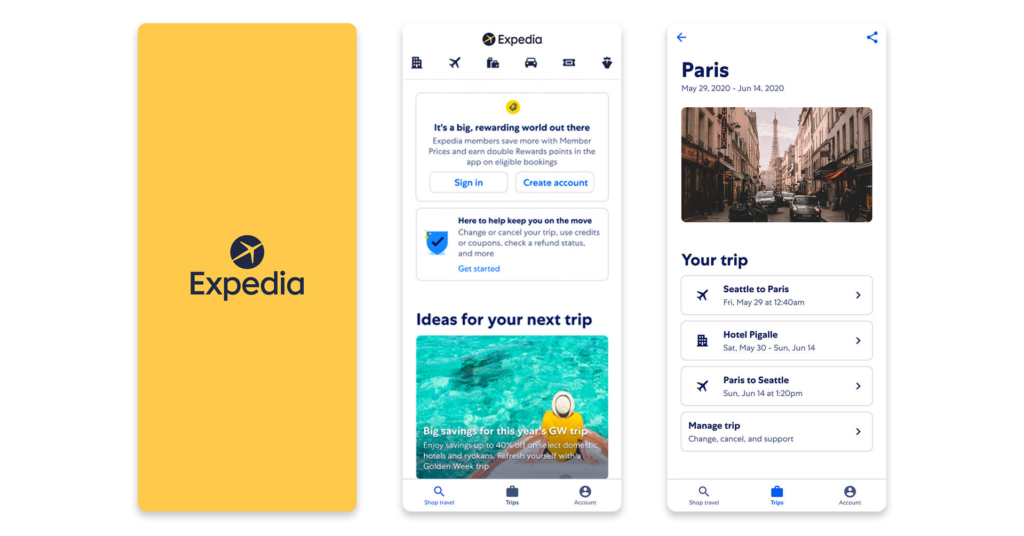
Look at what that already does to a category. In travel, Expedia, Booking.com, The Ritz-Carlton, Marriott Bonvoy and Hotels.com already dominate what AI recommends without being asked, while most other brands in the same category barely get mentioned at all. Citation share is concentrating fast, and it’s concentrating in a handful of names per category.
And the mechanics favor the few. When an AI Overview shows up, a 2026 field study found the whole query gets 38% fewer clicks overall — but the sources AI actually cites get 35% more clicks than everyone else on that same search. So the total pie shrinks, and whoever gets cited takes a bigger slice of what’s left. There’s no safe, comfortable middle ground anymore — you’re either the source AI is pointing to, or you’re fighting over table scraps.
The Next Great Websites Will Win Both Brains
The developer world moved first, as it always does. Stripe, Cloudflare, Vercel, Anthropic, Coinbase, Supabase, ElevenLabs and Pinecone all publish llms.txt files — plain-language summaries of themselves, written for AI to read. Worth a caveat: their human audience and their machine audience are nearly the same person, a developer, so this is evidence of intent more than proof anyone has solved the harder version of the problem, where the two audiences don’t overlap at all. Adobe now sells an LLM Optimizer to enterprises doing the same thing at scale. Nobody in that list stopped caring what their site looks like. They simply stopped assuming a human would be the one reading it.
And this is one job, not two departments. Organizations that unify SEO, AI visibility and communications report gains at 81%, against 36% for those running them in silos. That’s why Rose promotes an integrated approach. The brief hasn’t split. The audience has.
So…
Delight the human, inform the machine, and do both in the same sentence. Your site stops being a brochure and becomes evidence, which, if you think about it, is what the good ones always were.
Your website should still move people. But if AI can’t understand it, a growing share of those people will never arrive to be moved.
Sources: SparkToro / Datos, Bain & Company / Dynata, Google I/O 2026, Semrush 2026 AI Visibility Index, GoodFirms, Similarweb, OrganiKPI, Adobe, Media Copilot, Princeton University, Walker Sands, SE Ranking / ALLMO