Why Marketing Trophies Matter
What advertising awards can teach marketers about making work that works.
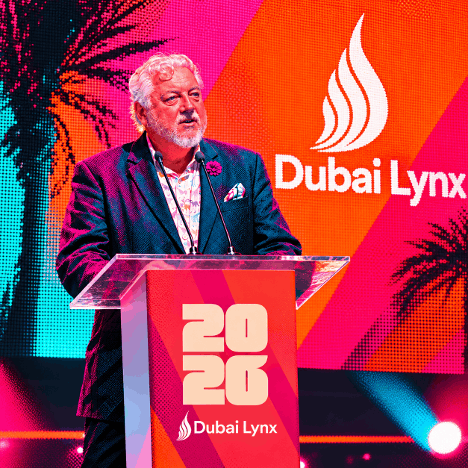
Recently, I was at the Lynx Awards as the guest of my good friend and Motivate Media’s Chairman, the big-hearted and always entertaining Ian Fairservice. Ian is excellent company, which was fortunate because the Dubai heat was making a fairly determined attempt to turn me into consommé.
I had one thought in mind. Okay, two. The first was that we were seated outside. In Dubai. In early October. Apparently, celebrating the hottest work in advertising required a fully immersive experience.
Dubai Lynx, launched in 2007, celebrates creative excellence and marketing effectiveness across the Middle East and North Africa. It’s a sister awards program to Cannes Lions and a partnership involving Motivate Media Group, the regional publishing and media business chaired by Ian, who also serves as Dubai Lynx’s Vice Chairman. Cannes Lions began as the International Advertising Film Festival in Venice in 1954, eventually making Cannes, France, its permanent home. What began with advertising films has grown into recognition of creativity across marketing, communications, technology and business innovation.
I have attended the Cannes Lions in France on numerous occasions – often wondering why I was inside a dark screening room viewing hundreds of entries instead of outside enjoying the Côte d’Azur. Be careful what you wish for, as they say. Because now I live in Dubai. And there I was, outside, in a puddle of perspiration, at the Emirates Golf Club event area watching as 21 Grands Prix—the highest prizes in individual categories—went to 14 campaigns, and Kuwait earned its first-ever Grand Prix. I won’t go into all the winners—you can find them all [here]. But I applauded more than a few standout campaigns, including “Recipe for Change,” which turned Lebanese women’s family recipes into income; “Let It Fly,” which rewarded souvenir purchases with extra baggage allowance; and “Ruby Blooms,” which made period education more accessible to autistic girls.
Then, somewhere between applauding the winners and quietly reconsidering the thermal properties of my linen suit, a second thought emerged: How much great work would never get made if our industry stopped celebrating it? Every campaign being recognized had survived a brief, a budget, an approval process and, almost certainly, someone seemingly trying there darndest, though probably unintentionally, to make those great ideas less so.
Award shows give creativity something every business discipline needs: recognition, benchmarks and an incentive to improve. Their greatest contribution is what they encourage before the ceremony and what the rest of the industry learns afterward.
They also inspire young talent and create an esprit de corps, that shared pride and sense of belonging, that is essential in our collaborative industry, where a great idea may be sparked in one person’s mind but is almost always inspired and improved by others. Celebrating the finished work recognizes that collective effort and reminds the next generation that they have a place in it.
Creativity deserves a business case. Fortunately, it has one.
Creativity helps a brand earn attention, become memorable and give people a reason to choose it. And there is considerably more evidence for those advantages than “the creative director feels strongly about it.” Even when that creative director is me.
Kantar, the marketing research company, reported in its 2025 French analysis that the strongest-performing 30% of campaigns generated a return on investment of 6.62, compared with 1.42 for the least creative 30%—roughly 4.7 times as much. The analysis matched creative testing with campaign returns from WARC, the international marketing research and case-study service.
System1, an advertising research company, and Effie, the international marketing effectiveness awards organization, analyzed 1,265 campaign cases across the United States and Europe, linked to consumer testing involving approximately 200,000 people. Their recent Creative Dividend research found that creative quality and media support together explained 60.1% of reported business results in its analysis — evidence of their combined importance.
The lesson here is that we must valuate creativity as part of the investment’s earning power. A media plan buys opportunities to be noticed; the work determines what happens when people encounter it.
Awards give clients something valuable: confidence to say yes.
Great work requires someone on the client side to approve it, fund it and defend it. Recognition celebrates that contribution alongside that of the agency and supplies precedents that can make the next ambitious idea easier to explain internally.
LIONS, the organization behind Cannes Lions, surveyed more than 1,000 marketers and creatives globally for its 2025 State of Creativity report. Only 13% considered their companies friendly toward creative risk, while 29% of brands described themselves as highly risk-averse. Creative risk means backing bold, unconventional ideas that challenge familiar category practices. Or, as I like to say, the kind that make your palms sweat. Some marketers get it. Most don’t.
Consider “Recipe for Change” for Arla Foods, the international dairy cooperative, and its Puck dairy brand. Launched in 2025, it brought displaced Lebanese women’s family recipes onto restaurant menus, turning their cooking knowledge into an income-generating asset. Restaurants licensed the recipes—obtaining permission to use them—and participating women helped chefs recreate the dishes.
Its 2025 London International Awards submission reports 120,960 meals sold across 96 restaurants in 28 cities. At Dubai Lynx 2026, it won four Grands Prix: for customer experiences and participation, commerce, strategy, and public relations. This required restaurant partnerships, recipe licensing and delivery of the program. The recognition celebrates the client’s willingness to make the idea operational as well as the agency’s imagination.
That same willingness is visible in “Three Words,” launched in France in April 2025 by AXA, the global insurance company. AXA added “and domestic violence” to the circumstances covered by its home insurance assistance, providing emergency relocation and legal, psychological and financial support. The advertising communicated a real change in the product.
Its 2026 One Show case, submitted to the international advertising and design awards run by The One Club for Creativity, reports 9.1% more new contracts over the first six months compared with the same period in 2024, and 1,292 people supported in the first ten months. The campaign won Best of Show, the program’s highest overall honor.
As agencies, that means we must present an unconventional idea with its consumer insight, commercial objective and measurement plan. We have to give the client something sturdier than “Trust us, it’ll work.”
The winning idea should solve something. Preferably the client’s problem.
The most useful award cases reveal a creative response to a specific obstacle. Studying that connection teaches more than admiring the finished execution.
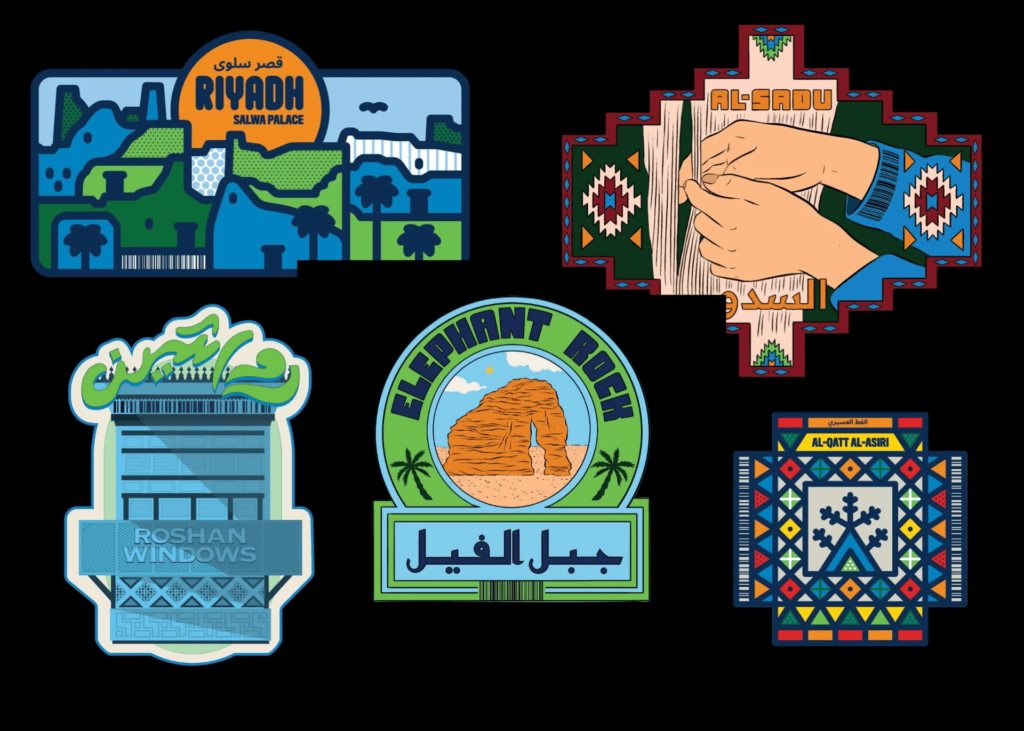
“Let It Fly” for Saudia, Saudi Arabia’s national airline, addressed an obstacle familiar to anyone who has weighed a suitcase while negotiating with a pile of souvenirs strewn across their hotel room: baggage limits discouraged travelers from buying local crafts and cultural goods. Purchases at participating retailers earned artist-designed luggage stickers. Scanning them at check-in unlocked extra baggage allowance. Very clever.
Its 2026 One Show submission reports more than 39,000 stickers activated, reaching 22 countries, and a 34% increase in cultural souvenir purchases at partner retailers. At Lynx, it won the Media and Outdoor Grands Prix, recognizing its use of communication channels and advertising beyond the home. The benefit and the sales mechanism were the same thing.
In Britain, Currys, the retailer selling electronics, appliances and technology services, confronted a different obstacle. Physical shops increasingly looked like a disadvantage as customers moved online. Yet buying complicated technology without knowledgeable help could be frustrating. Its “Beyond Techspectations” campaign used unexpected humor to make employees’ expertise the reason to choose Currys.
The Institute of Practitioners in Advertising, or IPA, the UK advertising industry’s professional body, awarded the work its 2026 Effectiveness Grand Prix. The award case reports £500 million in additional revenue attributable to the marketing activity over two years, a 1.1 percentage-point increase in market share and a 44% increase in long-term ROI. The program combined creative work with changes to marketing planning and investment.
Start with the barrier to growth. Then ask whether the creative idea changes behavior in a way that helps remove it. A clever execution becomes much easier to defend when the commercial logic is equally clever.
Award shows expand our understanding of what creative work can be.
Public recognition brings unfamiliar approaches into view and helps teams see possibilities beyond their category’s conventional, and often habitual, advertising.
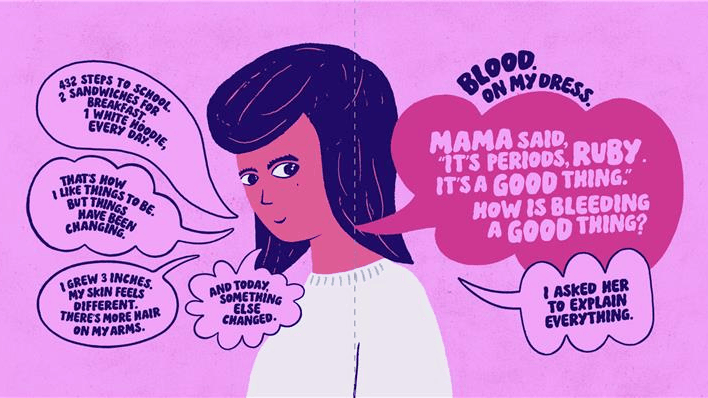
“Ruby Blooms” for Nana, the menstrual-care brand marketed under names including Bodyform and Libresse in other countries, addressed the difficulty traditional period education can present for autistic girls whose sensory and communication needs require a different approach.
The response was a 28-page sensory guidebook, using textures, scent, sound and calm visuals to help girls prepare for menstruation. Medical experts informed its development, and the book was introduced through clinics, therapy settings and schools. Its 2026 awards submission reports that more than 2,000 girls read the books. At Lynx, it won the Healthcare, Industry Craft and Print & Publishing Grands Prix—recognizing health communication, execution and printed work.
“Vaseline Verified,” launched in March 2025, took another route. Vaseline is the skincare brand owned by Unilever, the international consumer goods company, well known for its petroleum jelly. Online creators were publishing inventive, and sometimes questionable, uses for the product. Using this insight, the brand brought its scientists into the conversation to test popular tips, validate those that worked and challenge misinformation.
Unilever reports 136 million social views in the first three months and nine Cannes Lions awards, including two category Grand Prix. Those views measure exposure, rather than purchases, but the idea made scientific expertise useful in an existing consumer conversation, giving people a reason to trust the product.
Study how that execution served the strategy. Creativity can improve what a brand provides as well as how it promotes it.
The best work deserves an encore. And sometimes several decades of them.
Awards should encourage sustained excellence as well as exciting debuts. A strong creative platform can accumulate commercial value when marketers keep developing it.
Specsavers, the international optical and hearing-care retailer, demonstrates that particularly well. Its “Should’ve gone to Specsavers” advertising uses humorous mistakes and misunderstandings to make the value of better eyesight memorable. The campaign has been running for 24 years. And still, at the 2026 IPA Effectiveness Awards, it won Gold and the prize for dedication to effectiveness. The IPA reports £635 million in additional profit attributable to its advertising over 24 years, with the platform extending across Britain, Australia, New Zealand, Canada and Northern Europe.
System1’s 2025 research on creative consistency analyzed 4,000 advertisements and responses from 600,000 people, examining how maintaining recognizable characters, music, visual style and other creative elements relates to stronger advertising and business outcomes. Familiarity can be an asset worth developing.
“New” is not the only way to be creative. There are many ways to protect an effective idea from organizational boredom. The marketing department’s desire for something new is a poor substitute for evidence that customers need it. Unlike you, they haven’t watched the ad 100 times.
The industry gets smarter when the applause becomes shared learning.
Creative awards recognize qualities such as originality, execution and innovation. Effectiveness awards examine evidence that marketing achieved its objectives. The strongest learning comes from understanding both. At its 2026 awards, the IPA subjected entries to technical and industry scrutiny before final judging by client experts, turning individual successes into evidence other marketers can use.
Regional recognition adds another benefit. Kuwait’s first-ever Dubai Lynx Grand Prix went to “WABA Ramadhan” for WABA, a homeware brand. The film celebrated Gulf culture and Ramadan through clothing, settings and carefully coordinated editing. Its Film Craft award recognizes the great filmmaking, which brings another creative community into the industry’s shared reference points.
After awards season, review selected cases with the client and agency team. Examine the problem, insight, creative decision, execution and evidence. Discuss which principles could improve the next brief. There is considerable value in discovering why something worked before requesting your own version by Thursday.
Take the ambition home.
I left grateful to Ian, impressed by the work and a bit like a wet towel that desperately needed wringing. But the evening had done what a good awards show should do: it reminded me how much talent this industry has and how much becomes possible when clients give that talent room to work.
The trophy goes home with the winner. The ambition should go home with everyone. Preferably in an air-conditioned UBER.
Sources: Campaign Middle East, Dubai Lynx, Motivate Media Group, The Current, Kantar, System1, Effie, LIONS, Puck, Unilever, London International Awards, The One Club for Creativity, D&AD, IPA