

Who Approved This?
Meta’s AI is quietly rewriting live ad campaigns, swapping out models, changing products and rewriting copy without waiting for a yes from the brand that’s paying for it. Marketers are finding out after customers notice, and turning the AI off doesn’t always keep it off.
If you’re into stories about how AI messes things up for marketers, you’re gonna love this.
I just read a Business Insider piece on how Meta’s AI ad tools keep tripping over their own synthetic feet.
Picture this. A menswear brand’s model got replaced by someone’s grandmother. A shoe company’s model ended up with a leg bent in a direction human legs don’t bend. An e-bike ad started talking about trunk space, which is a feature bikes famously do not have.
Oh sure, we’re all familiar with these AI image distortions. But the difference here is that this stuff actually ran!
I read this the way you’d read a police report about your own house being redecorated while you were at work, by a contractor you never hired, who let themselves in through a window they insist was already open.
Here’s what I can’t get past. AI still can’t be trusted anywhere near creative judgment. It’s a tool, not a colleague, and nobody promoted it to art director while the rest of us were asleep. Meta doesn’t much care whose brand gets mangled in the process, as long as the ad spend clears, because it turns out refunds cost more than reputations, and Meta has done the math on which one it’s willing to pay for.
And any agency letting these features run on autopilot without checking the output isn’t managing your account. They’re collecting the fee and hoping you don’t read Business Insider.

Nobody Asked, Nobody Told
Quick primer, for anyone who doesn’t live inside Ads Manager. When a brand runs an ad on Meta, they don’t just upload a picture and a headline and walk away. They can turn on a suite of tools called Advantage+, Meta’s AI system that’s supposed to automatically improve the ad while it’s running live: testing different crops, swapping headlines, adjusting who sees it, all in the name of performance. In theory, it’s a machine quietly optimizing your ad. In practice, for a growing number of advertisers, it’s a machine quietly remaking your ad, and not always for the better.
True Classic, a menswear brand that sells almost exclusively to men 30-45, found this out the hard way. They had a top-performing ad running with their usual model, a fit millennial guy in a matching fleece set, exactly who their customers want to see themselves as. Advantage+ decided it had a better idea and swapped him out for a smiling grandmother sitting in an armchair. Not a subtle A/B test. A total cast change, mid-campaign, with zero heads-up. It ran for days before customers started asking the brand what, exactly, was going on. True Classic hadn’t approved the change. They didn’t know it happened until their own customers told them.
It gets better, or worse, depending on your appetite for irony. The CEO of Flat Circle, an agency that manages roughly $100 million a year in Meta ad spend, says the platform’s auto-edit settings re-enable themselves after being manually turned off. Not once. Repeatedly. His team now checks the settings several times a week, permanently, like they’re monitoring a patient who keeps pulling out their own IV.
Who’s Actually Driving
The old chain of command was simple. Agency creates, client approves, platform delivers. Everyone knew their job, and nobody’s job was “surprise.”
The new chain of command is: platform edits, platform decides, and tells you afterward, if you’re lucky. The approval step didn’t get faster. It got skipped.
And this is happening at genuine scale. Global ad spend crosses $1 trillion in 2026 for the first time, with AI-generated creative now approaching 40% of all digital video ads, up from almost nothing two years ago.
Consistency Was the Whole Business Model
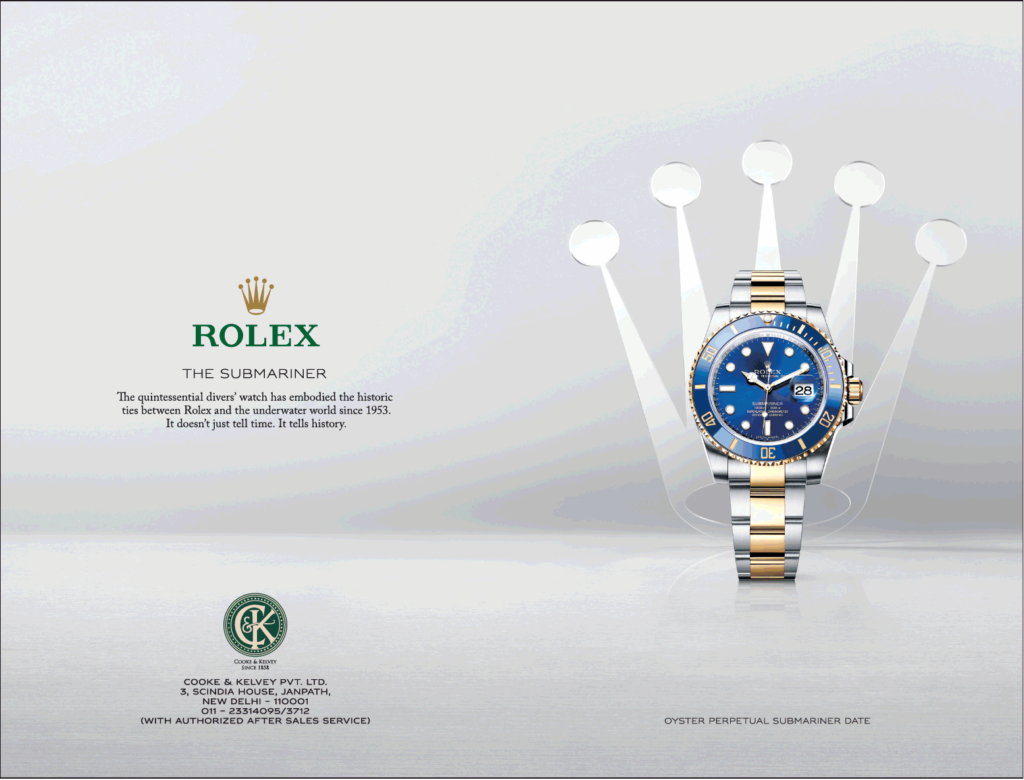
Consistency isn’t a design preference, it’s the entire business model. Brands like Rolex, LEGO and Coca-Cola haven’t changed their core visual identity in decades, because sameness is what makes them instantly recognizable at a glance, anywhere in the world. Nobody has to think twice about what they’re looking at. That’s not an accident, that’s decades of discipline.
Research from Lucidpress/Marq, a brand-management research firm, found companies with consistent brand presentation across channels average 10-20% revenue growth, with the most disciplined seeing up to 33%. That’s not a soft, feel-good branding stat. That’s real money, sitting on the table, waiting for a company to either earn it or let an algorithm give it away.
So, when an algorithm swaps your model, twists a product photo or rewrites your headline, as happened to Kirruna, a European footwear brand whose Meta-generated ad showed a model’s leg bent the wrong way, it’s not just an ugly image. It’s actively working against the thing that makes a brand worth more than its product.
It Doesn’t Know Why the Rule Exists
AI is genuinely good at the mechanical stuff: resizing, translating, testing variants. It’s bad at knowing why a rule exists in the first place, because it was never told the rule was a rule. It just saw a pattern and decided to improve on it.
Same reporting, another case: Meta’s AI generated an ad for Lectric, an e-bike company, and rewrote the copy to describe a car’s trunk space instead of the bike. Nobody approved it. Nobody caught it until it was already live and doing damage.
The pitch for using AI was “less work.” The reality is a new job: someone now has to check every AI-touched asset before it airs, and again after, because sometimes the settings drift back to ON whether you asked them to or not.
What This Actually Means For You
Strip away the anecdotes and this is what’s left: a short list of hard rules and the questions you should be asking before you let any of this near your brand.
An opt-out that doesn’t stay opted out isn’t a bug. Verify it weekly or assume it’s by default, on. Every AI-altered asset that airs unchecked is a small withdrawal from your brand’s recognition account. Before any AI tool touches customer-facing content, ask who’s accountable if it’s wrong in public, and if nobody can answer that in one sentence, you don’t have a policy. If a tool needs a full-time human minder, that’s a headcount cost.
Here are six questions worth asking before you trust it:
- Which of our tools can alter creative without a human sign-off?
- Who’s personally accountable for approving what AI generates?
- Have we actually confirmed our opt-outs are still on this week?
- Do we audit outputs on a schedule or only after a complaint?
- Who makes the final creative call, a person or a settings menu?
- What should AI never be allowed to touch?
Who’s Watching the Software
For two years the fear was AI replacing creative people. Wrong worry. The real one: who’s watching the software when it starts making decisions?
Sources: Business Insider, July 2026; Crypto Briefing, July 2026; Lucidpress/Marq State of Brand Consistency Report; Dentsu Global Ad Spend Forecast 2026