


Celebrities Are Taking Equity Instead of Fees — and the Advertising Is Better For It.
Talent now wants shares and a seat in the editing suite, not a cheque. What that buys, what it costs when it curdles, and how a company without Nike money builds one.
Last week an actress took shares in a betting start-up instead of a fee, ran the creative herself, and helped the company bury a competitor forty times its size.
For those of you with better things to do than track American advertising rows: Sydney Sweeney is the actress from Euphoria, and the face of an American Eagle jeans campaign last year that ate a fortnight of news. Novig is a sports prediction market — a betting exchange for people who’d rather not say betting — worth roughly $500 million, which in its category makes it a small fry..
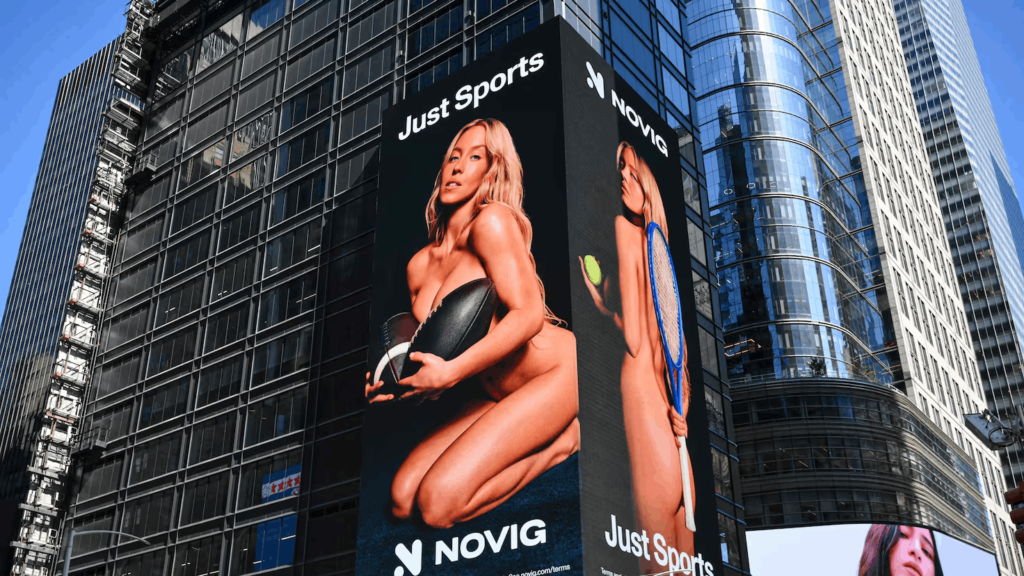
Sweeney approached them. She didn’t want a fee, she wanted stock. She took equity and a creative partner title, then chose the music, guided the camera angles and rewrote the script.
The commercial isn’t subtle. Sweeney uses all of her…assets. She is naked throughout, covering herself with sports equipment: two footballs held to her chest, a basketball while perched on a hoop, tennis in her underwear, a golf club, a pool table. She repeats the word “sports.” It went up on billboards in Times Square, and Olympic athletes came after them for it. The swimmer Ariarne Titmus, the sprinter Amy Hunt, the surfer Felicity Palmateer squawked, entirely on reasonable grounds, that women’s sport spent a decade fighting for the opposite framing and could have been spared this.
I read about it in Fortune, filed by a writer whose job title is Crypto Fellow. The most instructive talent deal of the year, covered by the cryptocurrency desk.
I have sat through a great many talent negotiations. They concerned billing, per diems, whether they could keep the wardrobe, the jewelry, the car. Nobody asked for equity. Nobody asked to sit in the director’s chair. Occasionally someone asked for a bigger trailer, which everyone understood to mean take me seriously.
The ones asking properly now are the ones worth having. And, this is the part that should interest anyone running a business smaller than Nestlé, you almost certainly can’t afford them any other way.
Forty times the response, one-fortieth the company
The day before, Polymarket had launched its own spot. Polymarket is the whale of the category, valued north of $20 billion, reportedly paying LeBron James $15 million a year, with Derek Jeter, Eli Manning and Spike Lee also in frame.
Polymarket’s Instagram post drew under 55,000 likes. Novig’s drew over 1.2 million.
Before anyone files this under sex sells, which it has done reliably since the invention of the poster, note that the Polymarket ad was also professionally seductive, also had LeBron James in it, and still managed only fifty-five thousand. A well-lit plate of pasta does that.
The difference isn’t flesh. It’s that everyone in the Polymarket spot got paid whether it worked or not, and could be photographed the following Tuesday selling something else entirely. Sweeney had shares. Had the thing landed with a thud, she’d have paid for the privilege of making it. That concentrates the mind in a way no creative brief ever has.
Note also who won. Not the $20 billion company. The small fry.
Why this is an underdog’s weapon
Here is the thing nobody says out loud at conferences. Equity partnership isn’t a luxury strategy that trickles down from the giants. It runs the other way. It is what you use because you cannot outspend the other guys.
A big brand pays cash because cash is the thing it has in abundance and its shares are not, frankly, exciting. You are the reverse. You have very little cash and a stake in something that might be worth a great deal in eight years. That asymmetry is your entire advantage, and most small companies never think to spend it.
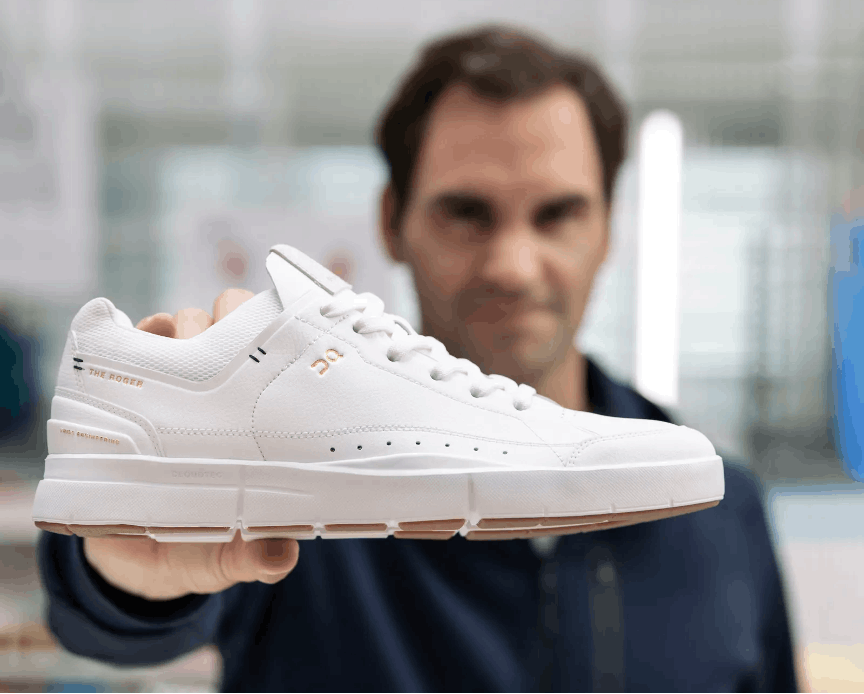
Roger Federer is the cleanest illustration on earth. In 2018 Nike wanted to cut his fee. Sit with that: the most bankable, scandal-proof athlete of his generation, and somebody ran a spreadsheet and concluded he’d gone off the boil. He left. In 2019 he took about 3% of On, a Swiss running-shoe company that had started in a garage and could not conceivably have matched Nike’s money. He helped design its tennis line and stayed on after retiring in 2022. That stake has been valued near $400 million — more than the $131 million he earned in twenty-four years of professional tennis. On now turns over around 3.5 billion Swiss francs a year.
On didn’t win Federer by outbidding Nike. It won him by offering something Nike structurally couldn’t.
Ryan Reynolds is the same trade at a scale you might actually recognize: roughly 20% of Aviation American Gin, a small Oregon distillery, sold to Diageo for up to $610 million; roughly 25% of the budget network Mint Mobile, sold to T-Mobile for up to $1.35 billion. Neither business could have afforded him as a hired face. Both could afford him as an owner.
And none of it is new. 50 Cent took equity in Vitaminwater in 2004 rather than a flat fee, helped run it from a reported $100 million to $700 million in three years, and reportedly collected nine figures when Coca-Cola bought the parent. Twenty-two years on, the industry is still working from a template drafted by a rapper. I find that delightful.
Time is the multiplier, and nobody collects it
Now the unglamorous part, which is where the money is, and which matters more to you than to Nestlé.
Everyone objects that audiences get bored. But most campaigns ever wear out their welcome. Most never live long enough to wear in.
A large company that throws away a good campaign after eighteen months has wasted money. A small one has wasted the only campaign it could afford to make. You have the least room of anyone to keep starting again, and you are statistically the most likely to do it, because small companies change direction every time a new hire arrives with opinions.
Which brings us to George Clooney, selling Nespresso since 2006. Twenty years of one man and one raised eyebrow turned a niche Nestlé capsule machine into shorthand for a certain kind of life. And note what Nespresso did this March when it wanted younger customers: it didn’t retire him. It added Dua Lipa for a campaign its CMO calls the biggest in the brand’s forty-year history, and put Clooney in it beside her. Succession, not defenestration.
The bill, payable in full
The risks are real. They are also knowable, which is rather the point; the brands that got hurt are the ones that never priced them.
Adidas and Kanye West is the maximum invoice. Nine years, roughly a tenth of brand revenue, terminated in October 2022 after his antisemitic statements — leaving €1.2 billion of unsellable stock, a €513 million quarterly loss, and a forecast €700 million operating loss the year after. Adidas called it right and called it fast, eighteen days from review to exit. It still took three years to empty the warehouses.
Read that as a ratio rather than a number and it should frighten you more, not less. Adidas lost a tenth of its brand revenue and survived because it had the other nine-tenths. If your partner is the face of your only product line, your exposure isn’t €1.2 billion, it’s everything.
Compare a shallow deal: Prada appointed the Korean actor Kim Soo-hyun in December 2024 and dropped him within days when allegations surfaced that March. Clean, cheap, forgotten by Thursday. That escape hatch is precisely what depth costs you.
Then the subtle bill. When the Novig ad drew fire, its chief executive explained that no comment on women’s sport was intended, and mentioned that Sweeney had driven much of the visual direction. Fortune observed, drily, that he’d thrown her somewhat under the bus. That is what accountability looks like when your partner is an owner: you can’t quietly terminate her, so the pressure finds a public exit.
Volatility runs both ways, too. On 11 August, On missed its quarterly numbers, the shares fell 19%, and Federer’s paper fortune dropped some $52 million before lunch. Your partner’s enthusiasm is now correlated to your results, which is marvelous in a good year.
And the fair counterweight: American Eagle maintains the Sweeney jeans campaign drove awareness and sales, and it did — denim sold out, the news cycle was enormous. A year on, the core brand showed no sustained sales growth and the share price had round-tripped to where it started. Attention is a real asset. It is simply not the same asset as a brand.
How to actually do this without a Hollywood budget
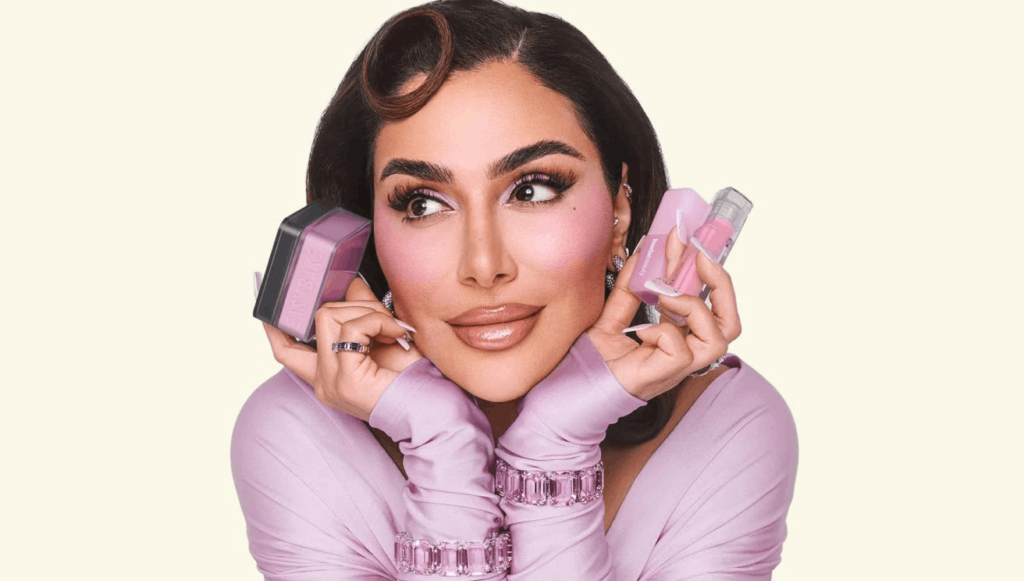
Huda Kattan built one of the world’s biggest beauty brands out of Dubai on exactly this logic — talent, product and owner in one person. The private equity firm TSG Consumer took a minority stake in 2017 at around $200 million of retail sales; by mid-2024 the business was past $300 million; in June 2025 she bought them out entirely. She has said she was told a beauty brand couldn’t be built from Dubai, and that she’d never get her equity back. Two for two.
That’s the aspiration. Here is the practical version for a company with a real budget and no cap-table romance.
Forget celebrity. Buy relevance. You are not signing Sweeney. You are signing the chef every restaurateur in your city already listens to, the physiotherapist your customers quote at each other, the retired national-team player nobody outside your market has heard of. Forty thousand people who buy your category beat four million who don’t. Reach is what big brands purchase because they must sell to everyone. You don’t have to.
Equity is one instrument, not the only one. Most owners of small businesses hear “give away shares” and reasonably stop listening. Fine — the point is skin in the game, and there are cheaper ways to arrange it. A royalty on the line they co-design. A share of profit on that line only. Options that vest over four years so leaving early costs them. A small stake that you can buy back at a set price. All of these produce the behavior you want; none of them hands a stranger a seat at your board.
Start with one line, not the whole brand. Give them a product, a category, a region. If it works, widen it. If they turn out to be a nightmare, you have contained the damage to one SKU rather than your logo.
Vest it, clause it, and write the buyback now. Vesting over years, a morality clause with teeth, and an agreed mechanism to buy them out at a formula price. Do this while everyone is delighted with each other. Nobody negotiates a clean exit in the middle of a scandal.
Don’t give shares to someone you wouldn’t take advice from. This is the real filter. An owner will have opinions about your pricing, your packaging and your hiring. If the thought of that makes you wince, pay a fee and keep your freedom — that is a perfectly respectable answer and it is the right one more often than this industry admits.
Then leave it alone. The most expensive habit in this business is changing direction at the precise moment the work begins to pay. It costs a big company money. It costs a small one the whole bet.
Marketing has been waving for thirty years. New campaign, new face, new platform — all of it beautifully choreographed to distract from how few brands will do the boring, compounding, unglamorous thing of picking something and staying with it.
Equity partnership is the most encouraging development in brand-building in a decade precisely because it finally pays people to stay, and because it is one of the very few weapons that works better in small hands than large ones. It costs more flexibility than a fee. It repays in compounding, which a fee never has and never will.
The brands that win the next ten years will choose somebody, give them a real seat, and then manage the genuinely hard part: sitting still.
Sources: Fortune, Front Office Sports, System1 / IPA, Compound Creativity, Mi3, Forbes, Variety, CBS News, The Grocer, CNN, Malay Mail, Associated Press, WWD