

Why You Should Vandalize Your Own Brand
The strongest brands spend years teaching us what to expect from their logos, packaging and other distinctive assets. Occasionally, the smartest thing a CMO can do is break that expectation on purpose and turn the brand itself into media.
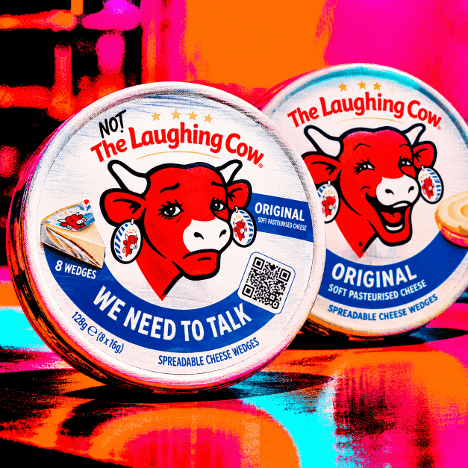
I recently discovered that The Laughing Cow had stopped laughing. The horror.
For more than a century, the French processed-cheese brand has been represented by a cheerful red cow wearing cheese-box earrings and looking unnervingly pleased with herself.
Now she looks serious. Moo-rose, even. No explanation. Just a changed expression, a QR code and the words: “We need to talk.” Their site’s still purely a teaser. Its headline reads: “After more than 100 years, The Laughing Cow has stopped laughing. We need to talk.” It also features two amusing short films showing a rather depressed cow — one set in a diner and one in a park.
Naturally, my first thought was that she’d finally seen the news. Or perhaps discovered what was actually in that processed cheese.
Either way, the important point was this: I noticed. And so did everyone else. That’s the strategy.
Recognition + Violation of Expectation = Attention.
Most advertising tries to interrupt people. Strong brands can do something perhaps more interesting. They can interrupt themselves. And that first word — recognition — is important.
Ipsos’ 2026 global database covers more than 12,000 distinctive brand assets from 900+ brands, yet only 15% achieve its highest “Gold” rating: an asset people instantly and uniquely associate with the correct brand even when it appears on its own. Brands with stronger portfolios of distinctive assets are 31% more likely to be considered and 38% more likely to be used than brands with the weakest portfolios. Only about one in five brands has enough strong assets to produce these effects consistently.
In other words, before you vandalize your brand, you’d better make damn sure people know what it looks like in the first place. I know a great agency that can help you with that. Just ask. (wink)
First, What Exactly Are We Vandalizing?
By brand, I don’t mean just a logo. A brand is the collection of memories, associations, expectations and experiences people connect with a product, company or service. A distinctive brand asset is one of the recognizable cues that helps trigger those memories: a logo, package shape, mascot, color combination, typeface, slogan, product shape or other familiar device.
And by brand as media, I mean using those assets themselves as the communication rather than simply placing advertising around them. The package becomes the ad. The logo becomes the headline. The mascot becomes the story.
That only works if people recognize the asset in the first place. Which is why this strategy belongs mainly to brands that have spent years building familiarity. You can’t violate an expectation nobody has.
Strategy 1: Remove Something People Expect
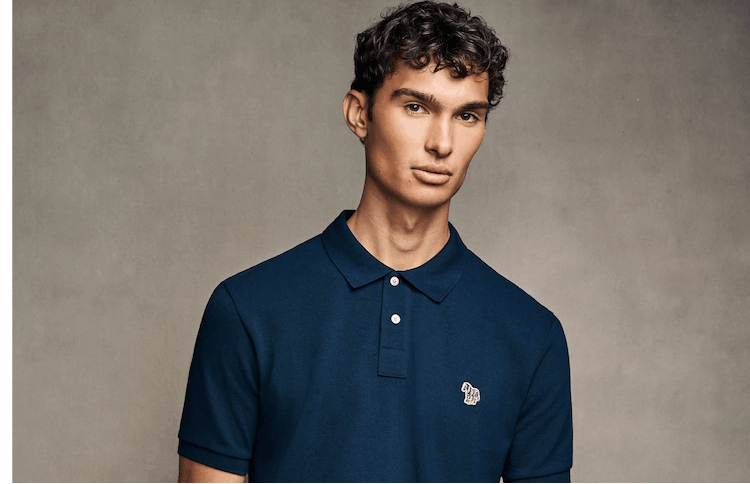
In perhaps the cleanest form of brand vandalism, Lacoste, the French fashion brand famous for the small crocodile embroidered on its polo shirts, temporarily removed that crocodile and replaced it with endangered animals in its Save Our Species campaign. The point was immediately understandable. The crocodile had disappeared because species were disappearing. The logo wasn’t merely carrying the campaign. Its absence was the campaign.
Cadbury, the British chocolate brand, later did something similar with Dairy Milk packaging. For a campaign about loneliness among older people, it removed the words from the front of the chocolate bar. Again, subtraction did the communicating.
These are older examples, but they established a principle that remains useful for CMOs because most briefs instinctively ask: What should we add? Sometimes the better question is: What can we take away?
By the way, Google does this on the daily. For years it has shapeshifted its ubiquitous primary colored logo into themed versions of itself to maintain relevance. It was brilliant when they created their first Google Doodle back in 1998 when Larry Page and Sergey Brin added a simple Burning Man stick figure behind the second “o” to signal that they were away at the festival, and its brilliant today.
Strategy 2: Replace The Brand With The Customer
Coca-Cola took another route. Its Share a Coke campaign replaced the Coca-Cola name on bottles and cans with people’s names. That sounds almost reckless. It’s one of the world’s most valuable brand names. Why remove it? Because the bottle, colors, typography and overall identity were already recognizable enough to survive the defacing. The campaign was so successful the first time they tried it, Coca-Cola again relaunched Share a Coke globally in 2025, activating approximately 10 billion bottles and cans in more than 120 countries with over 30,000 names tailored to local markets. Coca-Cola says the campaign contributed to growth in single-serve transactions.
The package stopped behaving like packaging. It became content. That’s the deeper idea. If consumers want to photograph your pack, carry it around, give it to someone or share it, you’re no longer dealing with packaging alone. You’ve created a media object.
Strategy 3: Make The Brand Speak
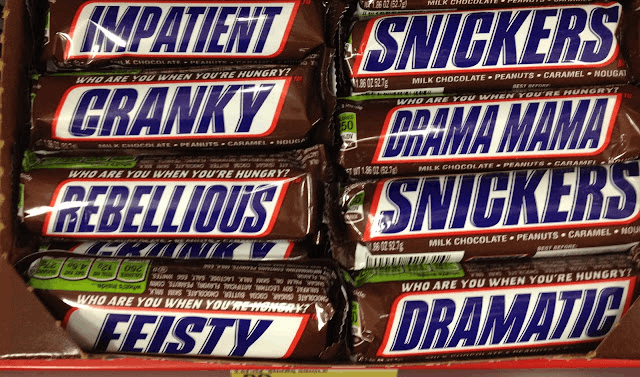
Snickers, the chocolate bar owned by Mars, turned packaging into language. Instead of the SNICKERS name, wrappers carried words such as GROUCHY, IMPATIENT and CONFUSED — symptoms of what its long-running campaign suggested happens when people get hungry. That meant consumers could use the product itself as a message. Hand somebody a bar labelled GROUCHY and the packaging does the talking for you. This is an underused idea. Most packaging tells people about the product. Better packaging can help people communicate with each other.
Strategy 4: Make People See Your Brand Where It Isn’t
Heinz, the global ketchup brand, took a different approach in 2025. Its Looks Familiar campaign pointed out that an ordinary french-fry carton happens to resemble the distinctive Heinz Keystone — the shield-like shape that has been part of the brand’s identity for generations. Suddenly thousands of completely unbranded fry boxes began looking vaguely like Heinz advertising. The campaign ran across eight markets including the U.S., Canada, Mexico, UK, Brazil, Germany, UAE and China.
That’s an interesting evolution of brand as media. Heinz didn’t alter the logo. It trained consumers to recognize its logo in the world around them. The asset became a visual shorthand strong enough to escape the package entirely.
Strategy 5: Break Consistency Without Breaking Recognition
Absolut, the Swedish vodka brand, has spent decades treating its distinctive apothecary-style bottle as a creative canvas rather than something that must remain visually untouched.
In 2024 it returned to one of its most famous collaborations, producing a limited-edition bottle based on a rediscovered painting by Andy Warhol and rolling it out across more than 50 global markets. The bottle changed dramatically. Its identity didn’t.
That matters because marketers often confuse consistency with sameness. Consistency means retaining enough recognizable DNA to remain identifiable. Sameness means repeating exactly the same execution forever. Those aren’t the same thing. The stronger the underlying brand system, the more freedom creative teams have to play with it.
Strategy 6: Turn A Problem Into The Brand Idea
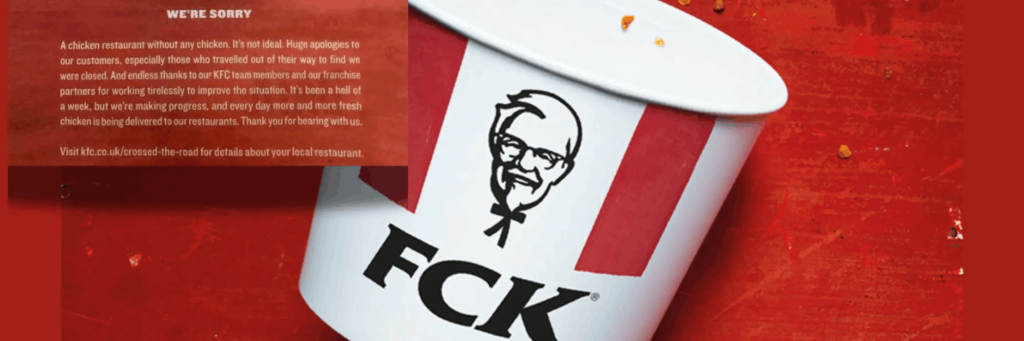
One of the best examples of turning lemons into lemonade came from KFC, the global fried-chicken chain. When a distribution failure left many UK restaurants without chicken, the company rearranged the letters on its famous bucket from KFC to: FCK. Three letters. One apology. No corporate poetry. The brilliance wasn’t simply the joke. It was that the brand asset itself acknowledged the mistake. A conventional apology ad would’ve been advertising about a crisis. This made the brand identity part of the response. How fck’n cool is that?
Which Brings Us Back to The Cow
The Laughing Cow example may be the most elegant of all because almost nothing changed. The French cheese brand, created in 1921, has spent more than a century establishing one very simple expectation: The cow laughs. Now she doesn’t.
The temporary Not Laughing Cow packages began appearing last week in more than 4,700 U.S. stores. As of this writing, Bel has deliberately refused to explain the reason yet and is directing consumers to a website to speculate about what happened. You can check it out here: https://www.thenotlaughingcow.com/
No redesign. No celebrity. No complicated visual metaphor. Just one violated expectation and one unresolved question: Why isn’t the Laughing Cow laughing? The physical product becomes the teaser. The altered brand asset becomes the headline. And the mystery creates the media.
How To Do This Without Making a Mess
The temptation, having read examples like these, is for a marketing team to rush into a workshop and start putting moustaches on the logo. But stop right there.
There are a few rules.
- Start with an asset people genuinely recognize. Remember: Ipsos found that only 15% of the 12,000+ assets it studied achieved its highest level of instant, unique recognition. Your brand guidelines may insist your teal gradient is iconic. Consumers may have other ideas.
- Change one thing. The Laughing Cow doesn’t need a new personality. She just needs to stop laughing. Keep enough recognizable DNA. If consumers can’t identify the brand after the change, you haven’t created intrigue. You’ve created anonymity.
- Make the change mean something. Lacoste’s missing crocodile worked because endangered species replaced it. Random disruption is decoration.
- Make the idea explainable in one sentence. “The Laughing Cow stopped laughing.” “Lacoste removed the crocodile.” “Coke replaced its name with yours.” If the idea requires a 40-slide explanation, it probably isn’t an idea yet.
- Give curiosity a payoff. Mystery creates attention. A disappointing reveal destroys it.
- And perhaps most importantly: Put the brand back together afterwards. It should be like waking up from a vivid dream. The disruption works because consistency came first.
The Real Asset May Be Memory
Marketers spend enormous amounts of money looking for new media. New channels. New formats. New placements. New audiences. But mature brands already occupy extremely valuable media space. They occupy memory. The bottle people recognize. The crocodile they expect. The wrapper they know. The cow that always laughs.
That accumulated familiarity isn’t something to protect so carefully that nobody is ever allowed to touch it. Sometimes it should be activated. Sometimes it should be interrupted. And occasionally, it should be vandalized. Because when a familiar brand suddenly behaves in an unfamiliar way, people look again.
And in a world where everybody’s fighting for attention, that may be the most valuable media buy you never had to buy.
Sources: Ipsos — Distinctive Brand Assets research, Bel Brands / The Laughing Cow — current Not Laughing Cow campaign, Coca-Cola — Share a Coke, Lacoste / IUCN — Save Our Species, Mars — Snickers Hunger Bars, Kraft Heinz — Looks Familiar, Absolut — Andy Warhol limited-edition bottle, KFC / The One Club — FCK, Cadbury / Age UK — Donate Your Words