

Lions and Liars and Fears, Ai
The Cannes Lions, the advertising industries most prestigious awards, opens in two weeks. Last year it ended in scandal. This year it opens with a rulebook nobody has tested yet. Welcome to the new age of creative accountability, where the biggest threat to advertising’s most glamorous night out isn’t the competition. It’s the work.
Every June, thousands of advertising people descend on the French Riviera to celebrate creativity, drink rosé and compete for a small golden lion that somehow carries the full weight of an industry’s self-regard. I have attended. I have admired the work. I have marveled at the ambition.
Of course, as the specter of AI has appeared, we are all left to wonder whether some of the work we’re marveling at is entirely, completely, unambiguously real.
Last year, the industry found out the hard way.
The Year the Lions Lost Their Roar
Cannes Lions 2025 will be remembered for three things, none of them a great campaign.
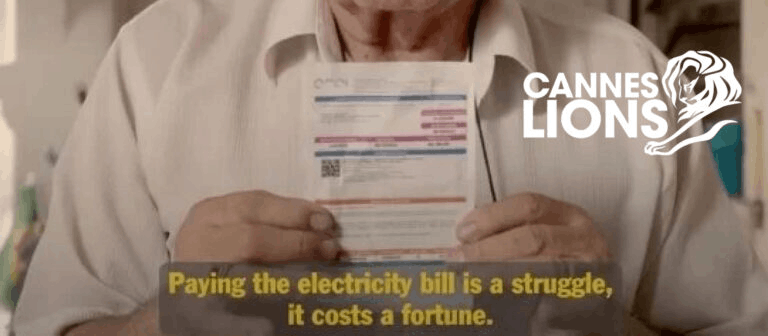
The headliner: Brazilian agency DM9, part of Omnicom’s DDB network, won the Creative Data Grand Prix for “Efficient Way to Pay,” created for Whirlpool’s Consul brand. A whistleblower tipped off Ad Age. Investigators found the case film contained AI-manipulated footage lifted from CNN Brasil broadcasts, edited without permission to simulate news coverage of a campaign that never generated that coverage. Fabricated real-world events. Simulated outcomes. A jury misled. CNN Brasil filed a formal complaint. DM9 admitted “serious inconsistencies” in not one but three of its entries and withdrew all of them. Grand Prix gone. All associated Lions gone. CCO Icaro Doria resigned. DM9 had won 21 Lions that year, helping DDB claim Network of the Year. That crown now comes with an asterisk the size of the Palais.*
It was not DM9’s first rodeo. A 2001 Ad Age investigation flagged a previous Gold Lion-winning ad for Parmalat ketchup as a possible ghost ad, work that allegedly ran only after the Cannes entry deadline, in an obscure car magazine. Some agencies play a long game.
The supporting act: Publicis agency LePub São Paulo won a Bronze Lion for “Followers Store,” a campaign for New Balance and São Paulo FC. The case study claimed a geo-targeted push notification allowed fans near the team bus to pre-order an exclusive jersey on match day, with 45,000 shirts sold in a single day. Brazilian journalist Demétrio Vecchioli investigated and found no evidence the presale ever happened. Several media outlets named in the case study either never covered the campaign or no longer exist. Influencer content appeared to have been edited without disclosure. New Balance’s statement was short and devastating: all materials were made by LePub “without the knowledge or approval of the brand.” The client had no idea the case study existed.
Then there was the Budweiser situation. Africa Creative DDB won a Grand Prix in Audio & Radio for “One Second Ads”, a campaign deliberately engineered around using ultra-short song clips specifically to avoid paying music licensing fees. Technically within the rules. Morally, a different conversation. AB InBev issued a formal apology. An awards jury gave a Grand Prix to a campaign whose central innovation was finding a loophole to avoid paying artists. The industry noticed.
The Response Was Serious. The Question Is Whether It’s Enough.
Cannes Lions CEO Simon Cook’s response, in full: “Creativity is only valuable if it’s credible, and credibility must be earned, not assumed.”
Which is a remarkable sentence to need to say out loud at the world’s most important creative festival in its 73rd year.
The new Global Integrity Standards, announced July 2025 and effective for the 2026 festival opening June 22, are genuinely substantial. Every submission must now be approved and signed off by a senior leader from both the agency and the commissioning brand. Meaning no brand can claim it had no idea what was submitted in its name. A dual-layer verification system combines human review with AI-led analysis to scrutinize every claim. A new Integrity Council handles disputes. An annual Integrity Audit will be published. Agencies found to have submitted deliberately false work face bans of up to three years. Cannes published a full Integrity Handbook in November 2025 and has been running support webinars for entrants ever since.
The agencies entering this year are already calling the new process burdensome. Which, translated from agency-speak, means it’s probably working.
This Is Bigger Than One Festival
Here is where it gets interesting. The Cannes scandal is a vivid, industry-specific example of something happening everywhere simultaneously. The technology arrived faster than the guardrails. Now the guardrails are being built in real time, and everyone from advertising festivals to governments to technology platforms is doing it at once.
The EU AI Act’s transparency rules take full effect in August 2026 requiring that AI-generated content be labeled, deepfakes disclosed, and users informed when they’re interacting with a machine. Fines for non-compliance can reach €15 million or 3% of global annual turnover. Italy has already passed its own AI law with prison sentences of up to five years for unlawful dissemination of AI-generated content. The European Commission published its voluntary Code of Practice on marking AI-generated content in December 2025, with the final version expected this month.
The advertising industry is not being singled out. It is simply the most visible, and in some ways the most entertaining, expression of a universal problem: when you give creative people extraordinarily powerful tools and no rules, some of them will use those tools to cheat.
All of this is good news. Not the cheating. The response to the cheating.
The reason Cannes Lions still matters. The reason a small golden statue commands this much attention and generates this much anxiety is that it represents a genuine standard. When that standard is enforced, when fake work gets pulled and careers face consequences, it reinforces rather than undermines the value of the real thing. The agencies who did honest work, who produced results that actually happened and campaigns that actually ran, are the direct beneficiaries of a system that just got considerably harder to game.
The same logic applies to AI regulation broadly. The brands and agencies building responsible AI practices right now, documenting their use, disclosing their tools, making sure their claims are real, are not at a disadvantage. They are building a competitive moat. Trust, it turns out, is not a soft asset. In an era of AI-generated everything, proof that something is real carries a premium that only gets more valuable as synthetic content becomes more indistinguishable from the genuine article.
Simon Cook is right. Creativity is only valuable if it’s credible. After forty years in this industry I’d put it slightly differently: creativity was always only valuable if it was credible. We just spent a few years forgetting that.
Cannes opens June 22. The new rules face their first real test. I genuinely can’t wait to see what happens.
* The Palais des Festivals et des Congrès. The main venue in Cannes where the Lions are awarded.
Sources: Cannes Lions official statement on DM9 entries, June 27, 2025 — canneslions.com, Cannes Lions Global Integrity Standards announcement, July 10, 2025 — canneslions.com, Adweek: “LePub Under Investigation After Cannes Lion-Winning Case Study Draws Scrutiny,” Audrey Kemp, June 27, 2025, Adweek: “Agencies Say New Cannes Lions Entry Rules Are Burdensome But Necessary,” Brittaney Kiefer and Rebecca Stewart, May 14, 2026, Campaign Asia: “Cannes Lions 2025 Controversies Casting a Shadow Over Big Awards,” June 30, 2025, More About Advertising: “LePub Is Third Agency in the Dock for Cannes Entries,” June 30, 2025, EU AI Act transparency rules — digital-strategy.ec.europa.eu, Charles Russell Speechlys: “AI in Advertising: A Regulatory Lookahead for 2026,” January 30, 2026, European Commission Draft Code of Practice on AI Content Marking, December 2025.