


Siri Is Finally Waking Up. Is Your Brand Ready?
Apple’s long-awaited AI overhaul isn’t just a product upgrade. It’s the moment AI search goes mainstream on 1.5 billion devices simultaneously.
I’m a devoted Apple fan. Have been since the beginning. I buy nearly everything they make, I’m a longtime shareholder, I believe in their ecosystem and I’ve defended the brand through thick and thin. But Siri? Siri has been the one embarrassment I couldn’t defend. Clunky, literal, infuriatingly limited. It seems to always be listening but acts more like a toddler than anything resembling a real assistant. And somehow Siri got worse at understanding humans as every other AI on the planet got dramatically better. While ChatGPT was rewriting the rules of human-machine interaction, Siri was still mishearing my alarm settings. It has been, frankly, an embarrassment for a company that doesn’t do embarrassment.
Which is exactly why this announcement feels different.
Apple unveils the new Siri at its Worldwide Developers Conference on June 8. We don’t know everything yet. The beta follows immediately after the keynote, the full public rollout comes with iOS 27 in the autumn and some details will only become clear once developers get their hands on it. But we know enough. And what we know should be getting every serious marketer’s attention right now.
Apple’s new Siri isn’t a product story. It’s a distribution story. And the distribution is 1.5 billion devices, already in people’s pockets, already trusted, already habitual — about to become the world’s most powerful AI answer engine whether your brand is ready for it or not.
When Siri gives your customer a single synthesized answer about your brand, your product, your category, what will it say? You better find out.
Better Late Than Never.
Apple promised a genuinely intelligent Siri at their WWDC in 2024. Then missed the target. Then missed it again. The marketing press had a field day. Apple’s stock dropped on delay rumors alone.
None of that matters now. Because what’s coming is bigger than what was originally promised.
The rebuilt Siri runs on a custom 1.2 trillion parameter Google Gemini model on Apple’s Private Cloud Compute infrastructure. It will live in the iPhone’s Dynamic Island and replaces the current search interface entirely with a “Search or Ask” experience. It opens to third-party AI extensions, meaning users will choose ChatGPT, Gemini or Claude as defaults from a new App Store section.
Monday’s keynote will fill in the gaps. There will be features we haven’t seen yet, capabilities that haven’t been leaked and almost certainly some surprises. But the broad shape of what’s coming is clear and the marketing implications are significant regardless of the finer details.
This isn’t Siri getting smarter. This is Siri becoming a search engine. On the world’s most used consumer device.
1.5 Billion Devices May Be Your New Media Channel
There are now 8.4 billion voice assistants active globally — more than the world’s population — processing over 10 billion queries per day. Siri’s upgrade transforms the quality and intelligence of every Apple interaction within that ecosystem, simultaneously, without a single user having to do anything. No app download. No new subscription. Most significantly, no behavior change required.
When someone asks the new Siri “best luxury hotel in Dubai,” they get one synthesized answer. Not ten links to evaluate. Someone is going to be in that answer. The question is whether it’s you.
The Click Was Dying. Siri Is About to Shoot it in the Head and Bury it in the Desert.
60% of all Google searches already end without a single click. In Google’s AI Mode that zero-click rate hits 93%. The new Siri will give answers not links. If your brand isn’t in the answer you don’t exist for that query.
This isn’t a future risk. Google search referral traffic to publishers already declined by roughly a third in the year to November 2025. Siri extends that dynamic to 1.5 billion devices and the most valuable consumer demographic on the planet.
Your SEO Budget Has a Blind Spot
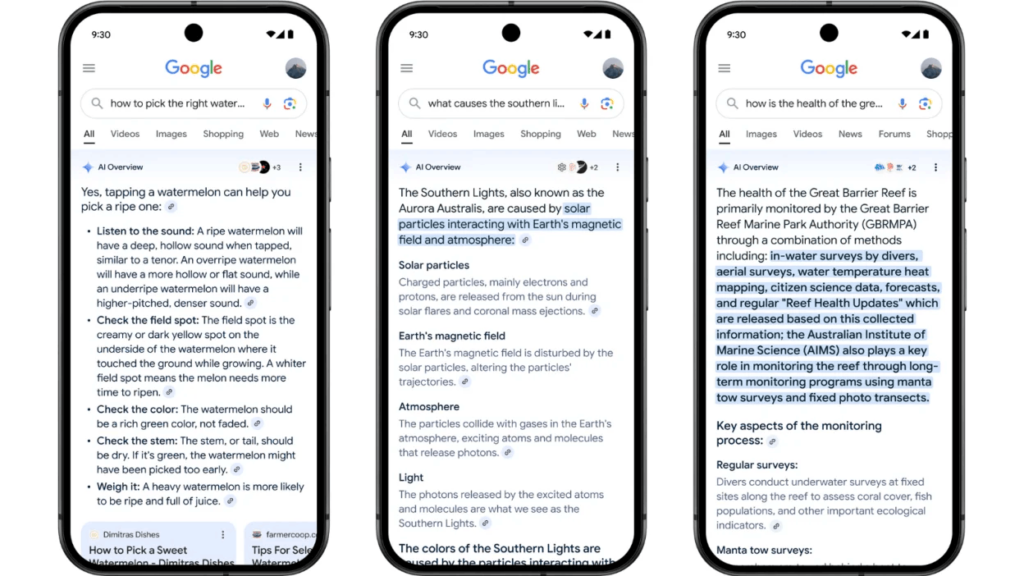
If you are following our PR FOR ROBOTS sessions, you have heard us say this before. The overlap between top-10 Google rankings and AI Overview citations has collapsed — from 75% in mid-2025 to between 17% and 38% by early 2026. The content Google ranks highest is increasingly not the content AI systems cite. A brand that spent years and serious budget building search authority can now be completely invisible to Siri while a competitor with more credibly sourced better structured content gets the answer. Rankings and AI visibility are now entirely separate games and most marketing teams are only playing one of them.
Show Up or Pay Double
Brands cited in AI Overviews earn 35% higher organic click-through rates and 91% higher paid click-through rates than non-cited brands on the same queries. AI citation doesn’t just lift organic performance — it makes paid media investment work nearly twice as hard. Being absent doesn’t just cost organic traffic. It undermines the return on every paid dollar running alongside it.
Siri Doesn’t Do Keywords.
Voice search now accounts for 27% of all queries globally and voice queries are not keywords. They’re questions phrased the way people actually think.
“Is Heineken a responsible brand?”
“What’s the best airline for long-haul to Asia?”
“Which hotel in Kyoto do people actually recommend?”
These are reputation verdicts being sought from a machine. The new Siri answers them with authority, in one sentence, to 1.5 billion users.
The Mainstream Just Arrived.
Traditional search engine volume is predicted to drop 25% by 2026 and 50% by 2028, replaced by generative engines. By October 2025 McKinsey reported that 50% of consumers were already using AI-powered search as their primary way to find information and make buying decisions.
That’s before the new Siri. Before 1.5 billion default AI search users who never opened ChatGPT in their lives get a world-class AI assistant answering their questions by default. The mainstream consumer just arrived at the AI search party. They didn’t choose to come. Apple brought them.
First Mover Isn’t a Cliché Anymore
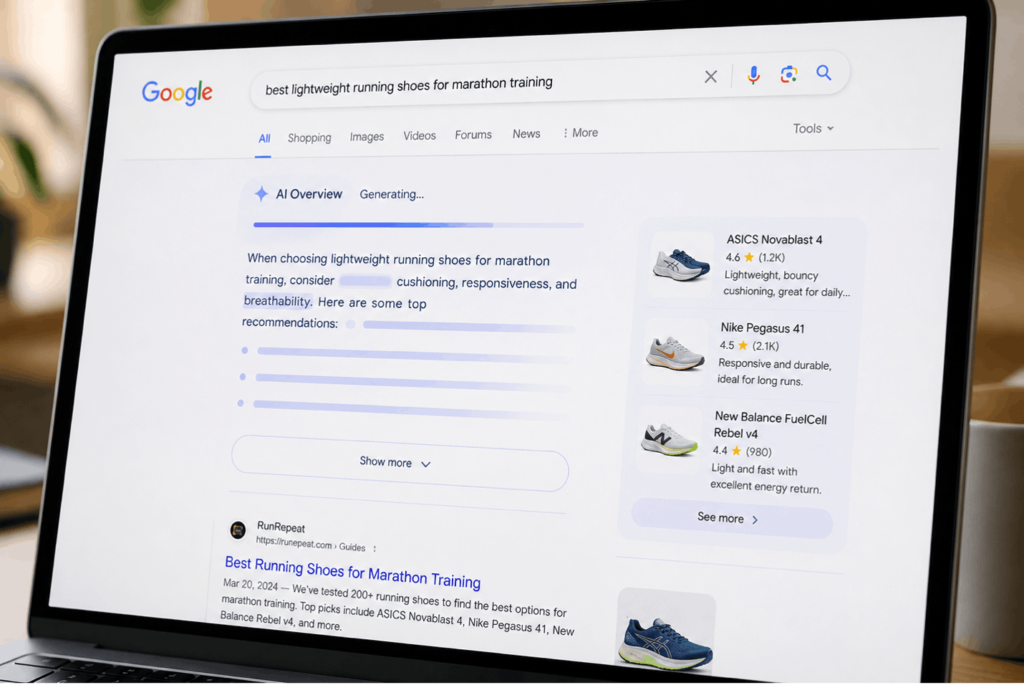
Most enterprise marketing teams now have a GEO — generative engine optimization — initiative underway. Most smaller teams haven’t started. 58% of consumers already use generative AI for recommendations and 48% of B2B buyers use it to discover vendors.
Once an AI system has formed a view of your brand, correcting it is harder than building it correctly from the start. The brands moving now are building foundations that will be harder to dislodge in twelve months. The brands waiting for clarity are ceding ground.
Nobody Gets a Free Pass
Hospitality has seen the worst AI search impact of any industry so far — a 6.7% decline in monthly organic traffic since Google’s AI search rollout, reversing growth that had been building for years. But hospitality is the canary in the coal mine. Every sector is exposed.
A homebuyer asks Siri which developer has the best reputation in their market. A CFO asks which fintech platform is leading in payments innovation. A parent asks which baby formula brand is safest. A procurement director asks which B2B software vendor is most trusted in their category. An entertainment fan asks what’s worth watching this weekend. In every case Siri returns one answer. One synthesized confident verdict drawn from whatever sources it deems authoritative. The brand in that answer wins. The brands that aren’t don’t get a consolation click. They get nothing.
This Is Your Best Traffic. Don’t Lose It.
AI-referred traffic converts 4.4 times better than standard organic search. These visitors arrive already informed, already persuaded and already further along in their buying decision than any visitor acquired through traditional search. The brand Siri recommends inherits that customer. The brand it doesn’t mention loses not just traffic, it loses the highest-quality highest-intent highest-converting traffic in the funnel.
One Interface. Three Judges.
Siri’s new extensions system lets users choose ChatGPT, Gemini or Claude as their default. Your brand may be evaluated by up to three AI systems simultaneously — each with different training data, different source hierarchies and different tendencies in how they characterize brands and categories. Three independent editorial environments, each forming their own view of who you are and whether you’re worth recommending.
So What Do You Actually Do About It?
Monday’s keynote will tell us more. We’ll follow up with a full breakdown of what the announcement means for marketers once the details are confirmed. But here’s what won’t change regardless of what Apple reveals: the brands that show up well in Siri’s answers won’t get there through technology alone.
They’ll get there because they built genuine authority — through earned media, credible third-party coverage and content that AI systems, like good journalists before them, find worth referencing. PR in the driver’s seat building the credibility and narrative that AI systems draw on. SEO riding shotgun structuring that narrative so AI crawlers can find, parse and cite it correctly. Paid media amplifying both at the moments that matter.
Most marketing teams are running this in reverse. Leading with paid, optimizing for rankings that don’t translate to AI visibility and treating reputation as the last item on the brief. The sequence matters. So does the proper integration of all three disciplines.
That’s the thesis behind PR for Robots, the series we have been building for exactly this moment. Because this moment was always coming.
Watch this space for our further Siri breakdown. And if you haven’t started thinking about how AI systems represent your brand — start today.
PR for Robots: How Publicity Fuels Sales in a World Run by Machines
PR for Robots: The Hospitality Session