

Nike Got Caught. You’re Next.
AI copy is getting brands convicted in public, even if they didn’t use it. Here’s what the data shows, what it means for your brand, and why marketing leaders can’t afford to ignore it.
I recently landed on this story about Nike that hit home for me.
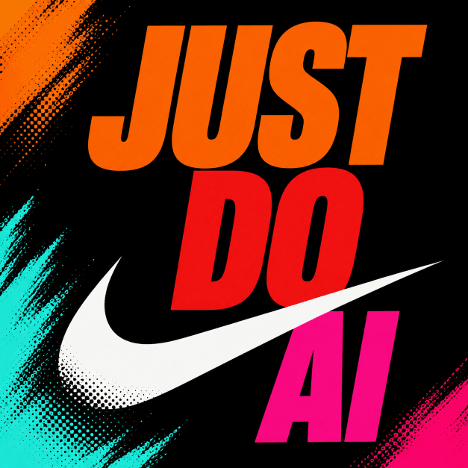
Recently, Nike posted on X about tennis player, Jannik Sinner. The line they chose: “This isn’t just history — it’s his story in the making.”
Within hours, a user fires back: “they let a GPT AI-ism through on the main Nike page?? I thought marketing teams caught this stuff by now.” Of course, true or not, hundreds then piled on. Nike says nothing.
That “it isn’t X, it’s Y” rhetorical pivot, is a timeless literary construction, which, of course, is the very reason the algorithm uses it so often.
Generative AI has certain “tells” and the internet has learned to sniff them out. The em dash that lands every other sentence. The “In a world where…” opening what shows up in so many social captions. Or, “The uncomfortable truth is…” trope that leads the most insightful paragraph in so many articles. Including some of mine. And don’t get me started on The Oxford comma.
The deeply irritating part, and I say this as someone who has been using em dashes for forty years, and who may have, on occasion, opened with something uncomfortably close to “in a world where…”, is that AI didn’t invent these moves. It stole them. From writers. From us. The machines have pickpocketed an entire generation of stylistic habits and industrialized them into the default output of every content team on the planet. And it has left those of us who were doing it first standing in a lineup, looking guilty. I now actively edit out punctuation I’ve used since the nineties. I second-guess sentence constructions that were mine long before they were anyone’s prompt. The machine didn’t just copy our style. It contaminated it.
Even if the accusation against Nike was wrong, it didn’t matter. Nike was tried, convicted, and sentenced in the court of public opinion before anyone paused to check the facts. No evidence required. No response accepted. The copy wasn’t the problem. The suspicion was.
They were guilty by algorithm.
This Is Not a Drill.
This is not a niche internet grievance or a creative community having a moment. The anti-AI sentiment is hardening into mainstream consumer behavior, and brands are directly in the crossfire.
A poll from Stanford University and UC Berkeley found less than half of Americans now think the country should charge ahead with AI innovation. When former Google CEO Eric Schmidt mentioned AI at a University of Arizona commencement speech this year, he was rewarded with a sustained hail of boos from graduating students. He argued that resisting AI meant “surrendering your agency.” The students’ response, several hundred people in caps and gowns loudly jeering one of Silicon Valley’s most powerful figures, was the agency. And it was remarkably well-organized.
Then Merriam-Webster named “AI slop” its word of the year for 2025. Think about it. The f’n dictionary, the institution that formally decides which words deserve to exist, added a phrase whose entire purpose is to describe your content department’s output as low-grade, machine-produced garbage. That means we are well past early warning signs. We are at the stage where the warning signs have their own warning signs.

The Numbers Don’t Lie
The uncomfortable truth (see what I did there?) is sitting in the data, and it ain’t subtle.
Only 7% of consumers say visible AI-generated marketing content makes them trust a brand more. 31% say it makes them trust the brand less. That is already a four-to-one negative ratio, a losing trade on its face. But here is where it stops being a reputation problem and becomes a revenue problem: 52% of consumers say they would stop buying from a brand after an inauthentic experience. Not post a complaint. Not write a review. Stop. Buying. And 58% say they trust brands less simply for using AI-generated content, not for doing it badly, just for doing it.
Meanwhile, 77% of senior marketing decision-makers plan to shift budgets away from traditional creator marketing toward AI-generated content. The industry is accelerating toward the cliff its customers are running from and calling it strategy. This is a controlled demolition being carried out by very confident people who don’t know how to read the room.
The Glitch That Stole Christmas
This is not a budget problem. It is a judgment problem. There is a meaningful difference, and confusing the two is how brands end up repeating the mistake.
McDonald’s Netherlands produced an AI-generated Christmas ad. They titled it, “The Most Terrible Time of the Year”. It was pulled within days. Viewers called it “AI slop.” Many said it “ruined the Christmas spirit.” The studio behind it described, in a since-deleted post, a seven-week production involving up to ten in-house AI and post-production specialists, with each shot going through extensive iterative refinement.
McDonald’s response? They called it “an important learning.” That is corporate for: we spent a significant budget discovering what common sense would have told us for free.
After significant backlash for AI-generated holiday ads in 2024, Coca-Cola released another set of AI-generated holiday ads in 2025. Their global VP of Generative AI explained the spots were guided by “human storytellers” to ensure “authentic and emotionally resonant” content. The internet looked at the AI-rendered polar bears, the trucks with shifting wheel counts, the otters in a winter cabin, and not so politely disagreed.
Coca-Cola owns Christmas in the global imagination. The red trucks. The original polar bears. Thirty years of emotional equity built one human feeling at a time. They chose, for the second consecutive year, to replace all of that with something that looked like a prompt. The lesson here has nothing to do with technology. When your most powerful brand asset is warmth, the one thing you must never allow is for your audience to feel the cold.
The Brands Going the Other Way
Here is where it gets interesting, and where strategic intelligence wins.
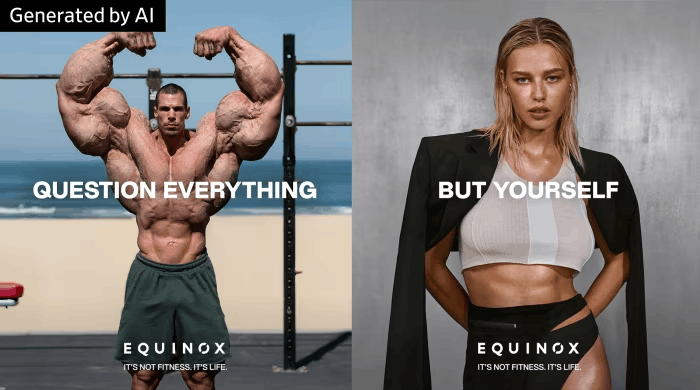
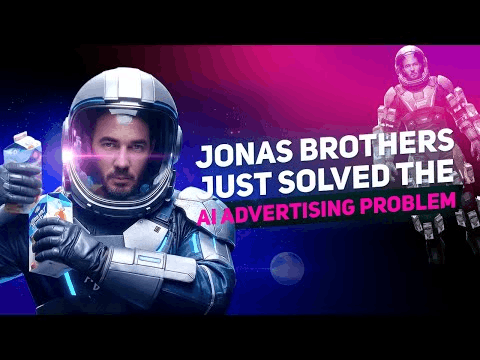
Brands including Aerie, Equinox, and Almond Breeze launched campaigns in early 2026 explicitly calling out AI slop, positioning themselves as authentic alternatives to machine-generated fakery. Equinox, a gym, made “not using AI” a premium brand signal. Almond Breeze deployed the Jonas Brothers to mock the entire premise of AI advertising. Cheerfully. Effectively.
We have reached the moment where restraint is the competitive advantage. “100% Human” is now a marketing claim. Bottled water once bragged about having no calories. Brands are now bragging about having no algorithms.
The consumer is not anti-AI. They are anti-cheap. That is actually good news, for every brand smart enough to understand the distinction.
Don’t Get Swooshed
Maybe Nike used AI. Or maybe they didn’t. It is just as likely that the line in question was written by a human copywriter doing their job, reaching for a construction that felt sharp and contemporary. It still went viral as an AI artefact. The copy was not the problem. The suspicion was. And after over four decades in the media and PR business I can tell you with all certainty that suspicion travels considerably faster than any clarification you will ever issue.
The question for every CMO and CEO reading this is not whether you are using AI. Everyone is, somewhere, in some form, on some channel. The real question is whether your brand has built enough of a distinctive, recognizable, irreplaceable human voice that your audience knows the difference instinctively, before the mob has a chance to decide for them.
If you are not certain of the answer, open your last ten posts. Read them like a suspicious stranger. Look for the tells. They’re not difficult to find. Just ask Nike.