

You Can’t Wing It.
When an unprepared executive sits down in front of a camera, the cost isn’t just embarrassment — it’s measured in lost deals, investor confidence, and reputation you spent years building. What the best-prepared leaders do differently, and why your next interview is not the place to find out.
I was three sips into my morning Cappuccino last week when a video clip appeared in my feed that made me put my cup down.
There was Ryan Cohen, founder of Chewy, the online pet food retailer he built from scratch and sold to PetSmart for $3.35 billion, and now CEO of GameStop, the struggling video game retail chain kept alive largely by meme-stock enthusiasm,sitting across from CNBC’s Andrew Ross Sorkin on Squawk Box, fielding what should have been the most predictable question of his week: How exactly does GameStop, a company worth around $11 billion, intend to buy eBay, the global online marketplace, for $56 billion?
Cohen had just made an unsolicited bid for eBay. He’d issued a press release. He’d apparently thought quite long and hard about this. And yet when Sorkin laid out the simple arithmetic, $9 billion in cash, $11 billion in stock, a highly confident but not yet locked $20 billion financing letter from TD Securities, all of it still roughly $16 billion short. Cohen’s answer was: “Yeah, we’ll see what happens.”
Sorkin tried again. Co-anchor Becky Quick jumped in with a laugh that was part incredulity, part pity: “Ryan, that’s a pretty straightforward question.” Cohen’s response? “I don’t understand your question.”
Then he suggested people check the website.
GameStop’s stock dropped over 10% that day. By Tuesday, the investor who had backed Cohen’s vision of GameStop as a disciplined capital allocator, Michael Burry, the hedge fund manager made famous by his prescient bet against the US housing market in 2008, had sold his entire position. Six minutes of television. Ten percent of the company’s market value. Gone.
I watched the clip twice. Here was a genuinely intelligent man walking into one of the most telegraphed interviews in recent financial history without a single coherent answer prepared for the one question every anchor, analyst, and algorithm in the world was waiting to ask.
And I thought: there it is again. The arrogance tax. Paid live on national television.
Of course, my second thought was: where the f&%k were his PR team?
THE FUNDAMENTAL MISUNDERSTANDING
There is a belief, widespread, stubbornly persistent and entirely wrong, that intelligence is a substitute for preparation when it comes to media. That if you’re smart enough to run a company, you’re smart enough to explain it on camera. That natural confidence will carry you through. That the journalists asking the questions aren’t as sharp as you are, so you’ll be fine.
This belief is responsible for a remarkable amount of expensive embarrassment.
Running a company and performing under a camera with a prepared interviewer are two entirely different skills. One, you’ve been doing for years. The other requires specific, practiced discipline. And the gap between them is precisely where careers come to be publicly dismantled.
It’s worth knowing that roughly 86% of corporate executives believe poor communication is a major cause of workplace failures, which raises the rather obvious question of why so few of them do anything about their own. The answer, typically, is that they assume the problem lives somewhere below them on the org chart.
It doesn’t. It sits in the green room, waiting.
The media landscape has made this more urgent, not less. News spreads instantly now. Social media platforms amplify a single misstep to a global audience in the time it takes a PR team to draft a holding statement. For C-suite executives, one careless comment can go viral and inflict reputational damage that no subsequent press release can fully undo. Media training has evolved, as a result, from a nice-to-have skill into a critical necessity for anyone leading any size business. And yet, the most senior people in most organizations remain the least likely to have done it recently, or at all.
THE HALL OF THE UNPREPARED
In February 2024, Brad Banducci, CEO of Woolworths Group, Australia’s largest supermarket chain, sat down with reporter Angus Grigg for a taped interview on Four Corners, the ABC’s flagship investigative program. The subject was whether Woolworths had been pricing unfairly during a sustained cost-of-living crisis. Not exactly a surprise topic for a supermarket chief in 2024.
The interview had one obvious question at its center: was Woolworths exploiting its dominant market position? Banducci had no clean answer for it. When Grigg pressed him on the point, Banducci stumbled, said something he immediately regretted, asked for it to be removed from the record, and, when told it couldn’t be, stood up and said: “I think I’m done, guys.” And walked out.
He returned a few minutes later, reportedly after talking with his PR team, and finished the interview. Reporter Grigg called the walkout “pretty startling,” adding: “I think it shows you that there you have the boss of the largest supermarket chain in the country really unwilling to face too many questions.” Days later, Banducci announced his resignation. Eight-and-a-half years as CEO, over.
He walked in knowing the hard question was coming and had no answer he could deliver calmly, on the record, on camera. That is not bad luck. That is a preparation failure. And the market knew it before the segment even aired.
This is the part where the numbers become uncomfortable. Research analyzing 725 CEO-related media events across major US news outlets found that negative CEO coverage, specifically stories involving scandal or misconduct, translates to an immediate stock market loss of more than $500 million on average. Not over a quarter. Not over a year. Immediately. For privately held companies, the damage doesn’t show up on a ticker, but it shows up just as fast: in a client who quietly pulls out, a deal that stalls, a talent conversation that goes cold. The words that come out of a leader’s mouth in a six-minute interview are a financial instrument, and they should be treated as one.
Pat Gelsinger learned this the slow way. When he returned to Intel, the American semiconductor giant he had originally joined as a teenager, as CEO in 2021, he was heralded as a turnaround architect. Credentialed, passionate, technically native. And he spent the next three years in interview after interview making commitments the company couldn’t keep. In earnings calls and press appearances, he repeatedly assured analysts and journalists that Intel’s new AI chip line, Gaudi, was on the verge of competing meaningfully with Nvidia’s dominant GPUs. He reportedly offended TSMC, the Taiwanese semiconductor manufacturer Intel depended on, by publicly calling out Taiwan’s precarious relations with China, which led to Intel losing important discounts from the chip fabricator.
No single interview ended his tenure. But a sustained pattern of overpromising publicly, of not having a prepared, disciplined answer for the gap between aspiration and current reality, eroded analyst and investor confidence quarter by quarter. In December 2024, the board gave him a choice: retire or be removed. He retired.
The lesson is not that executives should be pessimistic in public. It is that every media appearance that promises something specific creates a record against which you will be measured. Prepare your language accordingly, or the gap between your words and your results becomes the story.
THE OTHER SIDE OF THE ROOM
Not every executive who sits down with a camera ends up on a highlight reel for the wrong reasons. Some of them are so good at this that it becomes a competitive advantage, a form of brand capital that compounds quietly over time and pays off loudly when it’s needed.
The 2024 Edelman Trust Barometer, which surveyed 32,000 people across 28 countries, found that when executive management communicates openly and with transparency, employee trust follows directly. When it doesn’t, only 25% of employees say they trust their CEO. That trust, built through consistent and credible public performance, functions as a buffer when the inevitable bad news cycle eventually arrives. You don’t build it in the interview itself. You build it in all the preparation that came before.
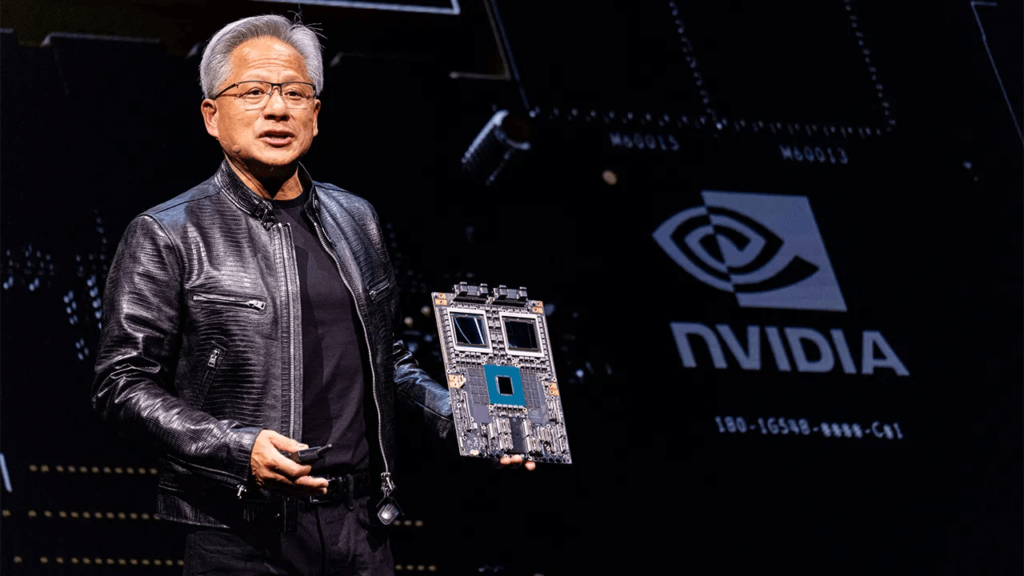
Nvidia’s Jensen Huang, founder and CEO of the American chip designer whose graphics processing units now power the global AI boom, has become one of the most watched business figures on earth. As of May 2026, Nvidia had a market cap of approximately $5.2 trillion, making it the world’s most valuable company. In that position, Huang does an enormous number of high-stakes interviews. He is consistently excellent. Not because he’s effortlessly charismatic, but because he is obsessively prepared.
Watch him field a tough question about US chip export restrictions to China, or about competition from rivals AMD and Qualcomm, or about whether Nvidia’s dominance can last. Every time, the answer is structured, direct, and lands clear key messages without sounding scripted. He can explain extraordinarily complex technical and geopolitical subjects in plain language because he has thought about how to explain them before the camera turns on. That preparation shows up as fluency, which is exactly what unprepared executives mistake for talent.
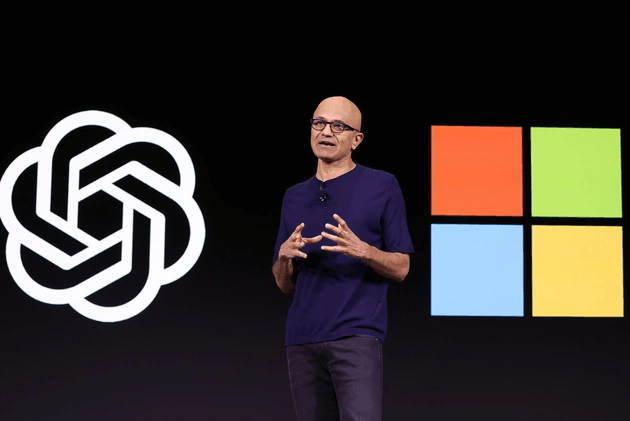
When Elon Musk publicly claimed in 2023 that Microsoft, where Satya Nadella has been CEO since 2014, “very strongly controls” OpenAI, the AI research company Microsoft has heavily invested in, it was an aggressive, newsworthy provocation designed to put Nadella on the back foot. Nadella didn’t get defensive. He delivered his message clearly: “OpenAI is very grounded in their mission of being controlled by a nonprofit board. We have a noncontrolling interest in it, we have a great commercial partnership in it.” Clean. Calm. Factual. Done.
That is what prepared composure looks like under fire. Not stonewalling, not combativeness, not the silence that comes when you haven’t thought about how to answer the aggressive version of the question. A clean, pre-thought response that closes the topic and moves on. Nadella had clearly war-gamed that question. You could hear it in the smoothness of the answer, the absence of any searching, any hedging, any “well, what I’d say is…”
THE ARROGANCE TAX, DEFINED
Let’s be precise about what’s happening when a genuinely capable executive implodes on camera, because it isn’t stupidity.
Ryan Cohen built Chewy from scratch and sold it for $3.35 billion. Brad Banducci ran one of Australia’s largest retailers for eight years. These aren’t fools. They are paying the arrogance tax, the cost levied on leaders who believe their track record makes preparation unnecessary. The implicit reasoning goes: I have done harder things than this interview. I know this business better than anyone in that studio. I’ll be fine. It is precisely this reasoning that produces the eye-rolls, the “I don’t understand your question,” the walkout.
Here is what the research actually shows about what happens in that room. Communication is overwhelmingly nonverbal – body language and tone of voice. Not just the actual words spoken. Body language under pressure doesn’t lie. And you can’t control it without preparation, because pressure is the precise condition that strips away the veneer and leaves you with your instincts. Instincts are only useful if you’ve trained them. An actor doesn’t walk onto a stage having thought about their lines. A surgeon doesn’t open a patient having roughly rehearsed the procedure. And yet executives routinely walk into material, high-stakes media appearances having done neither.
WHAT A PREPARED EXECUTIVE ACTUALLY DOES
This is not mysterious. It is not a personality type. It is a set of disciplines any executive can learn, and that the best ones treat as non-negotiable before any significant public appearance.
- Know your three core messages before you walk in the room. Not ten, not twenty. Three. If you can’t explain your position in plain language to a prepared journalist, you don’t understand it clearly enough to defend it publicly. Cohen apparently had one answer — “half cash, half stock” — with no architecture around it. When Sorkin pushed on the architecture, there was nothing there. Three messages, properly prepared, would have given him somewhere to go.
- Prepare specifically for the hardest question. Whatever the obvious weakness in your story is, the financing gap, the delivery miss, the allegation that’s been in the press for six months, the journalist has already found it. They were briefed on it. It is the first thing they planned to ask. Prepare a specific, direct answer you’ve said aloud at least a dozen times before the camera turns on or prepare to have it become the headline.
- Learn to bridge-over. Bridging — acknowledging a reporter’s question and transitioning to the message you want to deliver — is a trained skill, not an instinct. It’s what allows an executive to maintain control of a conversation without appearing to dodge. The difference between Cohen saying “Yeah, we’ll see what happens” and an answer that acknowledges the financing gap while pivoting to the strategic rationale is entirely a preparation difference. One sounds like a non-answer. The other sounds like a leader.
- Brief your body language. Sit up. Make eye contact. Don’t sigh, don’t roll your eyes, don’t look at your PR team for rescue. A confident CEO interview can stabilize a share price, reassure staff during uncertainty, and build credibility with regulators and policymakers. A poor one can spark reputational crises that last months. The stakes are material. Perform accordingly.
And refresh your training. The media landscape changes. Your messaging changes. Your vulnerabilities change. A session you did three years ago does not prepare you for the questions being asked today. Eighty-eight percent of communication experts say executive communication is a key skill, which is precisely why it requires ongoing investment, not a one-time box-tick. In fact, the most astute top executives sit in media training refreshers before every important interview.
THE MEME STOCK EXCEPTION (NOT!)
In the interests of intellectual honesty, it’s worth noting that some observers — including a communications expert at UVA’s Darden School of Business — have floated the theory that Cohen’s Squawk Box performance wasn’t preparation failure but deliberate chaos: that a man known as the “Meme King” may have been courting retail investor noise rather than institutional confidence, and that his performance was designed for the Reddit thread rather than the analyst note.
It’s a fun theory. The problem with it is that Michael Burry sold his entire position after the interview, stating the debt required was incompatible with his vision for the company. A single-day 10%+ stock drop is difficult to reframe as a strategic communications win by any conventional metric. You can choose your audience. You cannot fully choose your consequences.
A CLOSING THOUGHT
The executives who handle this well don’t look like they’re trying. They look natural, confident, in command. That’s the whole point — preparation is precisely what produces the appearance of effortlessness. The leather jacket stays on; the nerves don’t show; the answer lands.
After completing proper media training, leaders should be confident, effective communicators who can deliver their organization’s messages clearly and concisely while projecting credibility. It happens before the sit down. It happens in the prep room, the mock interview, the uncomfortable session where someone asks you the ugly question and you have to find an answer that doesn’t sound like you’re avoiding it.
Ryan Cohen is not a stupid man. He has done remarkable things. But last Monday on Squawk Box, he didn’t look like the smartest person in the room. He looked like a very smart person who had decided that being smart was enough.
It wasn’t. It never is.
Sources: Yahoo Finance, PC Gamer, Kotaku, Benzinga, Mediaite, UVA Darden School of Business Report — GameStop/Ryan Cohen CNBC interview, May 2026, Pedestrian.TV, 1News NZ, The Star/AAP, Epoch Times — Woolworths/Brad Banducci ABC Four Corners walkout, February 2024, TechCrunch, CNBC — Intel/Pat Gelsinger retirement, December 2024, Stratechery, CTO Magazine, Fortune — Nvidia/Jensen Huang, 2024–2026, PR Daily, C Suite Content — Microsoft/Satya Nadella, Springer Nature, Marketing Letters — “Breaking the news: how does CEO media coverage influence consumer and investor evaluations?”, 2024, FTI Consulting — “Essential Communication Skills”, November 2024, Apollo Technical — “43 Remarkable Workplace Communication Statistics”, 2026, Electroiq — “Communication Statistics”, Leverage with Media — “CEO Media Training: The Ultimate Guide for Leaders”, Comms Manoeuvres — “Media Interview Mastery for CEOs”, Coast Communications — “The Importance of Media Training for Leaders and Executives”