

Chasing social media trends is lame unless it’s on brand.
From viral dances to celebrity condiments, brands are borrowing the internet’s attention; and sometimes forgetting to give it a reason to care. When does joining a cultural moment build a brand, and when does trying to look hip just look desperate?
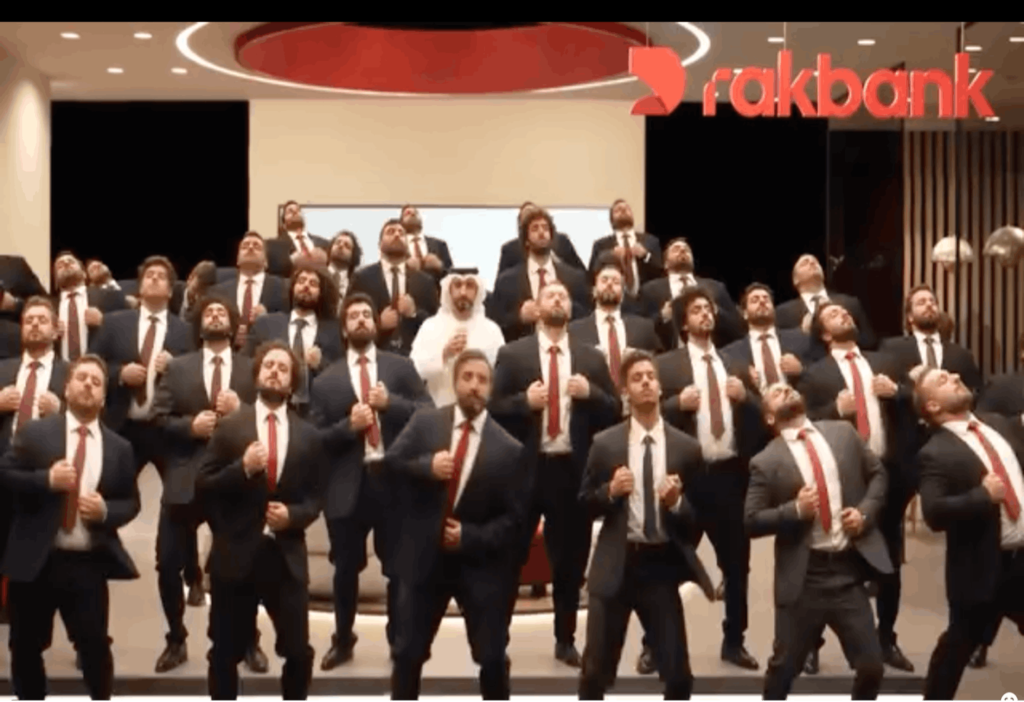
I caught a video from RAKBANK, a UAE bank, featuring one of its executives bringing the “Yung Lean energy” to Ru’ya, the Emirati career fair at Dubai World Trade Centre.
Within days of the rapper’s MTV Video Music Awards performance, the bank had its version on Facebook and Instagram. I don’t know whether RAKBANK’s idea worked for its intended purpose, but it got me thinking about when brands should borrow attention from something people already love. And when they absolutely shouldn’t.
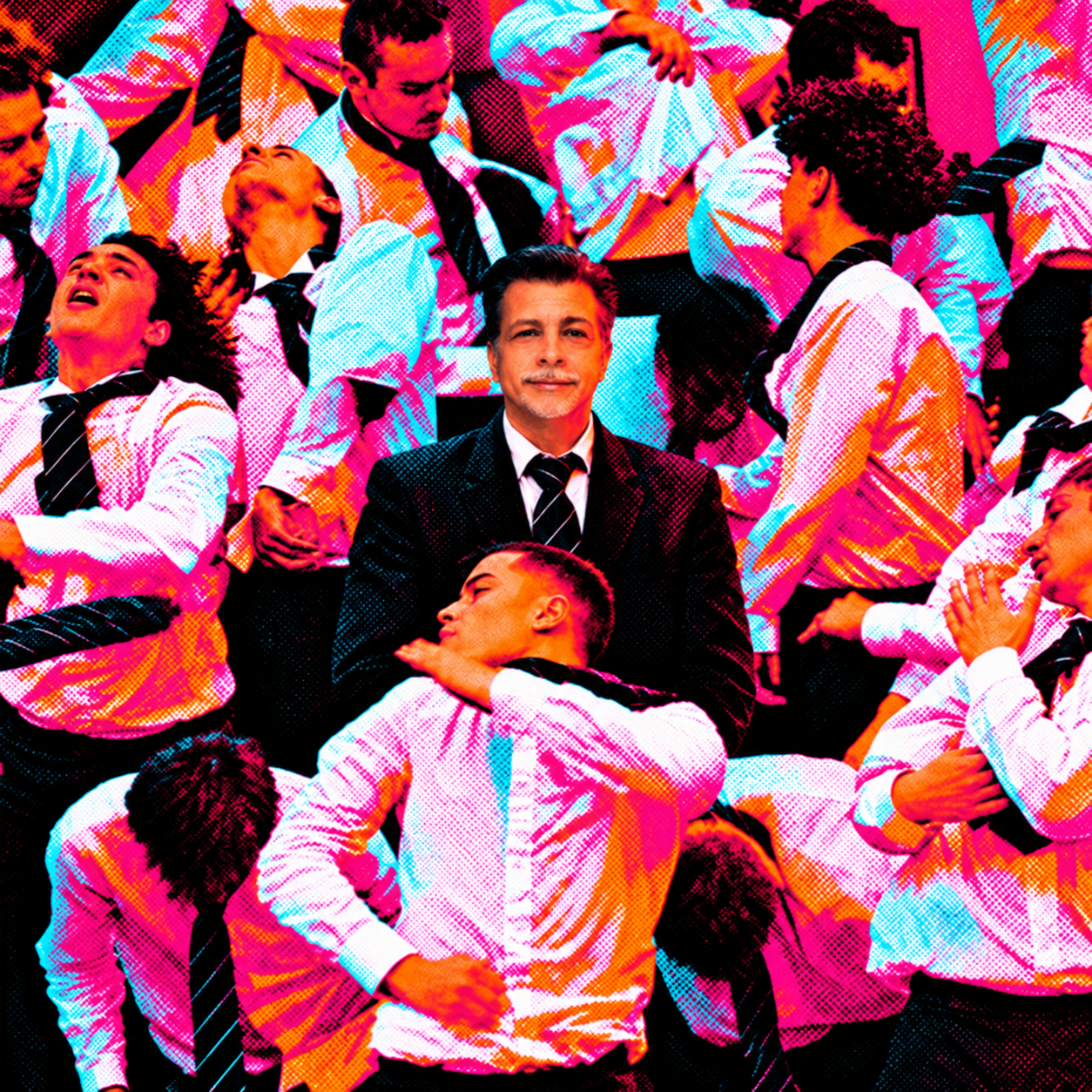
For anyone who missed the reference, Swedish rapper Yung Lean and GENER8ION, the music-and-film project of French producer Surkin and director Romain Gavras, performed the song, STORM II, at this year’s awards. Uniformed dancers fold, rise and surge together while Lean remains almost motionless. In the original film he smokes; at the awards, he eats ice cream. Extraordinary choreography meets a man who looks like he’s just waiting for a bus.
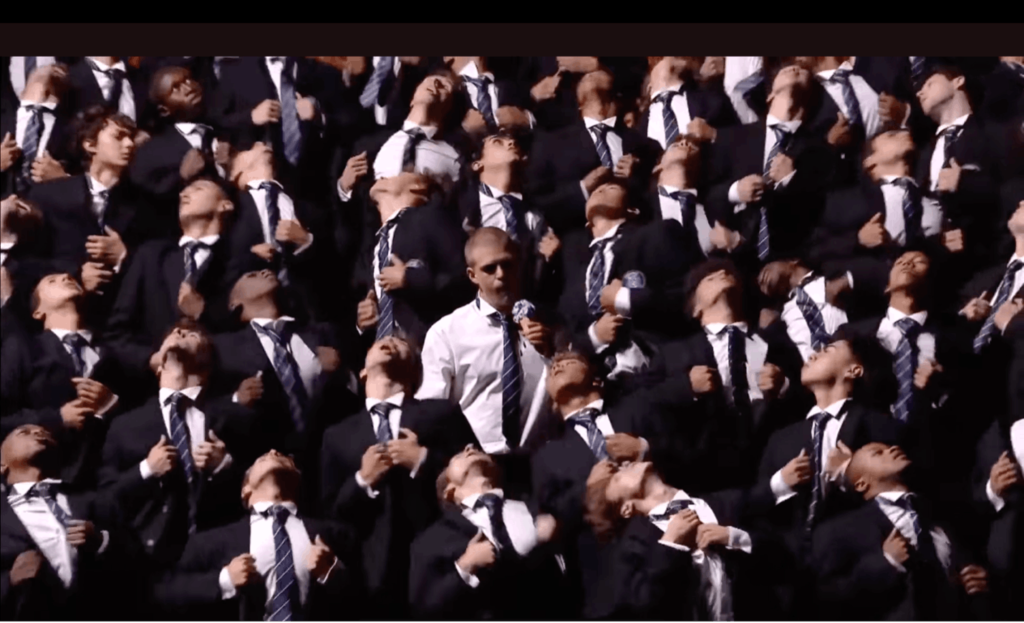
The imitations began before the awards. Pupils at South Africa’s Laerskool Vredekloof Primary School performed their own version of the synchronized group dance. Artificial intelligence copies replace the central figure with new faces and characters, turning a striking film into endlessly renewable clickbait.
And then came the brands.
Zomato, one of India’s largest food-delivery platforms, adapted the STORM formation around its delivery riders. Nigeria’s BUA Cement, one of the country’s largest cement manufacturers, put a factory worker at the center of the formation. A separate AI version featured footballer Pierre-Emerick Aubameyang in a kit associated with Spanish clothing brand Pompeii and Deportivo de La Coruña, the professional football club from Galicia. Its creator, Wekker Studios, explicitly labeled it an unofficial concept advertisement, unaffiliated with either brand.
Marketers call this borrowed interest: using attention already attached to a celebrity, event, joke or trend to attract attention to your brand. The zeitgeist is the prevailing cultural mood. Strategy means deciding whom to reach, what to communicate and what to achieve.
Borrowed interest is perfectly respectable. Borrowed thinking is just plain lazy.
A brand chasing young audiences can resemble a dad squeezing into his son’s clothes or trying to be relatable and funny. There’s nothing wrong with a dad joke when you know you’re telling one. The trouble starts when you think you’re the coolest person in the room. And the room strongly disagrees.
Borrowed interest when badly done reminds me of those old motor-oil ads featuring bikini-clad women: SEX! …Now that I have your attention, let’s discuss lubrication. (Cringe!)
Avoid first-level thinking
At ROSE, we describe creative thinking in three levels.
First level: The obvious. The predictable answer, the familiar joke, the idea practically anyone could have. Sometimes juvenile; rarely surprising. The first exit off the creative highway—and usually the busiest.
Second level: The inventive. Go beyond the obvious to find an unexpected connection or a fresh way to express an idea. This is where most competent marketing ideas live.
Third level: The exceptional. The brilliant leap nobody saw coming. Challenge the premise, change how people see the subject or create the thing everyone else wishes they’d thought of. The sort of thinking that can elevate a brand and collect an award on the way.
So, in this case, copying the format of a trending video is easy first level thinking. Making it mean something, fit the brand and meet a strategy, that’s second level thinking. Third level, in this case, would require an execution that’s so brilliant it might even eclipse the original video. The question is what the trend helps you say about the brand. If the answer is merely “we saw it too,” congratulations on having Wi-Fi.
Sprout Social, a social-media research and software company, found that 93% of surveyed consumers wanted brands to understand online culture, but 33% thought joining trends was embarrassing. Cultural awareness is not a license to impersonate a teenager.
When the trend makes your product less appealing
A trend brings its meaning with it. You cannot borrow the popularity and leave the inconvenient bits at the door.
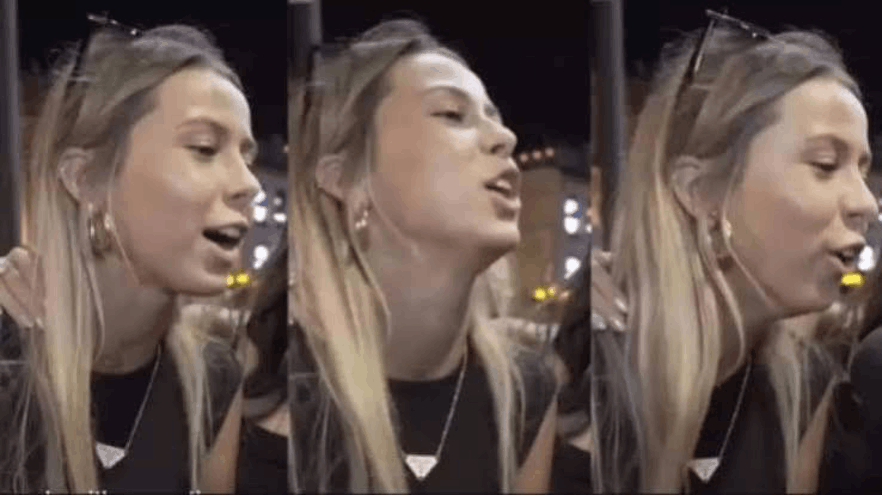
In 2024, Domino’s, the pizza-delivery chain, used the distasteful viral “Hawk Tuah” joke in a UK social post promoting its Tuesday offer: “It’s Two For (Hawk) Tuahsday.” The meme came from a street-interview video in which Haliey Welch made a spitting sound while describing a sexual act. Customers responded with disgust and ridicule, including, I’m sure, requests for pizza without the spit. This backfired in audience response: the borrowed joke made the food less appetizing. There is no published evidence here of a sales decline. There is, however, a fairly compelling case for keeping saliva out of the creative brief.
When the joke makes the brand’s case
The strongest borrowed interest makes a product benefit or buying occasion part of the joke. People should come away with a reason to buy, try or think better of the brand. The trend opens the door. A real, original idea still has to walk through it.
Borrowed interest comes in many forms.
In 2023, HEINZ, the food brand best known for ketchup, spotted a viral photograph of pop singer Taylor Swift eating chicken at an American football game. A fan described her dips as “ketchup and seemingly ranch,” apparently unsure whether the white sauce was ranch dressing. The oddly cautious wording became an internet joke. HEINZ already sold Kranch, a mixture of ketchup and ranch dressing, so it released bottles with a new name and label: Ketchup and Seemingly Ranch. This worked commercially: published campaign cases report sales growth and renewed distribution. The connection worked because the joke named something HEINZ actually sold. Taylor Swift supplied the interest. Heinz remembered to supply the condiment.
That same year, IKEA, the Swedish furniture and homewares retailer known for affordable design, answered luxury fashion house Balenciaga’s £695 skirt that looked like a bath towel wrapped around the waist. IKEA recreated the fashion photograph using one of its actual bath towels, costing £16, and presented it as its own “towel skirt.” The joke was that you could get the expensive designer look with an inexpensive household item. This worked for brand perception: campaign research reported that 87% of its Generation Z audience—young consumers born roughly from the late 1990s to early 2010s—said it improved their impression of IKEA. The joke demonstrated affordable style. It was the brand’s proposition wearing a towel.
The common thread is simple: each trend gave the brand a way to demonstrate something it wanted people to value. The joke carried the message.
Sprout found 40% thought brands joining trends was cool, while 27% said participation worked only within 24–48 hours. Speed helps when there is a connection worth making. A bad idea delivered promptly is still a bad idea. It simply arrives before lunch.
When the trend gives people something to buy
Attention needs an address. If people remember the joke but forget who told it, you have financed entertainment for strangers. Brand assets are recognizable characters, colors, packaging or slogans that tell people whose idea they are enjoying.
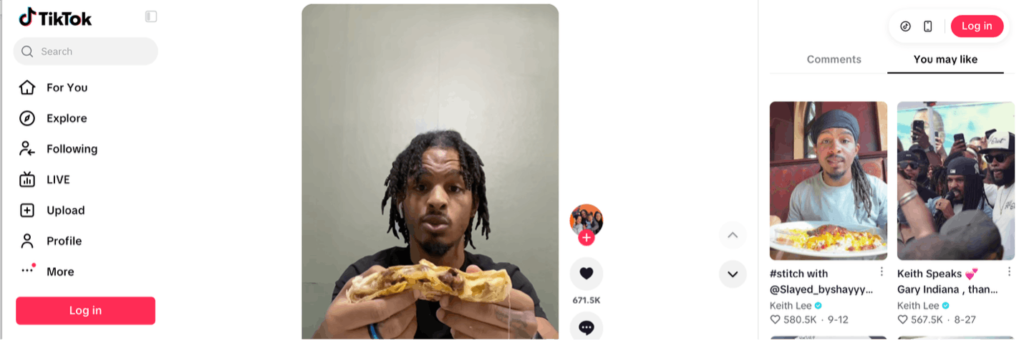
In 2023, Chipotle, the Mexican-style restaurant chain, acted on viral TikTok reviews by food creators Alexis Frost and Keith Lee. They recommended a steak quesadilla—a folded, cheese-filled tortilla—with grilled peppers and onions, dipped in a mixture of sour cream and Chipotle’s honey vinaigrette. Customers wanted to copy the order, but it was not available through the digital menu. Chipotle quickly trained staff, updated ordering and launched the creators’ combinations, including the “Keithadilla.” Its campaign partner reports the company’s best digital-sales weekend at launch. This worked because the brand made the viral recommendation easier to buy. It borrowed the appetite and supplied the checkout.
An older example remains unusually clear. In 2020, Nathan Apodaca filmed himself skateboarding, drinking Ocean Spray cranberry-raspberry juice and singing along to “Dreams” by rock band Fleetwood Mac. People copied the video. Ocean Spray, the American cranberry cooperative, jumped into the conversation with its CEO’s recreation and gave Apodaca a truck after learning his vehicle had broken down. Its digital director reported more than two billion media impressions and increased Cran-Raspberry sales, while acknowledging that strong pandemic sales made the campaign’s separate contribution difficult to measure. This worked at reaching new audiences with the actual product central to the entertainment. The brand supported the person who made the moment. It did not arrive with a logo and demand custody.
The principle is simple: give the audience an action that benefits the business. Sometimes that means changing the menu. Occasionally it means buying a man a truck. Neither requires another committee to approve a dance.
When acting uncool is the point
The dad-in-young-clothes problem has an exception: when everyone knows it is a joke. Self-awareness can make a borrowed format work. An older person pretending to be young is awkward. An older person knowingly performing that awkwardness can be delightful.
In 2024, Northumberland Zoo, a family-run animal attraction in England, copied the TikTok format in which younger employees write a slang-filled script for older bosses. Its directors, a couple in their sixties, delivered a deadpan animal tour: an actual goat became the “GOAT,” meaning greatest of all time. The video passed six million views. It succeeded at attracting attention to the zoo and showing its animals; the zoo also reported visitors arriving for selfies with its directors. The attraction remained the attraction. The slang was the comic device.
Research cited in video platform TikTok’s 2025 report found 45% of social and video-platform users associated relevance with feeling understood. Recognizing the meme is not the same as understanding the people.
When the borrowed format contradicts the brand
A trend should help express the promise, rather than expose a hole in it.
In 2024, SKKN by Kim, reality star Kim Kardashian’s skincare brand, appeared in her version of TikTok’s “I’m X, of course I…” format: people introduce themselves, then exaggerate a characteristic. Her office tour featured a tanning bed. Viewers challenged the contradiction with skincare, and Kardashian publicly defended its use for her skin condition. The post generated backlash rather than reinforcing confidence in the brand’s skincare judgment. Its 16.4 million views did not resolve that problem. “Of course” is a particularly unfortunate opener when the audience’s response is “Why the hell would you?”
McDonald’s Mexico offers a direct example from 2025. When social feeds filled with AI images imitating Studio Ghibli, the Japanese animation studio behind films such as Spirited Away, the fast-food chain posted similar illustrations of people enjoying its food. Hundreds of comments criticized the company for copying artists’ work and using AI instead of paying illustrators. This backfired in audience response: the conversation became about the company’s creative shortcuts rather than its food. Making your customers hungry is useful. Making them ask why you couldn’t hire an artist is less so.

The Real Asset May Be Memory
Borrowing a format also means inheriting its baggage. A popular trend can already be controversial. And a corporation using it commercially may receive a different welcome from someone playing with it at home.
Kantar, a global marketing research company, associated meaningful difference—being relevant and offering something consumers perceive as different—with up to five times market penetration, the proportion of category shoppers buying a brand, and up to twice the average category price. These relationships do not prove that trend campaigns cause growth. They explain why distinctiveness and relevance deserve more attention than impressions, meaning the number of times content is displayed.
Borrowed interest charges interest when you haven’t read the terms.
Before approving the dance
Start with the audience and objective. What should people think, feel or do after seeing this?
Then establish why this belongs to the brand. Add an original twist, useful action or product connection. Apply the logo-swap test: could a competitor credibly publish the same execution? If so, keep thinking.
Understand the context, substantiate claims and obtain necessary permissions. A trend’s availability in your feed does not automatically make its music, imagery or creators available for your campaign.
Finally, measure what people remember and do, not just views and likes. Did they connect the content to the right brand? Did it change their impression, encourage an application, prompt a trial or generate a purchase?
Avoid exhausted jokes, borrowed youth slang, fabricated drama and mistaking a new face in an AI video for a new idea. It’s not enough to say “it’s trending”.
The broader question sparked by RAKBANK remains worth asking. Borrowing can make a brand timely, approachable and entertaining. The strategic opportunity is to turn that attention into something people associate with the brand—and a reason to choose it.
Borrow the interest. But add some intelligence and creativity.
Sources: Hypebeast, InsideHook, BestMediaInfo, Sprout Social, Times of India, The Independent, WARC, The Romans, Ipsos, Chipotle and Pearpop, TikTok, Blooloop, Glamour, Creative Bloq, Digital Shelf Institute, Kantar