

The End of Marketing Poppycock
Every clever claim now has to survive a regulator, a competitor, a journalist and an AI model.
For over forty years I get paid to find the words that make a product sound irresistible. Biggest, smallest, fastest, new & improved. Also: light, diet, low-fat, sugar-free, natural, organic. And now: sustainable, carbon-neutral, and, currently trending, AI-powered. Every generation of marketers invents its own magic words because every generation of customers falls for different bait. There’s nothing sinister in that. It’s just the business.
What’s changed is that nobody’s treating those words as just marketing anymore. They’re treating them as evidence. And evidence, unlike copy, has to hold up in court.
Recycled, Reused, Re-Litigated
In June 2026 the UK’s Advertising Standards Authority banned ads from Adidas, Calvin Klein and Uniqlo for using the word “recycled” in ways they couldn’t back up.
Adidas advertised a “recycled shoe range” it turned out didn’t exist. Uniqlo’s fleece was recycled in the parts you could see and not recycled in the parts you couldn’t. Calvin Klein got dinged for implying an entire collection was made from preferred materials when the real number ranged from 20% to 100%.
Six months earlier the same regulator had done the exact same thing to Nike, Lacoste and Superdry. Six brands. Two rulings. One word. The lesson isn’t about fashion. It’s about the word “recycled” no longer surviving close contact with a lawyer.
The Robot Reads the Fine Print Now
Here’s the part that really changed the game. The ASA didn’t catch any of this from a customer complaint. It caught it with an AI system called Active Ad Monitoring, which scanned nearly 60 million ads in 2025 alone and now accounts for close to half the regulator’s total workload. That intelligence helped resolve more than 40,000 complaints covering over 25,000 ads, resulting in more than 22,000 amendments or withdrawals.
The old model was: someone gets annoyed, someone complains, someone investigates. The new model is: the machine reads every ad on the internet before breakfast and flags the liars. For decades marketers worried about focus groups. Now we should be worrying about a bot with better reading comprehension than all compliance departments put together.
Every Brand Should Take Notice
Lufthansa, Air France-KLM, Etihad and Virgin Atlantic have all had ads banned for implying that flying with them was somehow kinder to the planet than flying with anyone else. None of these airlines were faking their sustainability investments. Sustainable aviation fuel is real, offset programs are real. What wasn’t real was the insinuation that any of it added up to guilt-free air travel. Progress is not the same thing as permission to round up.
Healthcare Suffers the Same Scrutiny, with Sharper Teeth. In early 2026 the FDA sent Novo Nordisk two separate warning letters in the space of a month for misleading ads by Ozempic and Wegovy, their diabetes and chronic weight management drugs. One of them literally implied superiority over other GLP-1 drugs with no data to support it. Weeks later the agency issued warning letters to 30 telehealth companies for misleading marketing of compounded GLP-1 products, part of a six-month enforcement wave that produced more warning letters than the entire previous decade combined. Meanwhile in France, regulators fined Novo Nordisk close to €1.8 million and Eli Lilly over six figures for “disease awareness” campaigns that never named a drug but, according to the regulator, didn’t need to. Everyone in the room already knew which drug they meant.

Even the Category Name Is a Claim Now
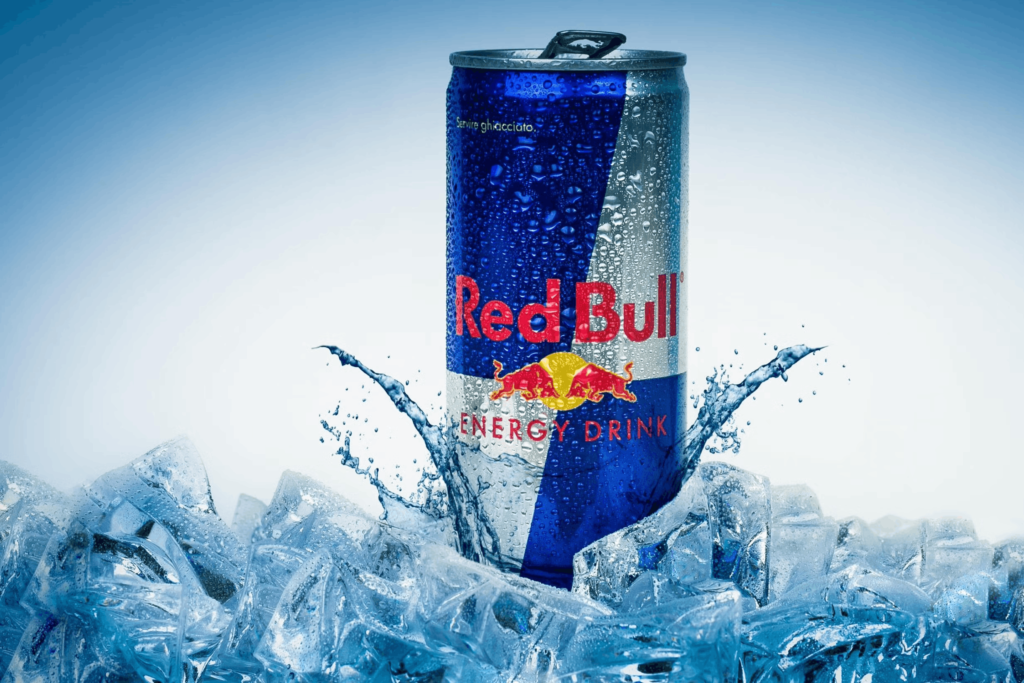
Just to prove the trend has no borders and no mercy, India’s food safety regulator recently issued notices to Red Bull, Sting, Monster and several other brands for calling themselves “energy drinks” (a category that, as it turns out, doesn’t officially exist under Indian food law). Marketers get so comfortable with category language that we stop noticing it’s actually a claim. Apparently regulators noticed for us.
Patriotism, Audited
The FTC launched a “Made in the USA” enforcement sweep in April 2026, settling with sellers of flags, entertainment systems, and footwear for claiming products were American-made when they were partly stitched together in the Dominican Republic and Brazil. One company advertised boots as “handcrafted 100%” domestically while sourcing components from two other countries. “Made in,” “Built in,” and “Designed in” sound interchangeable in a brainstorm. They are not interchangeable to a federal regulator with a customs manifest.
The Cancel Button Is Also Copy
And it’s not just the ad anymore. The FTC’s $2.5 billion settlement with Amazon ($1 billion in penalties, $1.5 billion back to roughly 35 million affected customers) was about Prime enrollment and cancellation flows, not a single banner ad. The checkout screen, the “are you sure?” pop-up, the maze between “cancel” and “confirm cancel,” all of it is now marketing communication, and all of it is now litigable.
The AI Doesn’t Forget What You Deleted
Then there’s the part that actually raises the stakes. BCG found that shopping-related generative AI use grew 35% between February and November 2025. Capgemini found that a quarter of consumers already used generative AI shopping tools in 2025, with another 31% planning to. That matters because an AI assistant doesn’t just repeat your tagline back to you: it cross-references it. It notices when your sustainability page says one thing and your annual report says another. It remembers the claim you quietly walked back last year. Marketing used to compete for attention. It’s now competing for something much harder to fake: consistency across every document you’ve ever published.
Trust Is the New Adjective
Edelman’s latest Trust Barometer puts it plainly: 88% of consumers say trust is an important factor in deciding whether to buy from a brand. That’s not new information: trust has mattered since the first merchant sold the first not so fresh fish. What’s new is how fast it can now be tested, by a regulator, a journalist, a competitor or a chatbot, often within the same week the campaign launches.
What This Actually Means for the Work
The job hasn’t gotten smaller. It’s gotten more interesting. The old question was “how can we make this sound better?” The new question is “how can we make this true enough that nobody, not a regulator, not a rival, not an algorithm, can take it apart?” That’s a harder brief. It’s also, frankly, the brief we should have been writing to all along.
What Marketers Should Actually Do About It
- Treat every claim as something that will eventually be read by a regulator, a competitor, a journalist, and an AI model, because it will.
- Replace the adjective with the number. “Sustainable” is an opinion. “40% recycled polyester, independently certified” is a fact.
- Assume nothing about a fashionable word’s meaning. “Recycled,” “natural,” and “AI-powered” all mean whatever a regulator decides they mean this year.
- Remember that the checkout page, the cancellation flow, and the subscription terms are marketing copy too, and they get read in court.
- Build the proof before you write the headline, not after someone asks for it.
- Get legal and compliance into the room during the creative process, not after the campaign’s already shot.
- Write claims that will still be true in five years, not just until the next sales meeting.
- Stop asking how good your copy sounds. Start asking how fast someone else could prove it wrong.
Sources: European Commission, Green Claims / greenwashing study; UK Competition & Markets Authority; UK Advertising Standards Authority (ASA/CAP), including the ASA and CAP Annual Report 2025 and Active Ad Monitoring briefing; U.S. Federal Trade Commission; U.S. Food & Drug Administration; France ANSM (Agence Nationale de Sécurité du Médicament et des Produits de Santé); India FSSAI (Food Safety and Standards Authority of India); Boston Consulting Group (BCG); Capgemini Research Institute; Edelman Trust Barometer