

Spotify Just Put AI Influencers in Timeout
Every fake artist on the platform now gets ignored by the algorithm that made them famous. Marketing directors, take note: the bill for pretending is coming due.
The pushback against AI influencers is getting fierce.
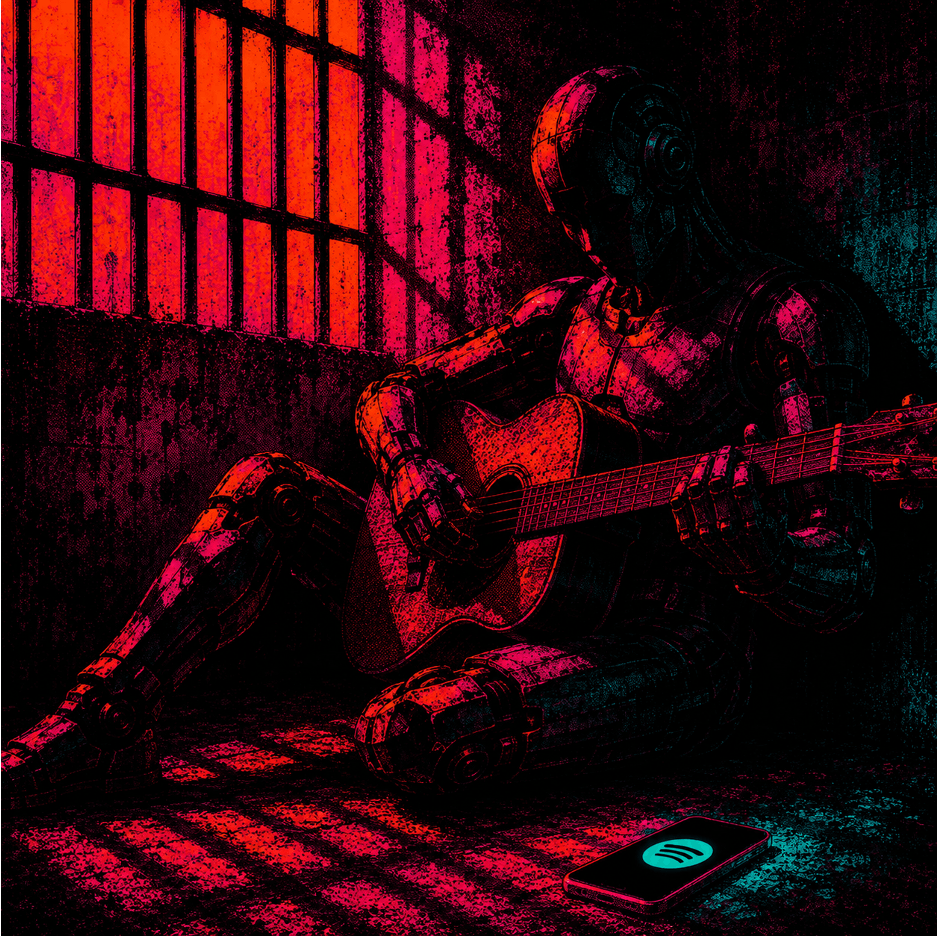
Starting mid-September, Spotify will slap an “AI Persona” badge on any artist profile that represents an AI-generated identity — whether the artist confesses (self-disclosure opened August 11) or Spotify’s own reviewers and detection tools quietly rat them out.
The badge itself is almost polite. What follows it is not. By default, AI Persona profiles vanish from every recommendation engine on the platform. No Discover Weekly. No algorithmic playlist adds. No radio. The music stays up. It just stops existing to anyone who wasn’t already looking for it. Which, on a platform built entirely on the premise that the algorithm finds you, is roughly equivalent to being told you’re welcome at the party as long as you stand very still in the corner.
It’s not a ban. Spotify just invented the algorithmic equivalent of a timeout.
Who’s Likely Next
Nobody should mistake this for a music-industry curiosity. It’s the opening move in a pattern. And the rest of the board is already in motion.
TikTok runs the most aggressive detection stack of any platform on earth — C2PA Content Credentials layered with AI classifiers, 1.3 billion videos labeled, synthetic-media removals up 340% year over year. It has both the tooling and, one suspects, the appetite to go from “label it” to “bury it.”
YouTube already suspends monetization on undisclosed synthetic content through a three-strike system. Meta runs the broadest labeling framework of anyone — Facebook, Instagram, Threads, WhatsApp — but currently saves its sharpest teeth for political content. Identity-based personas are the obvious next course.
LinkedIn, bless it, is still catching up. Its own help pages admit it can’t reliably detect AI content platform-wide, which either means it’s cautious or means it simply hasn’t been embarrassed yet.
Spotify didn’t invent caution about fake people. It just industrialized the punishment for it.
The Scale Nobody’s Pricing In
The global virtual influencer market hit $11.74 billion in 2026, on pace for $154.6 billion by 2032. There’s now more money in people who don’t exist than in most countries’ entire tourism industries.
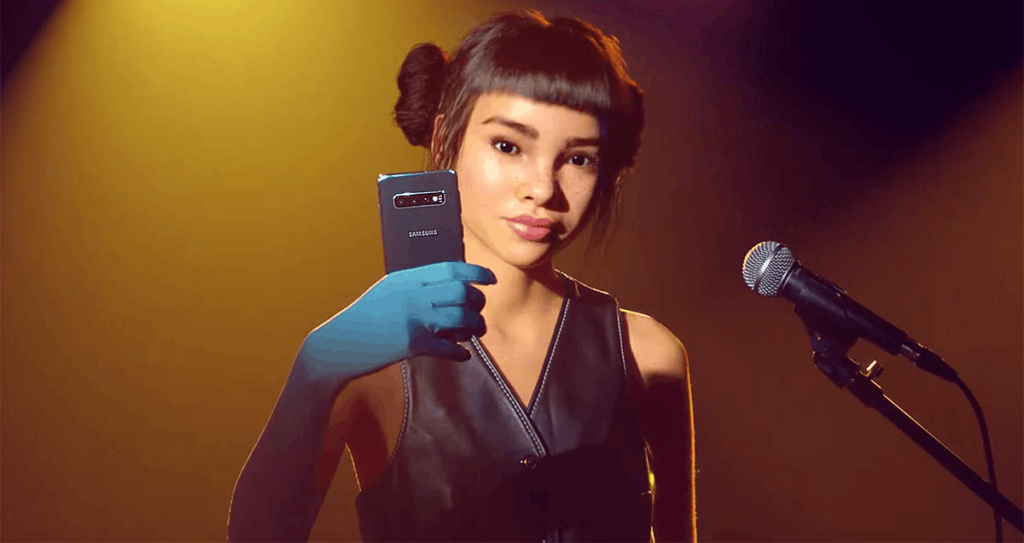
Lil Miquela set the template back in 2016 — Prada, Calvin Klein, BMW, Samsung, all signed before most brand teams had worked out what a virtual influencer even was. And the numbers explain why nobody blinked: virtual influencer campaigns average 5.67% engagement versus 1.89% for human creators, roughly three times the return. A brand’s most reliable spokesperson has never once had a bad hair day, a hangover or an opinion about geopolitics that lands wrong at a board dinner.
Brazil worked this out earlier than most. Lu do Magalu, the virtual mascot for retail giant Magazine Luiza, has 8.4 million followers and earned an estimated $2.5 million in 2024 across 74 sponsored posts — roughly forty times what the average human creator makes annually from sponsored content.
The Honesty That Pays Off
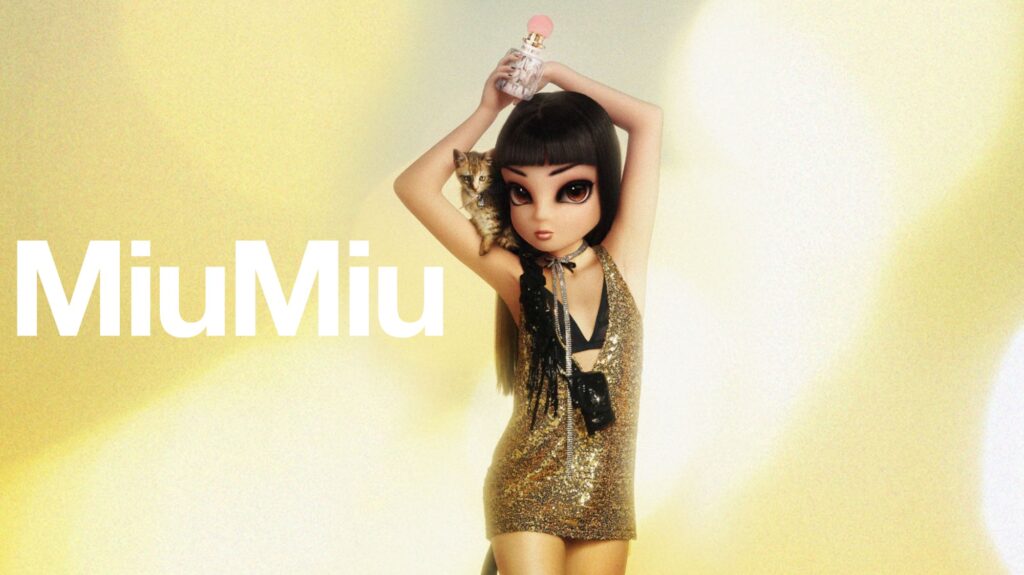
Not every synthetic persona is playing the same game, though, and this is where it gets genuinely interesting for anyone building a brand character rather than just renting one. Noonoouri, the doll-eyed, deliberately cartoonish German creation who’s landed Dior, Versace, Marc Jacobs, and a Warner Music record deal, never once tried to pass as human. She never had to. 58% of US consumers already follow at least one virtual influencer, and 35% of Gen Z have bought something a virtual persona promoted. The lesson sitting right there in the data: fake that looks fake earns more trust than fake that tries to fool you.
CMOs have already priced this in. Projections put virtual persona allocation at up to 30% of influencer budgets by 2026, with brands above the 25% threshold reporting 41% higher ROI. South Korea’s Rozy, built by Sidus Studio X, pulled over $1 million in brand deals within eighteen months, working Chevrolet Korea and Shinhan Life along the way.
The Trick Nobody Agreed to Watch
Here’s where the champagne goes flat. A Stanford Media Futures Lab study found that 68% of teenagers couldn’t tell AI-generated influencers from real humans. Spain’s Aitana López, built by agency The Clueless explicitly to eliminate the “unpredictability and cost” of human talent, is a case study in exactly why that matters. Her own creator admitted, on the record, that her sexualised aesthetic was demanded by the brands buying her, not chosen by her, because she doesn’t choose anything.
Then there’s the question of whose face is doing the work and whose paycheck is cashing it. Shudu Gram, billed as “the world’s first digital supermodel,” was created by a white British photographer and styled as a Black woman. Fenty Beauty, BMW, and Louis Vuitton have all worked with her, alongside a debate about authorship and profit that has never quite resolved and probably never will. A model with no lived experience, still getting asked to represent one. Worth remembering that Asia-Pacific, not Los Angeles, holds roughly 41–53% of the global virtual influencer market — the center of gravity on this entire category has already shifted east, whether Western agencies have noticed or not.
And when it goes wrong, it goes wrong fast. FN Meka, an AI virtual rapper, got signed to Capitol Records and dropped within days after backlash over racial stereotyping and uncredited Black creative labor behind the character. Capitol signed him faster than they dropped him — that’s the whole case study, right there, in one sentence. The stakes are real money too: deepfake-enabled fraud cost the global economy an estimated $23.7 billion in 2026, with 74% of the scam content behind it built on AI tools costing less than fifty dollars.
The Regulators Were Already Circling
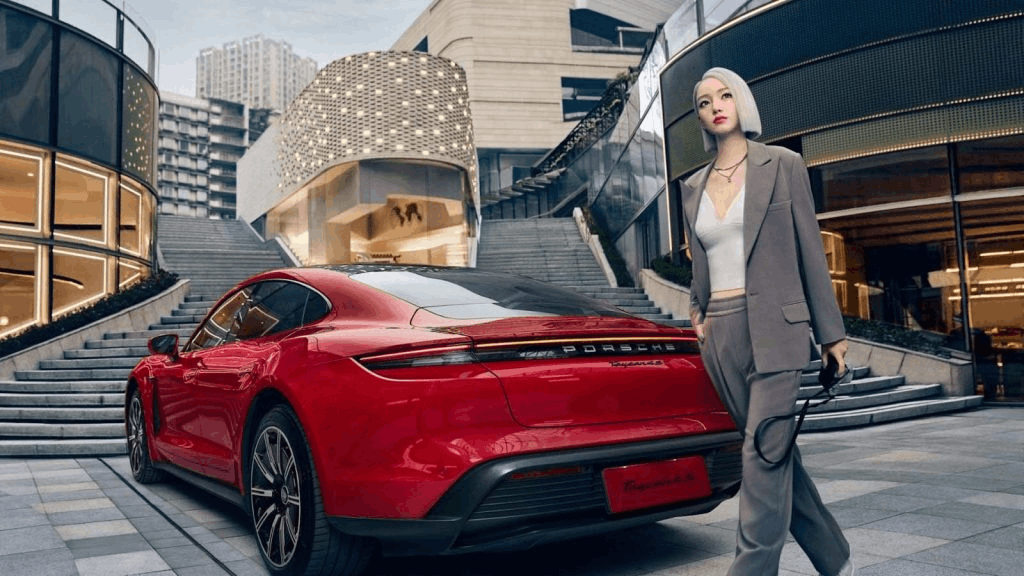
None of this is arriving without warning. China’s Ayayi, a photorealistic “luxury muse” from Ranmai Technology, works with Louis Vuitton China, Guerlain, and Bose — proof this is a fully global industry, not a Western export. Meanwhile India’s advertising regulator, ASCI, found that only 57% of sampled influencer ads met disclosure requirements, with 34% carrying none at all. Regulators have been asking politely for years. Spotify just showed the rest of the industry what happens when a platform stops asking.
What to Actually Do About This
- Disclose before you’re discovered. Own the label before an algorithm assigns it to you.
- Stylize, don’t simulate. Noonoouri beat the uncanny valley by never pretending to be real. Make the artificiality part of the design, not a liability to hide.
- Follow the money to the credit line. Know exactly whose likeness, culture, or uncredited labor built your persona before you greenlight it. FN Meka and Shudu are the same lesson from two different angles.
- Budget for the badge, not just the buzz. The threefold engagement lift and the ROI premium are real, and so is the coming wave of disclosure rules. Plan for both in the same line item.
- Watch TikTok and YouTube, not just Spotify. They already have the detection infrastructure Spotify just weaponized. Build your compliance posture assuming they follow, not if.
The Machines Were Never the Problem.
Lying about them is. Spotify just proved that the most expensive mistake in modern marketing isn’t a bad campaign, it’s an undisclosed one. As detection infrastructure spreads from Spotify to TikTok, YouTube, and eventually every platform your brand touches, “authentic enough that no one asks” stops being a strategy and starts being a liability. The brands that win this decade won’t have the most convincing fakes. They’ll be the ones who never made anyone wonder.
Sources: Spotify Newsroom, August 2026, TechCrunch, NPR, Rolling Stone, SQ Magazine, The Business Research Company, AutoFaceless, Everything-PR, Future Market Insights, AuditSocials, Storrito.