

You Can Now Advertise on ChatGPT. But You Can’t Make It Recommend You.
OpenAI’s ad business reached $1 billion in 200 days. The brands ChatGPT actually recommends mostly aren’t paying. Here’s what the ads do, what they don’t, and how to think about both.
In June, a small American ad agency called Floodlight ran an experiment that every marketing director should have run themselves. It opened a free ChatGPT account and asked it 50 questions the way a real new parent would — not “baby carrier” but “I’m five foot two with a bad back and a nine-pound baby, what carrier won’t cripple me?” Then it screenshotted what came back.
In 26 of the 50 answers, ChatGPT recommended the same company: Ergobaby, a Los Angeles baby-carrier maker. Fine. Sensible. Ergobaby makes good carriers.
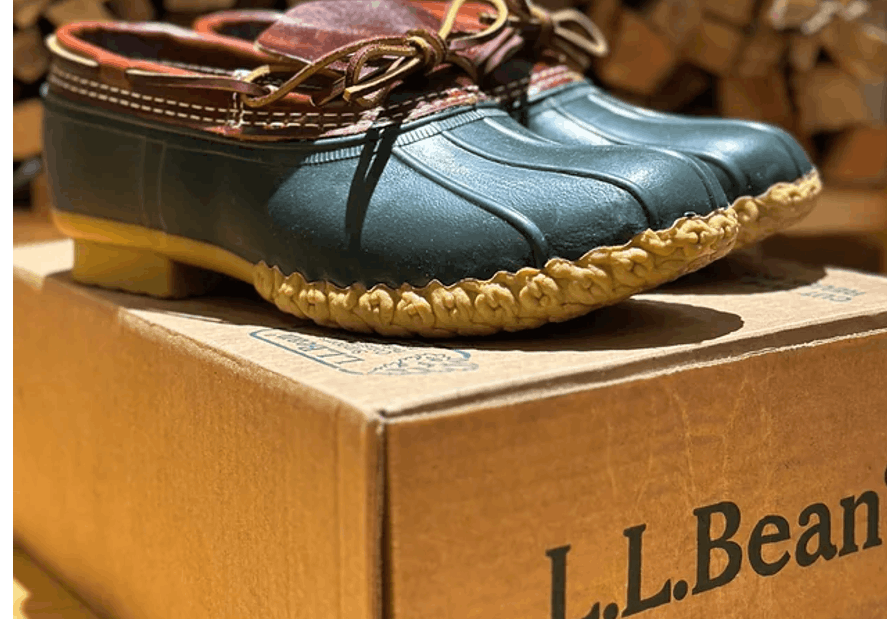
Directly beneath those answers, ChatGPT ran an advertisement. Not for Ergobaby. For L.L. Bean — the Maine outdoor-clothing chain that sells flannel shirts and duck boots and does not, to my knowledge, sell anything you’d strap a baby into. L.L. Bean had simply bought the space, and nobody else had turned up.
So the parent reads “buy Ergobaby,” then sees an ad for a fleece. Ergobaby paid nothing and got the recommendation. L.L. Bean paid and got a shirt ad next to somebody else’s endorsement.
If you were buying media in 2003, this will feel familiar. Google AdWords in its early years surfaced exactly the same disjointed ads — a mortgage broker beside a recipe, a divorce lawyer beside a hotel — because the inventory was empty and whoever showed up got the slot. In the immortal words of Baseball legend and habitual language mangler, Yogi Berra, “it’s déjà vu all over again.”
The gold rush, as reported
On 31 August, OpenAI — the San Francisco company behind ChatGPT — announced that its advertising business had reached a $1 billion annualised run rate roughly 200 days after launching. In March it had claimed $100 million. Tens of thousands of advertisers, it said, in more than 40 countries. The same day it opened self-service ad buying to the Middle East, Europe and India, which means that as of a fortnight ago, anyone in Dubai with a credit card can buy a slot inside the most-used piece of software on earth.
The entry price has collapsed with a speed that should tell you something. When the pilot launched in February, OpenAI wanted a $200,000 minimum commitment and a relationship with one of the big agency holding companies. By May, the minimum was zero.
India, which received self-service on the same day we did, responded exactly as you’d expect. Mamaearth, a Mumbai skincare and baby-products brand, issued a press release announcing it was the “1st Indian company to advertise on ChatGPT.” UNIVO Education followed as the “First Major Indian edtech brand.” Last Wednesday Sebamed, the German dermatology-skincare brand, arrived with the more carefully lawyered claim of being “among the early brands.” None of the three releases contained a single number about what the ads had done. We have seen this film before. It was set in the metaverse, and every brand in it had a virtual store.
The serious money is in too, and it is not stupid money. WPP Media, the media-buying arm of the London advertising group WPP, put Adobe, the American software company, into the pilot to promote its Acrobat and Firefly products. Alongside it came Audemars Piguet, the Swiss watchmaker whose entry-level piece costs more than a car; Mazda and Ford, the Japanese and American carmakers; Audible, Amazon’s audiobook service; and Mrs. Meyer’s, an American cleaning-products brand. Target, the American discount retailer, is reselling ad space inside ChatGPT through Roundel, its in-house retail-media network. Williams-Sonoma, the American kitchenware and furniture group that owns Pottery Barn, announced its participation two days after the pilot opened. Albertsons, the American grocery chain, followed. The Knot, the wedding-planning marketplace, joined after discovering that roughly a third of engaged couples now use AI to plan the wedding — nearly double the year before.
What the ads get right
Let’s be fair, because most of the commentary hasn’t been.
This is the most intent-rich advertising inventory anyone has ever sold. Nobody types “I have plantar fasciitis and my podiatrist says I need better arch support, what should I buy?” into a banner ad network. They type it into ChatGPT, and if you sell orthopaedic trainers, you would like to be in the room when they do.
The mechanics are unusually grown-up for a platform that is six months old. You pay per click, not per impression. There is no minimum spend. OpenAI ships a conversion pixel and a conversions API (the plumbing that lets you see whether a click became a sale) which are basics Google took years to bolt on. Ads are labelled, and OpenAI says they are walled off from the answer itself.
The audience is less hostile than the headlines suggest, once it has actually seen the format. In a survey of 2,338 American adults published last week by Semrush, a marketing-software company with an obvious interest in the subject, half the people who had encountered an ad in a chatbot said they’d clicked one. Among that group, more said they’d be likelier to click a ChatGPT ad than a Google one. Of the people who were neutral or positive about the ads, over half said the ad had simply given them an extra piece of information.
And the traffic is real. Target told the trade press that visits to its site from ChatGPT were growing about 40% a month before it had bought a single ad. When people are already walking through your door from a place, paying to put a sign up in that place is not a foolish idea.
And yes, the L.L. Bean problem will no doubt fix itself
Empty inventory is a launch condition, not a design flaw. Floodlight’s test found that 84% of its 550 queries returned no ad at all. Five entire categories — dog food, car seats, beach tents, clean beauty and women’s care — had zero advertisers. Where L.L. Bean appeared under baby carriers, Away, the American luggage brand, appeared under stroller wagons; Instacart, the grocery-delivery app, under women’s care; and Choice Hotels and Nissan under baby gear. They weren’t targeting anyone. They were the only cars in the car park.
That is already changing. In the one category where the right brands had noticed, like cribs and crib mattresses, 80% of queries carried a relevant ad within weeks of self-service opening. OpenAI is testing exclusion targeting so brands can keep their ads away from the wrong conversations. A year from now, the ad under a baby-carrier answer will be for a baby carrier. Google went through exactly this way back when, and nobody remembers it now.
What you still can’t see
Last Tuesday, Adweek, the American advertising trade title, reported that ad buyers already spending on ChatGPT want three things they can’t currently get: which prompts triggered their ads, what surrounded those ads and whether any of it led to a sale.
Similarweb, the Israeli web-analytics company, put a number on it in August. By its estimate, 26% of answers on ChatGPT’s free and cheapest tiers now carry an ad, and about a third of all ad impressions land on the very first message of a conversation — before the user has revealed what they actually want. Similarweb’s other observation is the one that is concerning. Meta has a public Ad Library where anyone can see what a brand is running. Google has an Ads Transparency Center. ChatGPT has neither — not for competitors, and frequently not for the advertiser’s own team. You are buying placements you cannot inspect, in conversations you cannot read, next to an answer you did not write.
Fixable, all of it. But not fixed. And the $1 billion has already been spent.
How the audience actually feels
The same Semrush survey found that four in ten Americans dislike ads in chatbots. That’s a normal number for advertising. The part that isn’t normal is the reason: two-thirds of that group said the ad made them doubt the integrity of the entire answer — including the parts that had nothing to do with the ad. On Google, a bad ad is a bad ad. In ChatGPT, a bad ad is a rumour about the referee.
Seeing a brand’s ad in a chatbot made slightly more people think worse of it (23%) than better (20%). Most were unmoved either way. That’s not a catastrophe. But it is a handicap that Google ads don’t carry.
And there’s the audience you can’t reach at all. OpenAI serves ads only to people on its free plan and its cheapest paid tier. Anyone on Plus, Pro, Business or Enterprise never sees one. If you sell to companies, that is most of your prospect list, sitting in an ad-free room you can’t buy your way into.
The part nobody can buy is the part that works
Here is what the ads sit next to.
Among Americans who use AI at least weekly, three-quarters have bought something because a chatbot recommended it. More than half of all AI users have been talked out of a purchase by one. Two-thirds have replaced at least some of their product-related Google searches with a conversation. Nearly half of all consumers, including those who barely use AI, say they at least occasionally ask a chatbot about a company before buying from it. That is a background check, and it is being run on your company right now.
None of that is the ad. It’s the answer. It’s the model’s own opinion of your brand, assembled from every review, article, forum thread and press release it has ever read. OpenAI insists the ad cannot touch it, and OpenAI is right to insist, because the day an ad can buy the answer, the answer is worth nothing and so is the ad. Google understood this twenty years ago. It sells the slot above the result and the slot beside the result, and it has never sold the result, because the result is the reason anyone comes.
So the ceiling on a ChatGPT ad, however good the targeting becomes, is “relevant runner-up.” The paid slot beneath a genuine recommendation. That is exactly where Google’s search ads live, and Google’s search ads are the most profitable advertising business ever built. Runner-up is a perfectly good place to be. It simply isn’t the recommendation.
Floodlight’s test, incidentally, found the same thing in every category it looked at. Brooks, the American running-shoe company, was recommended 20 times in the arch-support queries and wasn’t advertising. ILIA, the American clean-beauty brand, kept coming up unpaid. In baby monitors, exactly one company — Nanit — had bought ads. The brands the machine trusts were, almost without exception, not the brands paying it.
What to do: both, in the right order
First, ask the machines about yourself. Open ChatGPT, Gemini and Claude and ask them what they’d tell a customer about your brand, your category and your three nearest competitors. Do it before your customers do, because they already are.
Second, fix the sources. The model’s opinion is built from what has been written about you — reviews, trade coverage, your own site, the forums where your customers complain. That is a public-relations job, not a media-buying job, and it compounds: every credible thing published about you this year is in next year’s answer.
Third, then buy the ad. Buy it cheaply, now, while most of the inventory is still empty, and buy the slot beneath your own name before your competitor does. Treat it as insurance, not strategy.
Fourth, measure across all three. Similarweb’s data has Google’s Gemini at roughly a quarter of worldwide AI web traffic and Anthropic’s Claude approaching a tenth. A plan that only watches ChatGPT is a plan that misses the majority.
Meanwhile, here In Dubai…
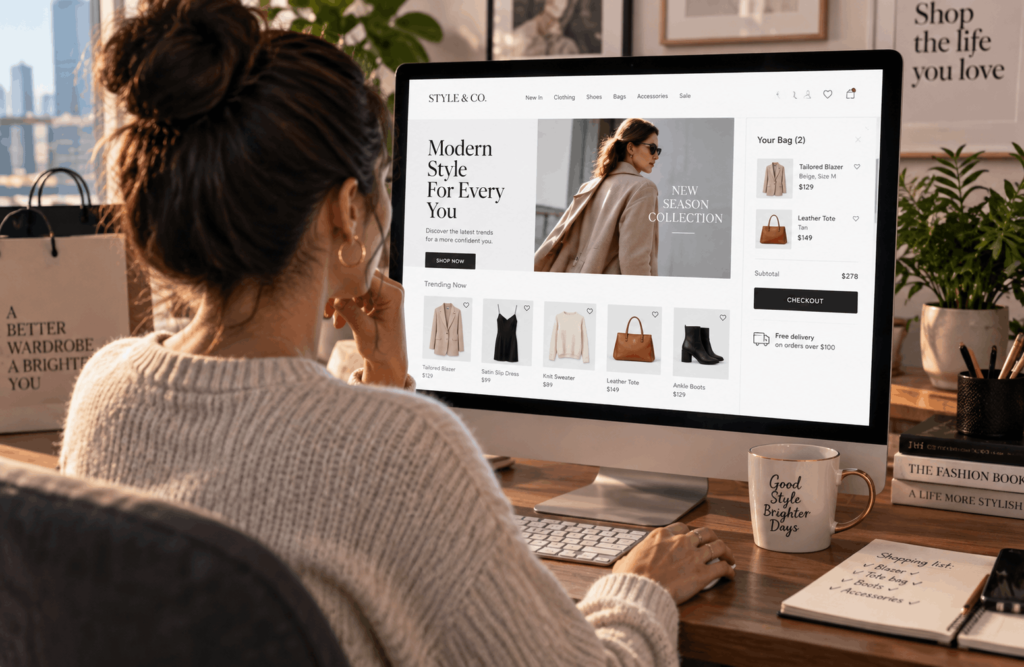
The ChatGPT self-service button lit up here on 31 August. According to Visa’s annual security study, 85% of UAE consumers have already used an AI tool somewhere on the way to a purchase — checking reviews, comparing prices, looking for gift ideas. DHL’s global e-commerce survey puts the UAE among the top markets in the world for AI-assisted shopping, with 51% of shoppers using an AI chat tool to buy.
The region will spend on these ads, and it should. Just know exactly what the money buys: the seat next to the answer. Whether you are the answer is a different job, and it started long before the ads did.
Sources: OpenAI announcement, 31 August 2026; Adweek, 8 September 2026 and 9 February 2026; WPP Media press release, 9 February 2026; Floodlight, ChatGPT ads test, June 2026; Similarweb, AI ad placements report, August 2026; Semrush / Exploding Topics consumer survey, September 2026.