


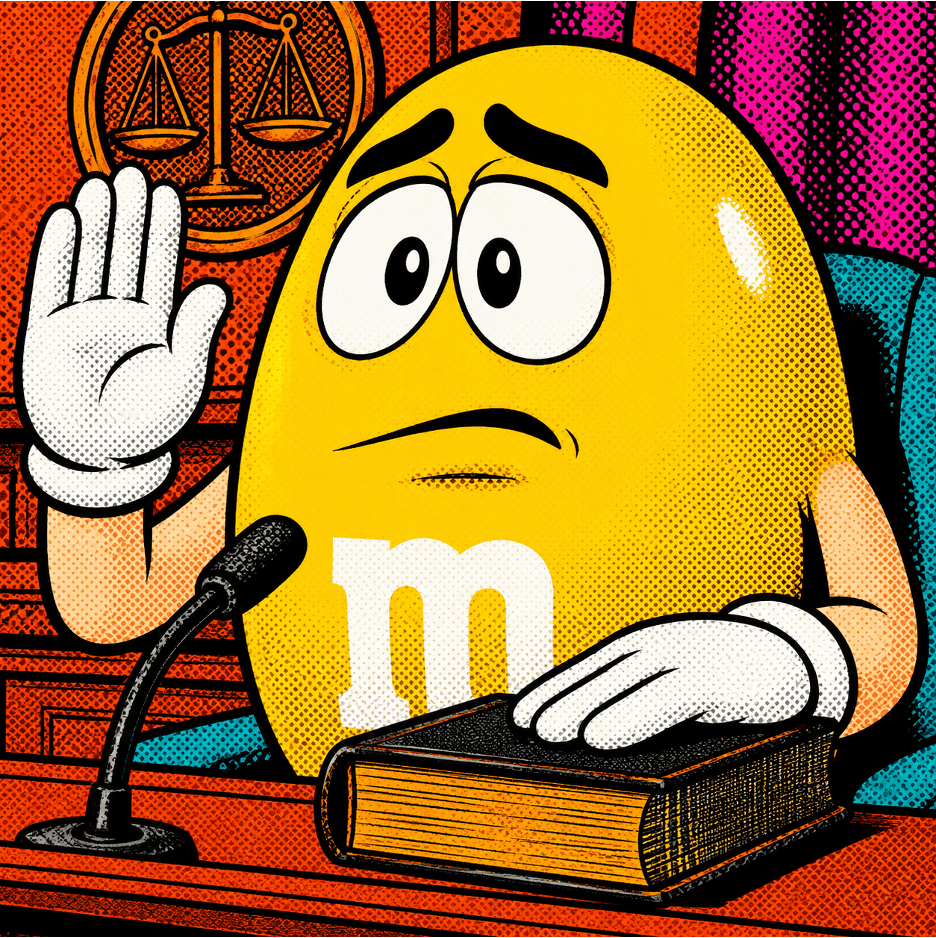
Melts In Your Mouth. Not In Your Brand.
Mars thought it was running a harmless brand ad. Britain’s regulator saw it differently. One of the first major rulings under the country’s new advertising law is part of a much bigger global trend that every marketing leader should understand.
The UK recently put M&M’s on trial. The popular candy-coated chocolate maker just learned that Britain’s new restrictions on advertising foods high in fat, salt and sugar that came into force on 5 January 2026 has teeth. Before that, the rulings under it have been rare enough that marketers were still waiting to see how far the law would reach. Now they know.
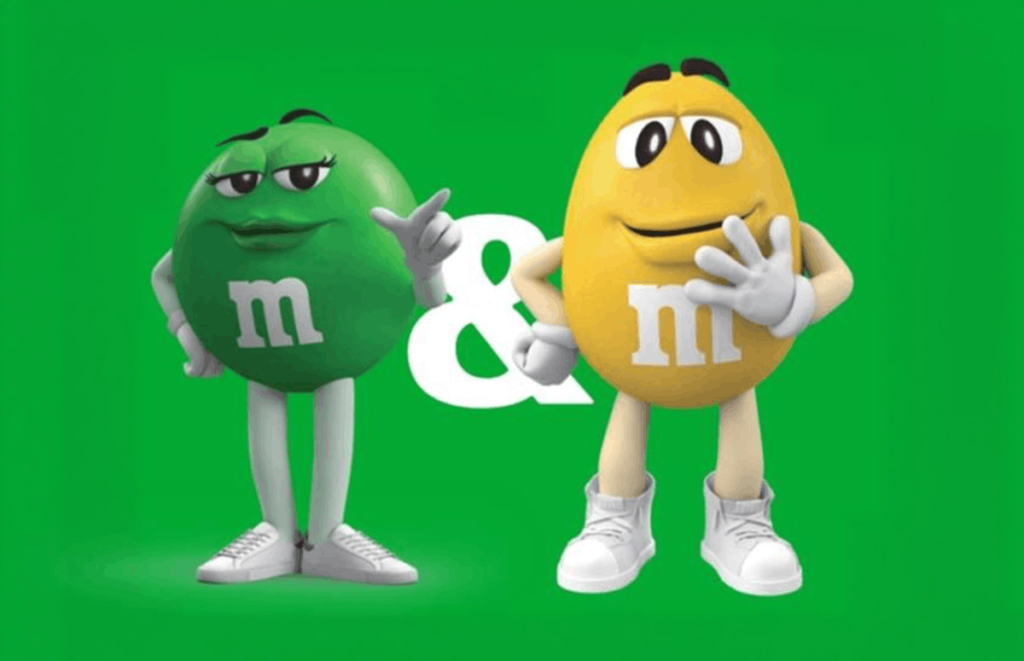
Mars ran a paid Instagram ad for M&M’s. No bag of candy in sight. No bite, no crunch, no product shot. Just two cartoon characters, a round green one and an oval yellow one, standing next to the words “For a truly unique event” and a link to the M&M’s website. Mars called this brand advertising, the kind explicitly exempted from the HFSS rules because it promotes an identity rather than a specific product.
Britain’s Advertising Standards Authority disagreed. Funny enough, the green character survived. The ASA ruled it represents a whole range of M&M’s flavors and colors, not one specific product. The yellow one did not. Its oval shape, the regulator found, identifies Peanut M&M’s specifically, a distinct HFSS product in its own right. Same ad, same campaign, same brand. One mascot cleared, one convicted.
Read that twice. A cartoon character with a face and arms just got treated as a proxy for a product ingredient list. Brand assets are becoming the product in the eyes of regulators, and this is not confined to confectionery. Similar arguments are already surfacing around alcohol, gambling and vaping, categories where the mascot, the color palette or the typeface can carry as much regulatory weight as the thing it is selling.
A Peanut Walks Into A Courtroom.
The complaint came from Bite Back, the food campaign group founded to push for tighter marketing rules on unhealthy products aimed at children. That is the enforcement model now. Advocacy groups file complaints, regulators adjudicate, and the resulting rulings become precedent that reaches well past the original brand. Consumer groups, environmental organizations and health advocates play the same role in Australia, Europe and North America. The complaint is the trigger. The ruling is the weapon.
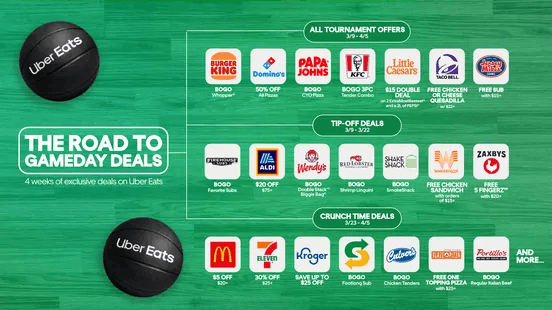
Mars was not the only brand in the crosshairs of this particular round of rulings. Morley’s Woking, a London chicken chain, got the same treatment for an Instagram meal deal ad showing burgers, wings and fries. Uber Eats, by contrast, walked away clean on ads featuring Burger King, KFC, Domino’s and Papa Johns, because the ASA decided the food shown was not visually tied to one specific HFSS product. The line between promoting a brand and promoting a product now runs through individual pixels, and it moves case by case.
There is something almost absurd about a cartoon candy having its shape cross-examined by a regulator. Highly stylized characters with arms, legs and personalities, deployed on merchandise, clothing and partnerships that have nothing to do with food, being read as product depictions anyway. Absurd, and also entirely real. Creative symbolism has become regulatory evidence, and the brands that dismiss this as a quirky one-off are the ones most likely to be next.
The Writing’s On The Wrapper.
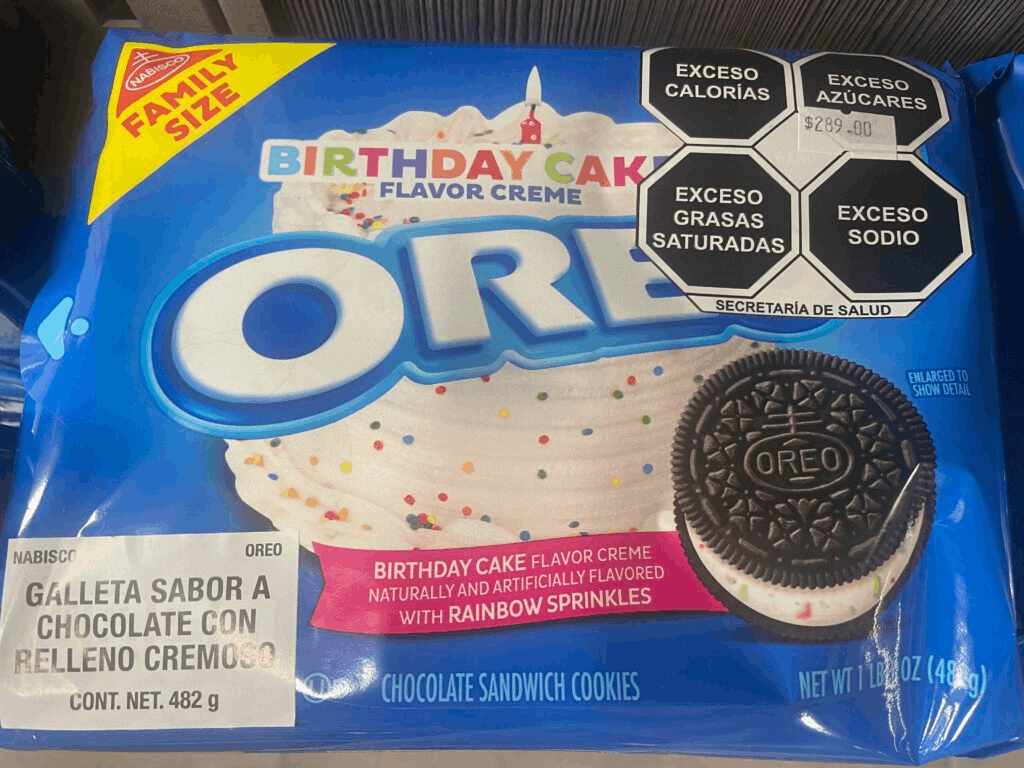
The UK is not moving alone. Chile restricts cartoon characters on unhealthy food packaging and advertising. Mexico has front-of-pack warning labels and advertising reform. Quebec has banned commercial advertising directed at children for decades. Australia is cracking down on greenwashing claims. The US Federal Trade Commission continues to pursue deceptive influencer marketing. The UAE and Saudi Arabia have both tightened rules on influencer disclosure, health claims and misleading advertising. The EU keeps pushing digital advertising transparency and platform accountability further.
Different legal systems, different politics, different starting points, same direction of travel: health claims, environmental claims, influencer marketing, advertising to children, financial promotions, misleading advertising. All converging toward the same demand, that a brand be able to prove what it says and defend what it shows.
The scale of what is driving this is not small. More than one billion people worldwide now live with obesity, according to the WHO and the Lancet’s 2024 global analysis, a milestone reached faster than the World Health Organization’s own projections anticipated. When the underlying public health numbers move like that, advertising law moves with them, and it does not move back.
More Than A Mouthful.
Marketers used to build for three audiences. Consumers, competitors, media. That list now runs longer: regulators, advocacy organizations, politicians, activists, courts, platforms. Every one of them can read a campaign and reach a different verdict than the one your creative team intended.
Reputation and compliance are no longer separate departments. The global influencer marketing industry is now worth more than $32 billion a year, per Influencer Marketing Hub’s 2026 figures, a channel built almost entirely on personal trust and light-touch disclosure. Regulatory scrutiny of environmental claims keeps climbing across Europe, Australia and North America. Enforcement actions involving influencers, greenwashing and undisclosed endorsements keep landing.
AI Has Turned Up the Heat.
The old enforcement model ran on complaints. Someone had to notice, someone had to care, someone had to file. That is changing. AI is increasing the scale and speed of advertising monitoring, which means regulators depend less on the public showing up with pitchforks and more on systems that scan everything, all the time. That does not necessarily mean more regulations. It means more routine investigations under the regulations already on the books, faster identification of misleading claims, undisclosed influencers, inconsistent messaging across markets and cross-border violations that used to slip through because nobody was watching every jurisdiction at once.
Read The Label Before You Print It.
Legal and compliance review needs to happen earlier, not as a final checkpoint before launch but as part of the creative process itself. Brand assets, symbols, implied claims and disclosures all deserve the scrutiny that used to be reserved for the product claims themselves. Before a campaign ships, four questions are worth asking every time.
- Could a regulator interpret this differently than we intend.
- Could another market reach a different conclusion than this one.
- Could a brand asset itself become the product, the way an oval yellow candy just did.
- Could this campaign become tomorrow’s precedent, the case study some other brand’s compliance team cites two years from now.
The M&M’s ruling joins a growing pile of reminders. Greenwashing investigations keep hitting major global brands. Influencer campaigns across the GCC and beyond face rising scrutiny over disclosure. None of these started as headline news. They started as one ad, one complaint, one ruling that nobody outside the legal team read closely enough at the time.
The Sweetest Lesson Of All.
Treat the M&M’s ruling as an early indicator, not an isolated curiosity. The global regulatory environment is tightening steadily, with legal scrutiny of brands rising across industries and jurisdictions, and with different political and legal systems converging, oddly, on the same stricter standards.
The M&M ruling is not really about candy. It is an early warning that marketers everywhere are entering a more heavily regulated era in which distinctive brand assets, once considered marketing strengths, are increasingly becoming legal liabilities.