



You Don’t Need More Content. You Need More Credibility
Everyone is publishing. Almost no one is being referenced. If your brand isn’t showing up where decisions are actually shaped in media, search and AI, you don’t have a content problem. You have a credibility problem. And fixing it requires the kind of integrated PR-led strategy most companies simply don’t have.
For years, the brief was predictable: we need more content. More articles, more posts, more thought leadership, more everything. And for a long time, I agreed. Content was the answer. Then smarter content. Then “always-on content,” which sounds impressive until you realize it mostly means feeding a machine that doesn’t care. What changed wasn’t the volume. It was the outcome.
The brands that are winning aren’t the ones producing the most. They are the ones being talked about in the right places. Mentioned, cited, linked to, included. Not just present, but present in environments that carry weight.
When AI showed up it made the whole situation brutally obvious. Because AI doesn’t read everything. It prioritizes what it trusts. It leans on authoritative sources, credible media, consistent signals. It ignores the vast majority of brand-produced content unless it’s validated elsewhere. Which means PR, real PR that earns coverage, citations and authority, isn’t just relevant again. It’s central.
The problem isn’t content. It’s credibility.
Most Content Doesn’t Fail. It Never Had a Chance.
Here’s the blunt reality: 90.63% of pages get zero organic traffic (Ahrefs). At the same time, 70% of marketers are investing in content marketing (HubSpot).
So, we’ve built a global system where everyone is producing and almost none of it is seen. That’s messed up! Most marketing teams don’t have a content problem. They have a misallocation problem. And credibility doesn’t happen by accident. It’s built, placed and amplified properly.

Search Doesn’t Reward Volume. It Rewards Authority.
Backlinko’s analysis shows the #1 Google result has ~3.8x more backlinks than positions #2–#10—one of the clearest indicators that authority still drives visibility. Google itself has consistently confirmed backlinks remain a top-ranking factor.
You can see this play out in how companies become visible. When Stripe, a global payments platform, publishes its annual “Stripe Sessions” content and economic reports, it’s picked up and cited by major outlets like the Financial Times and Bloomberg—creating authoritative backlinks and reinforcing its dominance in search around payments infrastructure.
Similarly, Property Finder, a UAE-based real estate marketplace and property portal, releases regular market reports that are cited by outlets like The National and Gulf News, generating backlinks and search visibility around real estate trends.
None of this comes from publishing more blog posts. It comes from being cited, covered and linked to by sources that search engines already trust.
Most of what brands create isn’t useless, it’s just undiscovered. The role of PR-led, credibility-driven content is to create the entry point. The signal that gets picked up, cited, linked to and surfaced. Once that happens, everything else benefits. Traffic doesn’t just go to the article that got coverage, it flows across the entire ecosystem. Your site, your deeper content, your product pages.
Think of it like a rock band. A few credible “hits” get the audience in. The coverage, the mentions, the visibility. Then people go deeper. They explore the deeper cuts. The earlier work. The overlooked pieces. Without those hits, the rest of the music just sits there.
This is where many companies fall down. They produce content. They run social. They buy media. But they do it in silos, and none of it compounds because no one is orchestrating credibility across channels. That’s not a content problem. That’s not a social problem. That’s a marketing leadership problem.
Buyers Trust Everyone Except You.
According to Edelman, earned media is trusted more than brand-owned content. And Gartner shows buyers spend just 17% of their time with suppliers. So when Notion, a productivity and collaboration platform, grew globally, it wasn’t by flooding content channels, it was through organic advocacy, media mentions and creator ecosystems that others trusted and referenced. The implication is uncomfortable: you don’t control your reputation. Other people do. And managing that isn’t about publishing more. It’s about aligning content, social, SEO and paid behind a single credibility strategy—led by PR, not separated from it.
Regional Reality: Credibility Travels Faster Than Content.
In the Middle East, Bayut, a UAE property portal and part of Dubizzle Group, has built consistent visibility by publishing quarterly and annual real estate market reports on prices, rents and transaction trends that are regularly picked up by outlets like Gulf News, Khaleej Times and Arabian Business. The content is structured for citation, not just consumption.
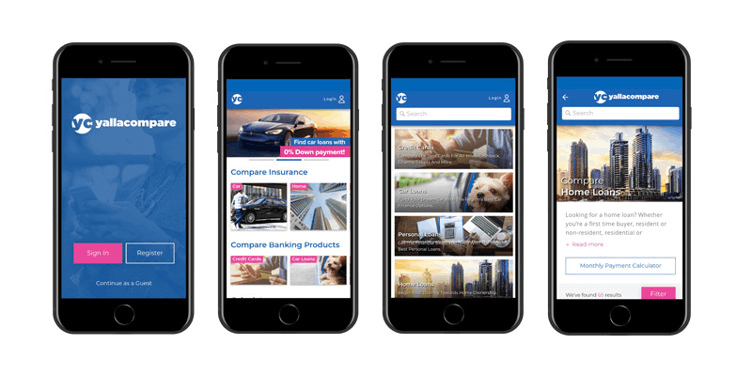
Similarly, YallaCompare, a UAE comparison platform for insurance, banking and personal finance products, publishes consumer finance insights on insurance pricing, credit behavior and cost-of-living that are frequently referenced by regional media, reinforcing its authority in personal finance.
In Europe, Raisin, a Germany-based fintech platform for savings and deposit products, releases data on savings rates and cross-border deposits that is cited by financial media, strengthening its visibility in a crowded category.
And in Asia, iPrice Group, a Southeast Asian ecommerce data and price comparison platform, built recognition through ecommerce trend reports that have been widely covered across regional publications, generating backlinks and sustained search visibility.
You don’t just publish content. You create content that others need so that they reference it, cite it and distribute it for you. And when that happens, the impact doesn’t stop with the article. It flows across your entire ecosystem—your site, your deeper content, your commercial pages—because authority has been established externally. That’s what integrated PR actually looks like in practice.
Reviews Help. But They Don’t Carry You.
Yes, reviews matter. Hugely. But they’re baseline. Tripadvisor has over 1 billion reviews and Booking.com has hundreds of millions. Which means everyone has reviews. What separates brands is where else they show up. For example, Rove Hotels consistently appears in international “best value” lists and travel media, extending its visibility far beyond review platforms. Getting into those lists is not an SEO trick. It’s not a content calendar. It’s PR coordinated with search, social and distribution so it actually drives visibility.

Platforms Are Quietly Killing Your Content Strategy.
Organic reach on Facebook sits around ~5% or less, So even if you produce more content, fewer people see it. Meanwhile, Google emphasizes E-E-A-T (Experience, Expertise, Authoritativeness, Trustworthiness), a framework that prioritizes credibility signals over output. Translation: you don’t need more posts. You need more proof. And proof doesn’t come from one team. It comes from aligned signals across media, search and social—again, coordinated, not fragmented.
AI Has Removed Any Remaining Illusion.
AI systems don’t reward effort. They reward validated presence. If your brand appears across credible sources, you show up. If not, you don’t. This is exactly what we broke down in our PR for Robots session about how PR, SEO, social and paid must work together to influence what machines surface and what people trust. The point was simple: PR leads because AI trusts authority. SEO makes sure it’s found. Social and paid amplify it. Content feeds it. Run them separately and you disappear.
So What Actually Works?
Not more content. Better signals: coverage in authoritative media, backlinks from credible domains, citations in trusted contexts, structured presence across platforms. And, most important, integration led by PR. Because PR is the only discipline designed to shape narrative, secure third-party validation and place stories where authority is built. Everything else should support that instead of operating independently.
Stop asking: “How much content are we producing?” Start asking: “Where are we being referenced and by whom?” Because the system has already decided: content is expected, credibility is scarce, scarcity wins. You don’t need more content. You need content that someone else is willing to reference.
Sources: Ahrefs: “90.63% of content gets no traffic from Google”, Backlinko: Google ranking factors study, Edelman Trust Barometer, Gartner B2B Buying Journey research, HubSpot State of Marketing Report, Hootsuite Social Media Benchmarks, Google Search Central (E-E-A-T guidance), Tripadvisor company reporting, Booking.com company reporting