



How Retail Media Is Reshaping Marketing Budgets
Retail media — advertising sold inside platforms like Amazon and Alibaba — is now the fastest-growing major advertising channel in the world, after cannibalizing billions from TV, social and open web display.
I’ve watched budgets move before. Print to cable. Cable to search. Search to social. Each shift came wrapped in theory — targeting, intent, engagement, community. We built narratives to justify the reallocation because the outcomes were still a bit fuzzy. We were buying influence and hoping for sales.
But Retail Media is all about the math. When a CFO can see the ad, the click and the sale tied together in one dashboard, It’s hard to get them to listen to arguments about brand value. Marketing stops being a debate about storytelling and becomes a discussion about contribution margin. That’s why this shift feels different. Previous migrations were persuasive. This one is provable.
Retail Media Is No Longer a Test Budget
Retail media is defined simply: advertising inside retailer environments powered by first-party shopper data with closed-loop attribution to sales. When a brand buys a sponsored listing on Amazon, that placement can be measured against actual transactions. That’s not just modeled awareness. That’s measurable revenue.
The scale tells the story. Global retail media spend is forecast to reach $174.2 billion in 2025, surpassing global TV advertising for the first time according to WPP Media as reported by the Wall Street Journal. That alone explains why budget conversations have changed tone.
In the United States, retail media is now the third-largest digital advertising channel behind search and social. Amazon Ads generated more than $45 billion in advertising revenue in its most recent annual reporting, growing faster than many legacy media companies. Walmart Connect has reported sustained double-digit growth as brands chase grocery and mass retail purchase data tied to real baskets. The channel has gone from incremental spending to massive budget reallocation in less than a decade.
Why CFOs Are Driving the Shift
Retail media thrives because it collapses the distance between marketing and revenue. McKinsey has estimated that retail media networks can deliver two to three times the return on ad spend compared to traditional digital display. In an era of shrinking cookies and weaker open-web targeting, that clarity is irresistible.
Deloitte’s latest CMO Survey shows performance marketing continuing to claim a growing share of total marketing spend while traditional channels decline. Retail media sits squarely inside that performance allocation, but with a critical twist: it controls placement at the moment of purchase.
When sponsored listings dominate the top of search results on Amazon, the shelf itself becomes paid real estate. Trade spend and media spend merge. That is not a small shift in terminology. It is a structural change in power.
AI Will Push Retail Media Even Closer to the Transaction
AI search and AI shopping agents will intensify this shift, not dilute it. As consumers increasingly rely on AI tools to compare products, summarize reviews and narrow choices, browsing compresses and discovery moves upstream. But the transaction still executes inside a retailer environment. That means sponsored placement, pricing strategy, ratings and product data become even more critical because they feed the algorithm that recommends the final choice. Retail media does not disappear in an AI world. It becomes embedded in the decision logic itself, making control of the digital shelf even more commercially decisive.
This Is a Global Phenomenon
More than 80% of global retail media ad spend is concentrated in the United States and China according to eMarketer’s latest projections, reflecting the dominance of large ecommerce ecosystems.
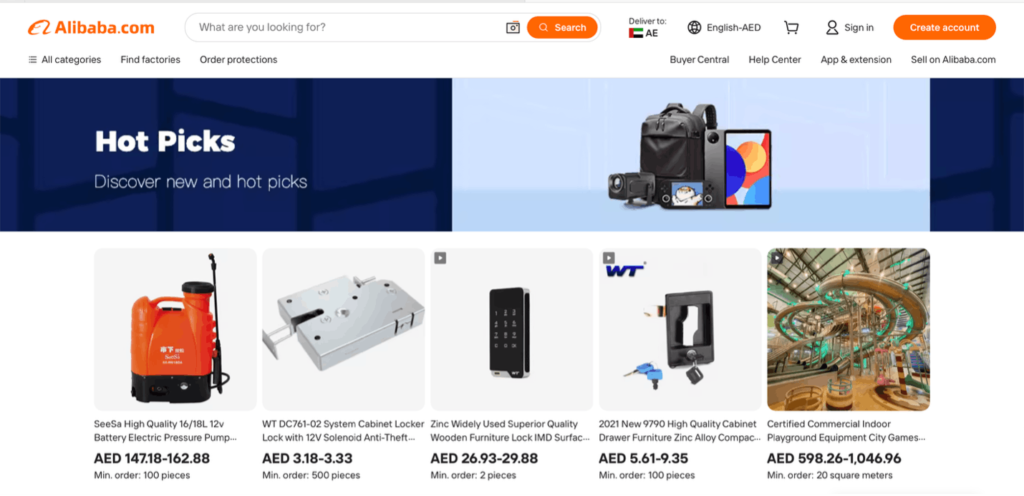
In China, Alibaba and JD.com have long integrated advertising into their marketplaces. Retail media there operates inside fully developed commerce ecosystems where payments, logistics and live commerce converge. Conversion rates for in-platform ads routinely outperform open web benchmarks because the consumer is already in buying mode.
Europe is accelerating. Carrefour and Tesco have both scaled retail media offerings leveraging loyalty card data. IAB Europe reports retail media as one of the fastest-growing digital segments across the region, driven by retailer data monetization and measurable performance.
In Latin America, Mercado Libre has identified advertising as one of its fastest-growing revenue lines in recent investor disclosures. In India, Flipcart continues expanding sponsored listings as ecommerce penetration rises.
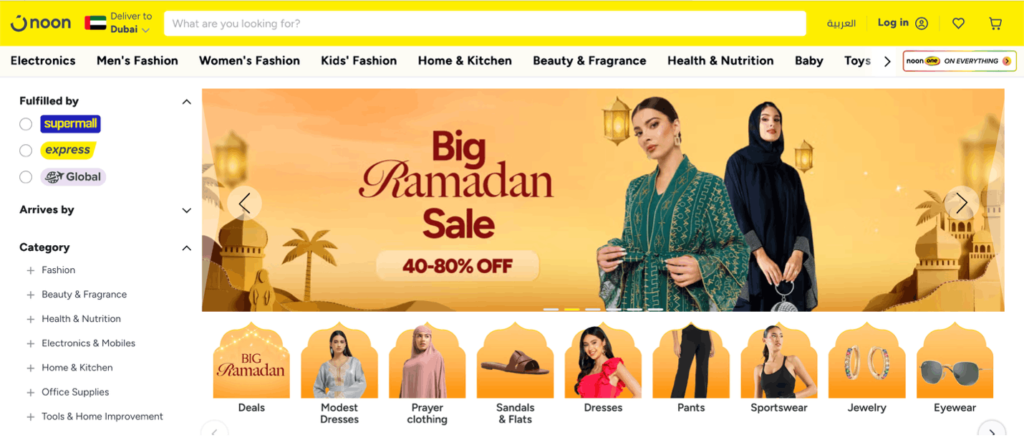
In the Middle East, Noon is building its advertising capabilities alongside rapid ecommerce growth in the Gulf.
The pattern repeats across markets: retailers are becoming media owners because margins on advertising significantly exceed margins on physical goods. Company earnings disclosures consistently show advertising carrying materially higher profitability than retail operations.
The Hidden Cost: Fragmentation and Creative Compression
There are now more than 200 retail media networks globally according to Interactive Advertising Bureau (IAB) estimates. That means global brands must manage dozens of retailer dashboards, attribution models and creative specifications.
Retail media ads are inherently product-centric. They optimize for conversion, not narrative. Product-led ads outperform brand-led ads inside retail environments because the consumer is already shopping. That performance bias subtly shifts creative strategy toward immediacy and price.
The danger is not that retail media is ineffective. It is that it becomes over-weighted. The Institute of Practitioners in Advertising (IPA), the UK-based professional body for advertising agencies has repeatedly shown that sustained brand investment drives long-term profit growth beyond short-term activation. Retail media excels at the bottom of the funnel. It does not replace upper-funnel demand creation.
Budgets are shifting because they work. But balance still matters.

What Smart Marketers Are Doing
This is where it gets interesting.
First, the smartest brands treat retail media as a data engine, not just a sales lever. They mine retailer search term reports to uncover unmet demand signals, then feed those insights into product development and pricing strategy. Retail media becomes market research in real time.
Second, they negotiate data access aggressively. Retailers want ad dollars. Brands should demand granular audience insights in return. Shopper-level behavioral data can inform media outside the retailer environment, even if activation remains privacy-compliant.
Third, they align trade and media teams structurally. Historically, trade marketing negotiated shelf space while media bought impressions. Retail media collapses those silos. The marketing genius move is integrating those teams so budget allocation optimizes total commercial impact, not departmental KPIs.
Fourth, they use retail media to test pricing elasticity. Because campaigns can be tied directly to SKU-level sales, brands can run controlled experiments on pricing tiers, bundle offers and promotional depth with immediate feedback.
Fifth, they protect brand equity. That means ring-fencing brand-building budgets rather than allowing performance success to cannibalize long-term investment. Retail media should capture demand, not become the sole creator of it.
Finally, they diversify intelligently. While Amazon dominates in the US and Alibaba leads in China, regional players like Mercado Libre, Flipkart and Noon offer growth opportunities where competition is less saturated and cost-per-click dynamics can be more favorable.
Retail media is not just a channel. It is a commercial negotiation layer sitting between brand and buyer. The marketers who win will be those who understand both its power and its limits.
Retail media is reshaping marketing budgets because it sits closest to revenue. The question is not whether to participate. The question is whether you control it — or it controls you.
Sources: WPP Media global advertising forecast 2025, Wall Street Journal reporting on retail media surpassing TV, Amazon, Walmart, Alibaba, JD.com, Mercado Libre, Carrefour, Tesco earnings reports 2024–2025, eMarketer global retail media market projections 2024–2025, McKinsey retail media ROAS analysis, Deloitte CMO Survey 2024–2025, IAB and IAB Europe retail media reports, IPA Effectiveness research on brand investment.