

BORROWED BRILLIANCE. The Art of Building on Someone Else’s Equity.
From Shake Shack to Samsung to Zara — some of the most successful brands in the world have one quiet trick in common. They built their products or brands on someone else’s foundation.
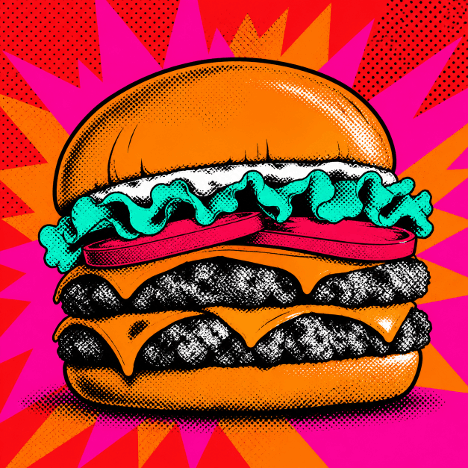
I was cruising down Sheikh Zayed Road in Dubai last week in the back of an Uber when a billboard popped up over the horizon. The billboard was for Shake Shack’s Big Shack burger. Three buns. Two patties. Secret sauce. I stared at it the way you stare at someone wearing your favorite jacket. You know that jacket. You love that jacket. You know where they got that jacket. But, damn, they look great in that jacket.
And then it hit me. “Two all beef patties, special sauce, lettuce, cheese, pickles, onions on a sesame seed bun.” I just recited that from memory without thinking. Maybe you did too. That’s what decades of McDonald’s media spend promoting the world’s most famous burger does to a human brain — it’s not advertising, it’s installation. And Shake Shack just borrowed the whole program for free.
I’m a Shake Shack loyalist from way back. They were a client. I know these people. I respect these people. And as I passed the billboard, I found myself genuinely admiring the move. Someone should check whether the Hamburglar was in the room when Shake Shack’s product development team held that meeting. Because the Big Shack is, brilliantly, a Big Mac that grew up in a better neighborhood.
The Tactic Everyone Uses and Nobody Talks About
What Shake Shack pulled off has a name in marketing circles: borrowed interest. The art of building something new on top of someone else’s cultural foundation — and letting the work speak for itself.
It’s not imitation. It’s not plagiarism. It’s a sophisticated creative and strategic decision that the smartest brands in the world make regularly, deliberately.
Consider the numbers. Approximately 59% of consumers prefer purchasing new products from brands they are already familiar with. The insight buried in that statistic is this: the familiarity doesn’t have to be yours. It just has to exist. Shake Shack didn’t need consumers to learn about one more fancy burger — they needed consumers to know the shape of what they were offering. McDonald’s spent fifty years and billions of dollars creating that shape. Shake Shack showed up and used it. That’s not a knock on Shake Shack. That’s genius.
This is different from Burger King’s gleeful McDonald’s trolling, which is loud, proud, and brilliant in its own right. BK names the enemy. BK geofences McDonald’s locations to steal customers mid-craving. Shake Shack did something more elegant — they borrowed the architecture without ever mentioning the address.
The Six-Week Runway
Zara doesn’t go to fashion week to take notes. They go to take photographs. Within six weeks of a Chanel jacket or a Prada silhouette appearing on a Paris or Milan runway, a version of it is hanging in 2,000 Zara stores across 96 countries. No acknowledgement. No attribution. Just the look, the feel, and a price point that makes it accessible to everyone.
It is the most industrialized, most efficient, and arguably most audacious borrowed interest operation ever built. Inditex, Zara’s parent company, reported revenues of €35.9 billion in 2023. A significant portion of that is built on the cultural authority of designers who never see a cent of it. The consumer picks up the jacket, thinks of the runway, feels the connection, and buys. The designer’s equity does the selling. Zara takes the margin.
The genius — and it is genius — is that nobody is pretending otherwise. The consumer knows. The designer knows. And yet the transaction completes, every single time.
The Phone Everyone Recognized
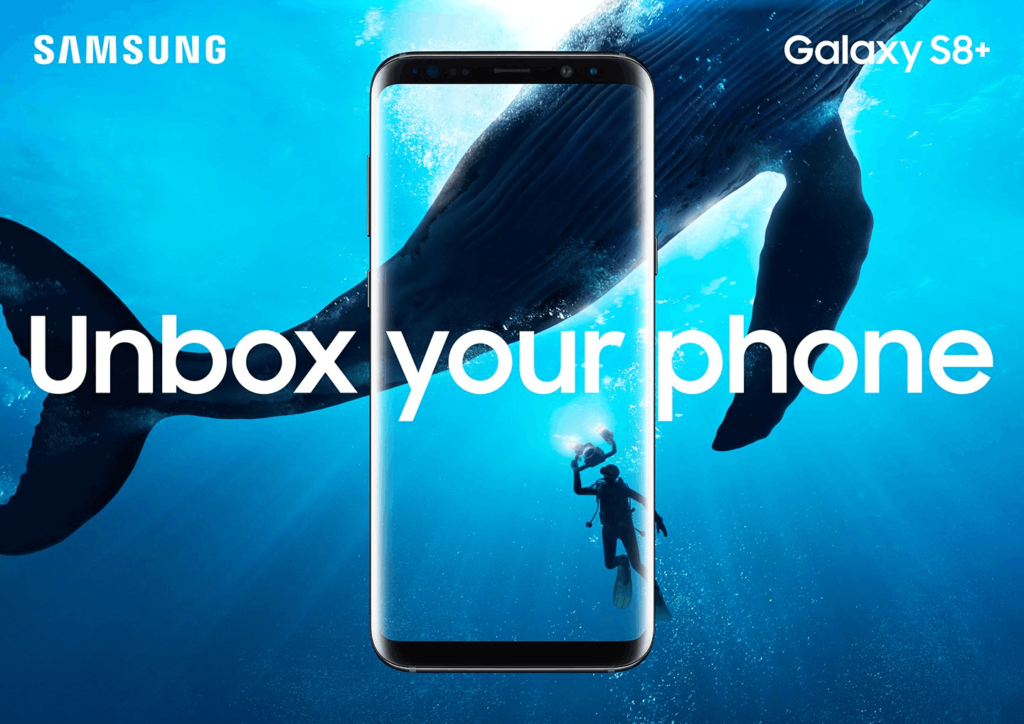
When Samsung launched the Galaxy S in 2010, consumers picked it up and immediately thought of one thing. The grid of icons. The touch gestures. The rounded rectangle. The premium retail experience. The unboxing. All of it borrowed, with extraordinary precision, from a product that had launched three years earlier and rewritten the rules of an entire industry.
Apple sued. The legal battle became one of the most complex intellectual property cases in history, eventually resulting in Samsung paying over $500 million in damages. And yet the Galaxy continued to sell in its hundreds of millions, building Samsung into the world’s largest smartphone manufacturer by volume. Every consumer who’d ever held an iPhone knew exactly what a Galaxy was and how to use it the moment they picked one up.
Our brains are pattern-matching machines. When we encounter a familiar structure in a new context, we experience something between comfort and curiosity — the neurological equivalent of a jazz cover of a song you know. Same chord progression. Better band.
The psychological engine behind all of this is straightforward. 86% of consumers consider authenticity a crucial factor when selecting brands to support. Borrowed interest works precisely because familiar structures feel authentic — they arrive pre-loaded with trust, cultural resonance and emotional memory that would otherwise take decades and extraordinary media budgets to build. Originality can sometimes be overrated.
The Biggest Borrowers in the World
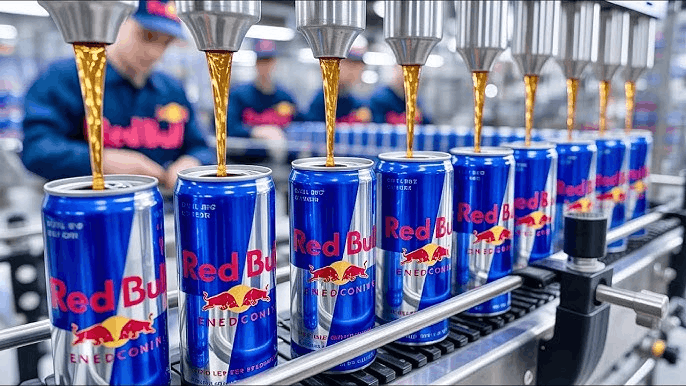
Red Bull is the gold standard of transnational borrowed interest. Austrian entrepreneur Dietrich Mateschitz encountered Krating Daeng, a Thai working-class tonic, adapted it for Western palates, and built a global empire. He didn’t invent the energy drink. He repackaged it, repositioned it, and sold it back to the world at a premium. The category Red Bull created from someone else’s formula is now worth tens of billions. Krating Daeng still exists, costs a fraction of Red Bull, and almost nobody outside Southeast Asia has heard of it.
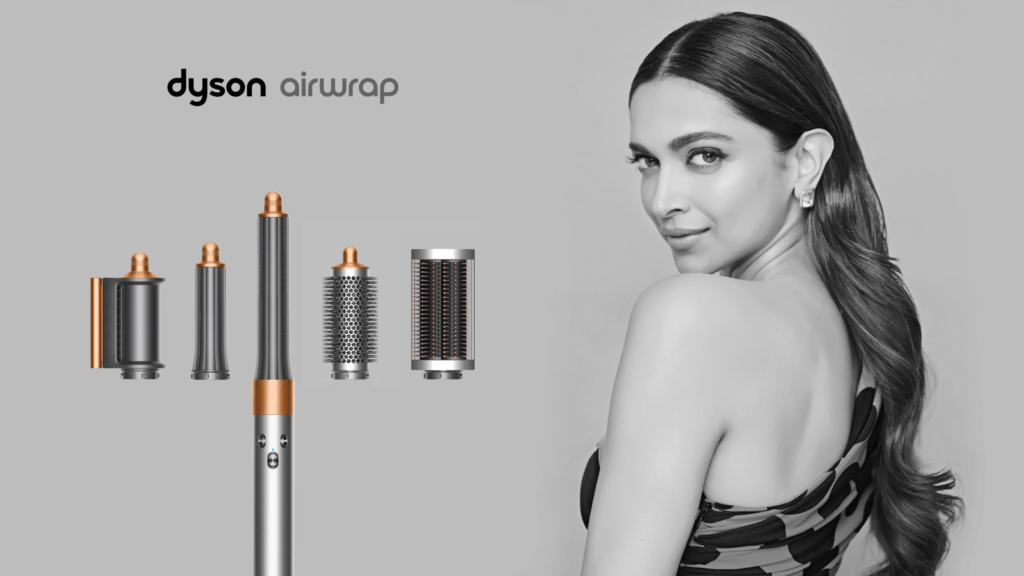
Dyson did something equally audacious. James Dyson borrowed the entire visual and emotional language of luxury goods — precision engineering, sculptural design, premium retail environments — and applied it to product categories nobody had ever considered aspirational. A vacuum cleaner. A hand dryer. A fan with no blades. Dyson didn’t invent the underlying technology. He borrowed the aesthetic codes of luxury and attached them to objects people had only ever bought on price. Today Dyson is a global multi-billion dollar brand and people genuinely feel good about owning one.
The global fast casual restaurant market reached $211.52 billion in 2024 and is projected to grow at a CAGR of 11.5% through 2034 — a sector built almost entirely on the borrowed architecture of fast food, dressed up in better ingredients and higher margins. Every brand in that space is playing some version of the same game Shake Shack played on Sheikh Zayed Road.
When Everyone Knows Exactly What You’re Not Saying
Aldi has turned borrowed interest into a science. Walk into any Aldi store in Europe, Australia, or the United States and the shelves are a masterclass in precise, deliberate recognition. The triangular chocolate bar that isn’t Toblerone. The stackable crisps in a tube that aren’t Pringles. The energy drink that isn’t Red Bull. Each product engineered to trigger instant recognition of the original while being entirely, legally its own thing. Aldi operates over 11,000 stores in more than 20 countries. The borrowed recognition doesn’t just drive trial — it short-circuits the entire consideration process. The consumer already knows what the product is, how it tastes, and whether they like it. Aldi simply removed the brand tax.
And then there is Beats by Dre. When Dr. Dre and Jimmy Iovine launched Beats headphones in 2008, the audio market was dominated by utilitarian products bought on specification. Beats borrowed the visual language, cultural weight, and status signaling of luxury fashion accessories and attached it to a pair of headphones. Consumers weren’t buying audio equipment. They were buying a $300 object that looked like it belonged in a Versace campaign. Apple eventually agreed, acquiring Beats in 2014 for $3 billion. The borrowed fashion equity was worth more than the technology.
The pattern is consistent: find a cultural structure that consumers already trust, inhabit it more convincingly than anyone else, and let familiarity do the heavy lifting.
Tips for Marketers Who Want to Play This Game
1. Map the equity before you borrow it. Know precisely what trigger you’re pulling — nostalgia, format, ritual, flavor memory. Zara doesn’t borrow “fashion” — it borrows a specific look from a specific runway and delivers it in six weeks. That precision is everything.
2. Upgrade the signal, not just the ingredients. The premium version must pay off the implicit promise. Better beef, real tomatoes, fresh onions — or a $300 object that looks like a fashion accessory, or a vacuum cleaner that that makes people proud to own one. Your borrowed equity gets you in the door. A genuinely better product keeps you there.
3. The reference is the strategy. Treat it like one. Not naming the reference is a creative decision, not an oversight. Build your communication around that conspicuous absence. Let the consumer connect the dots and they’ll feel ownership of the idea. That’s worth more than any campaign. And it may keep you out of court.
4. The borrowed icon must be aspirational to your target customer. Shake Shack borrows upward from McDonald’s. Zara borrows downward from Chanel. Both work because the reference point is aspirational to the buyer standing in front of the product. Beats borrowed from fashion because their customer wanted to look like they belonged in that world. The direction isn’t the point. The aspiration is.
5. Time it when the icon is ubiquitous but slightly tired. The Big Mac is culturally immortal but not exactly zeitgeist. That’s the sweet spot. You want the recognition without the freshness. The reference should feel like a comfortable old sofa — immediately recognizable, slightly past its prime, ripe for reinvention.
6. Leave room for the consumer’s aha moment. The unspoken recognition is the entire point. Over-explain and you kill it stone dead. The audience needs to feel clever for noticing. Zara never says “this is the Chanel jacket you couldn’t afford.” They just hang it on the rail and let you arrive at the conclusion yourself.
The One Thing Worth Watching
Apple borrowed the graphical user interface from Xerox PARC in the early 1980s — and built the most valuable consumer technology company in history. Samsung subsequently borrowed so comprehensively from Apple that the resulting legal battle became one of the most expensive intellectual property cases ever filed. Both brands continue to dominate global consumer electronics. Borrowing, it turns out, is a renewable resource — right up until it becomes a courtroom.
The structural consideration is this: brands perceived as unique can increase their revenue by 10% more than non-differentiated competitors. Used consistently and deliberately, borrowed interest reinforces your positioning. Used lazily or too often, it can blur it. The Big Shack works precisely because it’s a one-time, knowing nod — not a new direction. Know the difference.
The other thing worth watching is your audience. Social media consumers are sharp, engaged, and they enjoy spotting the reference. The internet noticed the Big Shack immediately — and the reaction was admiration and amusement in equal measure. That’s exactly where you want to be.
The Bottom Line
The best borrowed interest makes the consumer feel smart for spotting it. Done right, you inherit decades of cultural conditioning, redirect an established craving, and walk away with the equity, the revenue, and your premium positioning entirely intact.
Zara built a €35.9 billion empire on someone else’s runway. Samsung built the world’s largest smartphone business on someone else’s product. Beats turned borrowed fashion equity into a $3 billion acquisition. And Shake Shack renovated a Big Mac and called it innovation.
How is your brand using familiar cultural structures to carry unfamiliar ideas? That’s the question worth sitting with.
Sources: Expert Market Research, Linearity.io, Inditex Annual Report 2023, The Verge, Forbes, Apple Newsroom, Smithsonian Magazine, The Spirits Business, Into The Minds