


The Blurring of News, Entertainment and Trust
Audiences are no longer relying on traditional media alone to understand the news—they’re turning to comedians, creators and online personalities to interpret it for them. This shift is changing how trust is built, how stories spread and how brands and public relations need to operate within that reality.
As I was scrolling through my usual morning feeds, I landed on a piece in The Hollywood Reporter about online personalities and comedians overtaking traditional media as primary news sources.
Not shocking. But provocative.
What struck me wasn’t some dramatic collapse of journalism. It was something more subtle and more interesting. The article confirmed what most of us already sense: news hasn’t lost relevance, but it has lost its monopoly on how it’s delivered and who gets to interpret it. The mechanics of reporting are intact. The authority of interpretation is not.
The story still breaks in familiar places—newsrooms, wires, verified outlets. But belief forms somewhere else, shaped in real time by people who weren’t in the room when it was written. And increasingly, that “somewhere else” looks less like a newsroom and more like a personality with an audience, a point of view and a format people actually choose to engage with.
The Line Between News and Entertainment Is Gone
Late-night talk shows, cable formats and podcasts turned political commentary into global consumption long before TikTok made it obvious. They didn’t replace journalism. They reframed it—making it more digestible, more opinionated and more shareable.
That same blend now sits inside platforms like Netflix, where figures like Trevor Noah deliver commentary consumed as both entertainment and interpretation. In the UK, Have I Got News for You has long blurred satire and journalism, proving this isn’t new—it’s just scaled.
According to the Reuters Institute Digital News Report 2024, 66% of global audiences now consume short-form news video weekly, with younger audiences leaning toward personality-led formats. In India, creators like Ranveer Allahbadia—a YouTuber known for long-form conversations—reach millions who are not reading traditional outlets at all.
News hasn’t been replaced. It’s been absorbed into more entertaining formats people choose—and delivered by people they follow.

Distribution Has Fragmented. Interpretation Has Exploded
Distribution didn’t just shift. It fractured into layers operating simultaneously.
Reuters 2024 shows more than 40% of under-35s globally now use social media as a primary news source, while Pew Research finds about 20% of U.S. adults regularly get news from influencers.
Personalities like HasanAbi don’t just report what happened. They react to it, challenge it and let audiences process it in real time. News becomes something you watch being interpreted.
Platforms are investing accordingly. Spotify’s reported $200M+ investment in Joe Rogan isn’t about content—it’s about owning a voice that millions rely on to make sense of events.
In Europe, Reuters highlights messaging platforms like WhatsApp as a major layer of private news circulation. And figures like Piers Morgan show how a single clip can travel further than the broadcast it came from.
Brands are moving into this layer as well. Zomato engages with cultural moments in real time using a tone that mirrors the personalities shaping those conversations.
The story is no longer what’s published. It’s what gets explained, clipped and reshaped.
Trust Has Shifted from Institutions to Individuals
Trust didn’t disappear. It moved.
The Edelman Trust Barometer 2024 shows “people like me” are now trusted more than institutions in most countries, while IPSOS data places trust in traditional media below 50% in many markets.
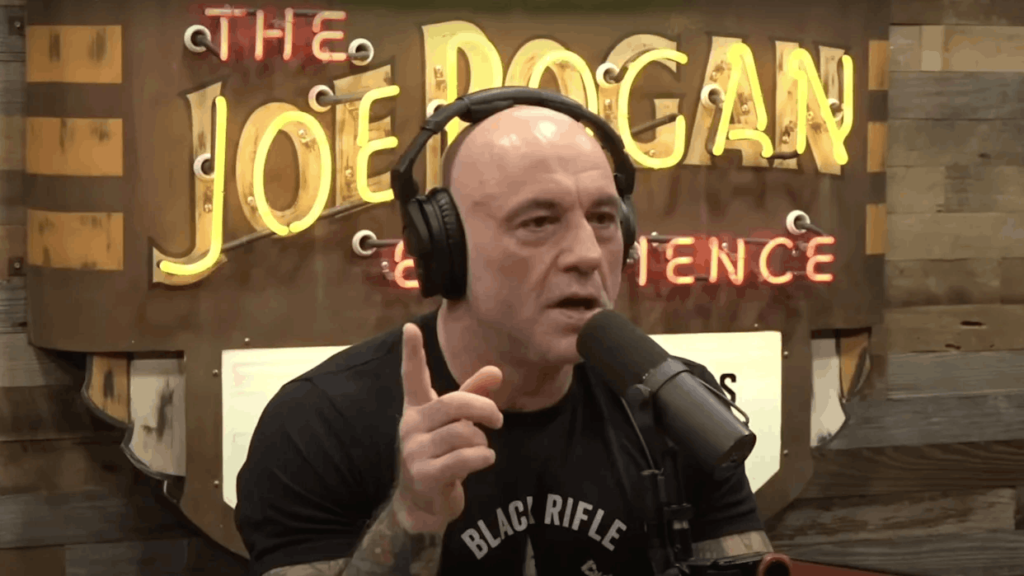
Joe Rogan reaches millions through long-form conversations that feel direct and unfiltered. In the Middle East, Abu Fella has mobilized millions around humanitarian causes based on perceived authenticity, not institutional backing.
Brands have noticed. Prime Video working with MrBeast reflects a move toward distributing through personalities that already hold trust.
At the same time, some brands are building their own voices. Duolingo behaves more like a creator than a company—reacting, participating and showing up consistently in culture.
Authority used to come from the masthead. Now it comes from familiarity, consistency and voice. Which is uncomfortable news for anyone whose career was built on knowing the right editors.
News Happens Fast. Credibility Builds Slow
News still originates somewhere. That hasn’t changed.
Outlets like BBC and Reuters continue to anchor verification globally. But Reuters 2024 also shows 39% of audiences now sometimes avoid the news, citing overload and distrust.
So people don’t stop consuming information. They filter it.
Ukraine President and former television actor Volodymyr Zelenskyy communicates directly via video messages that shape global perception. Lee Hsien Loong, Prime Minister of Singapore, does the same for policy communication through official social channels.
And when brands create moments, they rely on this same amplification dynamic. Red Bull saw its Stratos jump with Felix Baumgartner become global news not just because it happened, but because people and personalities amplified it.
Speed creates awareness. People create belief.
Editorial and News-Driven PR Still Matter—Just Not in the Same Way
News-driven PR gets you into the conversation while it’s forming. Editorial PR shapes how you’re understood after the fact.
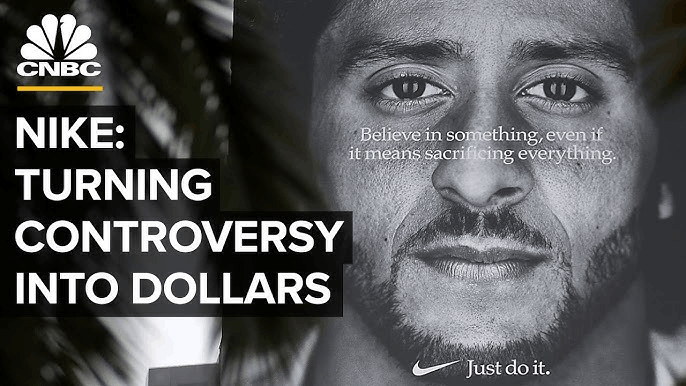
Nike’s work with Colin Kaepernick is worth understanding mechanically, not just referencing. The campaign broke as news instantly—but Nike had minimal control over what happened next. Athletes, politicians and commentators immediately took public positions. Nike’s stock dropped in the first 48 hours as one interpretation spread, then recovered as a counter-narrative took hold, driven not by Nike’s communications but by the public figures who chose to defend or attack it. The meaning of the campaign wasn’t set at launch. It was determined by months of ongoing cultural debate that Nike neither planned nor controlled—and which ultimately worked in their favor because the core idea was strong enough to survive being pulled in multiple directions at once. None of that was in the brief.
Reuters and Pew data consistently show the same pattern: initial exposure happens on platforms, while validation often follows elsewhere.
The mistake isn’t choosing one. It’s misunderstanding when each one does its job.
What Needs to Change
Stories can’t just be written for publication anymore. They have to survive interpretation. They must work when clipped, debated, reframed and occasionally misunderstood—because that’s exactly what will happen within minutes of release.
That requires a different kind of structural discipline—not just tighter writing, but engineering meaning so it holds under pressure. Every headline, data point and quote should be able to stand alone when stripped of context, because they will be. Test your story by imagining its worst possible clip. If that clip misrepresents you, the problem isn’t the person who made it—it’s the structure that made it possible. Build in the correction before you publish.
Planning for personalities means more than adding influencer outreach to a media list. It means mapping the interpretive layer before you launch—understanding specifically who your story will pass through, how they typically frame issues like yours, what they’ve said before and what incentive they have to engage. Some personalities will amplify your story straight. Others will use it as raw material for their own argument. Know which is which, and build the version of your story that can withstand both.
Designing for circulation means treating a piece of coverage as a starting point rather than an endpoint. Ask whether your story can move across formats—from a long article to a 30-second clip to a tweet to a WhatsApp forward—without losing the thing that matters most. If the meaning collapses at any of those compression points, it needs to be rebuilt into the original before it leaves your hands.
And accepting a degree of loss of control isn’t resignation—it’s strategy. The goal isn’t to keep your story intact. It’s to make the core idea so clear and so durable that even a hostile interpretation leaves the important part standing. Brands that panic when a story is reframed often make it worse. Those that build for reframing in the first place rarely need to.
The harder truth—the one most agencies won’t say out loud to a client—is that the standard PR model wasn’t built for any of this. It was built to generate coverage, and coverage was the proxy for influence. That proxy has broken down. Billing structures, reporting templates and success metrics designed around column inches and broadcast mentions aren’t just outdated. They actively discourage the kind of thinking this environment demands. Adapting to this shift isn’t a workflow problem. It’s a business model problem.
If no one wants to repeat your story, it’s not going anywhere.
Sources: The Hollywood Reporter, Reuters Institute Digital News Report 2024, Pew Research Center, Edelman Trust Barometer 2024, IPSOS