


Yapper Ads Talk Too Much, Convert Anyway—and Leave Little Behind
They ramble. They convert. They scale. But what was the brand?
I remember seeing an ad years ago—print, probably in a magazine or buried in one of those junk mail stacks in my mailbox. It stopped me cold because it didn’t even pretend to be clever. Just a hot girl and one word in oversized type: “SEX.” Then, in smaller print beneath it, almost sheepishly: “Now that we have your attention…” before proceeding to make its pitch. There’s an old adage that “Sex sells”. But this company was taking the suggestion literally.
If memory serves, it was selling auto parts. Or something equally unsexy. I wouldn’t swear to the category, but I would swear to the tactic. Because that line—or versions of it—popped up all over the place for a while. Subway, the sandwich makers, used exactly the same headline on billboards just a few years ago. Different companies, different industries, same blunt-force approach. Grab attention by any means possible, then pivot into whatever you’re actually trying to sell.
At the time, I used it often as an example—half admiring, half critical. It was undeniably effective as an attention device. It did exactly what it was supposed to do. You noticed it. You read it. You might even have responded to it. But it also revealed something uncomfortable. It did very little for the brand. In fact, you could argue it worked against the brand over time. It trained people to remember the trick, not the company. The interruption, not the message.
And the punchline still holds: I remember the ad perfectly. I have no idea who ran it.
We’re watching the same dynamic play out again—just dressed differently, distributed faster and optimized by machines.
Yap Yap Yap.
Today’s equivalent isn’t a single word in bold type. It’s a person talking—and taking their time doing it. The modern version shows up across platforms like TikTok, Meta and YouTube. A creator leans into the camera and starts explaining. There’s usually a hook, but it’s soft. The point arrives late. The product reveal is delayed just enough to keep you from swiping.
These are what we now refer to as “yapper ads.” Low production, conversational tone, often indistinguishable from organic content. Sometimes engaging, often a bit exhausting. But calling them a format misses the bigger point. Yapper ads aren’t a creative trend. They’re a system outcome.
They exist because the environment rewards them. Platforms reward time, not meaning. Brands reward conversion, not memory. Tools reward speed, not craft. And this is the critical shift: they hack the algorithm, not the audience. TikTok has reported that 67% of users say ads that feel native perform better, which is a polite way of saying that if your ad blends in, it gets more time to work.
You can see this clearly in Temu, a fast-growing online marketplace known for ultra-low-priced goods, where ads often stretch a simple product demo into a drawn-out explanation designed to keep you watching. Or Shein, a Chinese fashion brand that rapidly produces and sells inexpensive clothing driven by social media trends, where influencer “haul” videos feel more like casual conversations than structured selling. In both cases, the goal is not elegance. It’s duration. Nielsen reinforces the incentive: ads with higher attention scores drive stronger sales lift. So attention—by any means—wins.
They Don’t Persuade. They Sort.
What’s changed most isn’t how these ads look. It’s what they’re trying to do. Traditional advertising tried to change your mind. Yapper ads are trying to figure out whether your mind is already half made up.
Google and YouTube research shows that longer video formats can increase purchase intent when viewers actively choose to keep watching. That choice becomes the signal. If you’re still there after 20 or 30 seconds, you’ve effectively qualified yourself.
Brands lean into this behavior. HelloFresh, a subscription service that delivers pre-portioned ingredients and recipes to customers’ homes, uses relaxed, testimonial-style ads where someone casually explains how the service fits into their life. The pacing is unhurried, almost conversational. It doesn’t feel like a pitch. It feels like you chose to listen. AG1, a premium daily greens powder marketed as an all-in-one health supplement, does something similar in audio, with long host-read segments that rely on trust and familiarity rather than brevity.
This aligns with broader consumer behavior. Stackla found that 79% of consumers say user-generated content influences purchasing decisions. So brands don’t just use UGC—they recreate its tone and rhythm. Sometimes well, sometimes badly. Either way, the mechanism is the same. This isn’t about convincing everyone. It’s about identifying the ones who were already close. [This is that broader shift from targeting audiences to reading behavior signals I explored in last week’s article, After Personas: The Next Evolution of Targeting.]
Why They Scale (and Why Everyone Copies Them)
The real shift isn’t creative. It’s economic. The old “SEX” tactic was limited by media cost. You couldn’t run endless variations. Now you can. Yapper ads are cheap to produce, easy to adapt and built for constant testing.
Gymshark built early momentum by working with large numbers of creators producing simple, talk-to-camera content. Not one perfect ad—many iterations. Wish took this logic even further, flooding feeds with variations at scale.
Meta’s own data shows that increasing the number of creative variations improves performance outcomes. So the strategy becomes obvious: don’t refine one message, multiply many and let the algorithm decide.

Why They Feel Off (Even When They Work)
For all their effectiveness, yapper ads create a deeper issue. They are, almost by design, anti-brand. They prioritize watch time over clarity, volume over craft and conversion over memory.
The Ehrenberg-Bass Institute has shown that brands grow by building mental availability—being easily recognized and recalled in buying situations. That requires consistent assets, clear positioning and repetition with purpose. Yapper ads often strip those away in favor of looking “native,” which makes them blend in rather than stand out.
That matters because, as McKinsey reports, over 70% of consumers consider multiple brands before purchasing. If your advertising doesn’t leave a distinct impression, you become interchangeable. At the same time, Microsoft research suggesting the average attention span is around 8 seconds has led marketers to chase attention more aggressively. Ironically, that often results in longer, less focused content rather than sharper communication.
The Performance Trap
Yes, yapper ads work. They drive clicks. They convert. They show up nicely on dashboards. That’s why they’ve spread so quickly.
The danger is not in using them. The danger is in relying on them exclusively. Binet and Field’s research shows that brands over-investing in short-term activation at the expense of long-term brand building tend to see weaker profit growth over time. Short-term gains are visible. Long-term erosion is not. So the system keeps reinforcing itself—more ads, more yapping, more testing, less differentiation.
What Smart Marketers Do Instead
The answer isn’t to reject the format. It’s to discipline it. The most useful principle is simple. Yapper ads fail when they stretch a weak idea. They work when every second carries meaning.
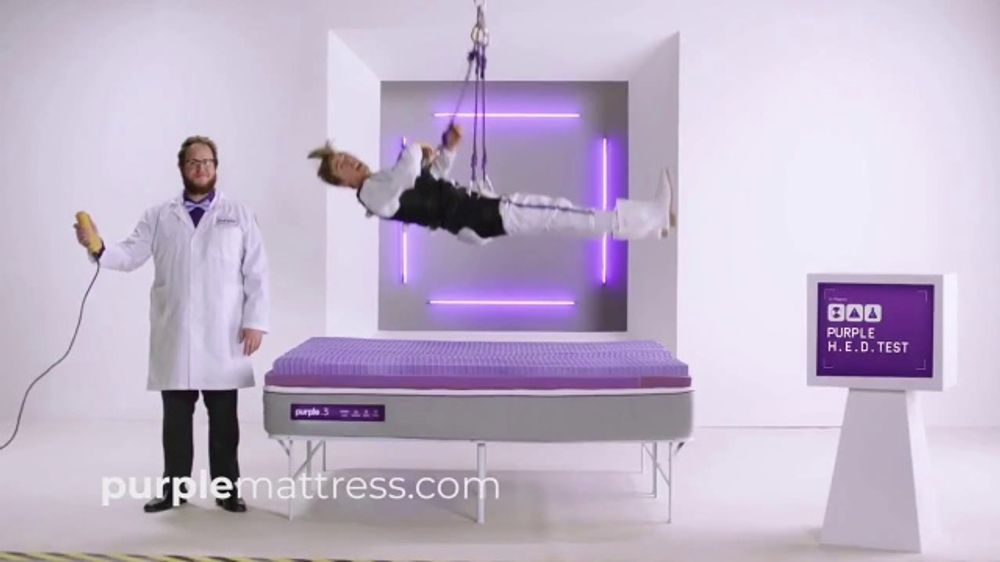
You can see the difference in how stronger brands operate. Apple communicates complex ideas with clarity and restraint, even in short formats. Nike relies on visual storytelling and emotion rather than explanation. Mattress brand, Purple, uses longer formats effectively because they are structured around clear proof, not filler. And Coca-Cola ensures that even informal content reinforces recognizable cues that build memory over time.
The difference isn’t length. It’s intention. It’s knowing what to say, saying it well and not overstaying your welcome.

“SEX! Now that we have your attention…” Still works as an attention device. So do Yapper ads. But both rely on the same underlying tradeoff. They capture attention and sometimes drive action, but they don’t necessarily build anything that lasts.
And in the long run, the brands that win aren’t the ones that talk the most. They’re the ones you remember when it matters.
Sources: TikTok Marketing Science reports (2023–2024), Google/YouTube Video and Intent Research, Nielsen Attention and Sales Lift Studies, Stackla Consumer Content Report, Ehrenberg-Bass Institute research on mental availability, Binet & Field, The Long and the Short of It, McKinsey Consumer Decision Journey reports, Microsoft Attention Span Study, Meta Advertising Insights on creative testing and performance.