



Many Happy Returns: Your Brand Is Now Judged by How Easily It Can Be Sent Back.
Once upon a time, product returns and service cancellations were an accounting problem. Today they’re a branding decision, a trust test and, increasingly, the reason someone clicks Buy Now or quietly backs away.
Professionally, I spend much of my time helping brands obsess over the moment of purchase. The ad. The promise. The conversion.
Personally, I have come to realize how often I decide not to buy because I’m already picturing the return. Not for fear of the product failing so much as the process failing. I’m contemplating the hassle I may face if I need to return it. The email limbo. The print-this-label-yourself nonsense. The “we’ll review your request in 7–10 business days” tone that screams we don’t actually trust you. That mental movie kills more purchases than bad creative ever did. And the “money back guarantee” that drove the mail order revolution is no longer enough.
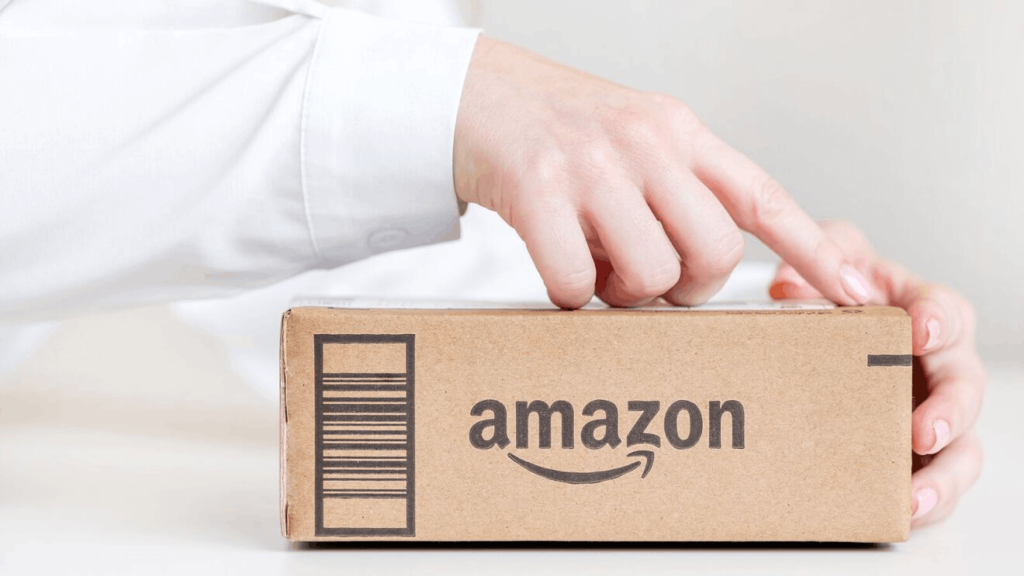
Amazon has quietly ruined me for other retailers. Amazon deliveries feel almost instant. Faster and faster to the point where “tomorrow” now feels sluggish. Returns are nearly as frictionless and just as fast. Tap, drop, refund. No drama. No suspicion. That experience has changed how I buy everything else. Even international deliveries from menswear brands I trust, like Paul Smith or Mr Porter, who offer similar assurances, suddenly feel far less scary, and clothing is the hardest category to buy online. This lines up with global data showing fashion accounts for the highest return rates in e-commerce, often exceeding 30 percent of orders in the US and UK. If something doesn’t fit, I’m not trapped. I’m not negotiating. I’m undoing.
That experience is the real inspiration for this article about where returns fit in the modern commerce ecosystem and how they impact our marketing and reputation-building.

How returns quietly became a pre-purchase filter
Returns used to sit at the end of the funnel. Out of sight. Out of mind. Now they sit right next to price, delivery time and reviews. In the US alone, retail returns are projected to approach $890 billion in 2024, roughly 17 percent of total retail sales, according to the National Retail Federation. It reflects how normalized “undoing” a purchase has become.
Globally, shoppers consistently say that free and easy returns influence where they buy, with large-scale consumer studies showing that unclear or restrictive return policies drive cart abandonment at rates comparable to unexpected shipping costs. Research has repeatedly shown that return friction is one of the top cited reasons shoppers abandon carts. In the UK, nearly half of online shoppers report checking the return policy before completing a purchase. In Germany, where consumer protection laws mandate generous return windows, e-commerce conversion rates are among the highest in Europe. In China, platforms offering instant refunds before items are physically returned report higher repeat purchase rates, particularly in fashion and beauty.
Returns aren’t post-purchase behavior anymore. They are pre-purchase reassurance.
The silent trust contract you didn’t know you were signing
A return policy is no longer logistics language. It answers a simple question: Do you believe me?
Brands that make returns easy are implicitly saying, “We trust you not to abuse this.” Customers respond by trusting the brand back. Deloitte’s global consumer research shows that trust is now one of the top three drivers of brand choice across categories. There’s data to support this reciprocity. Retailers that simplify returns consistently report higher conversion rates and higher lifetime value even when return volumes increase. A widely cited apparel study found that customers who experienced a smooth return were more likely to repurchase than customers who never returned at all.
This is why “no-questions-asked” has become such a loaded phrase. It isn’t about operational efficiency. It’s about tone. Contrast that with brands that require photos, forms, approval workflows and escalation emails. Every extra step quietly reframes the customer as a potential fraudster. PwC’s global consumer survey shows that once customers feel mistrusted, price sensitivity increases and brand loyalty collapses.
How one company rewired global expectations
Amazon didn’t just optimize returns. It normalized frictionless reversal at industrial scale. Prepaid labels. Drop-off points. Instant refunds. Over time, this trained consumers to expect that undoing a purchase should be as easy as making one. Amazon’s own disclosures show return handling has become one of its largest operational investments, not despite growth but because of it.
The consequence wasn’t just margin pressure for Amazon. It was systemic pressure everywhere else. Mid-tier e-commerce brands now compete not just on product and price but against an expectation shaped by a platform they cannot economically match. In Europe, marketplaces that introduced Amazon-style return policies saw measurable conversion lifts within months. In India, platforms that reduced return friction reported double-digit increases in first-time buyer confidence. In Japan, where precision logistics are cultural, frictionless returns have become a baseline expectation rather than a differentiator. This is how infrastructure becomes brand positioning by accident.
Try-before-you-keep and the rise of reversible buying
Fashion and footwear sit at the sharp end of the return economy. Size variance, fit uncertainty and aesthetic regret make returns inevitable. Try-before-you-keep models formalized what customers were already doing informally: ordering multiple options with the intention of sending most of them back. In the US and parts of Asia, this behavior now accounts for a significant share of fashion returns, with some retailers reporting that over half of returned items were never worn.
In Japan, where logistics precision is high, try-at-home services have been positioned as premium trust experiences rather than discounts. In contrast, mid-tier direct-to-consumer brands in Europe have discovered that copying these models without scale can quietly destroy margins while training customers to behave more expensively, a dynamic McKinsey has flagged as a structural risk for mid-market brands.
Returns, in other words, are now strategic. They either reinforce positioning or undermine it.
Why making returns harder is the worst possible response
Some brands respond to rising return costs by tightening policies. Shorter windows. Restocking fees. Store credit only. The intent is understandable. The effect is predictable.
Data across multiple markets shows restrictive return policies reduce conversion more than they reduce return volume. Customers don’t necessarily return less. They buy less. Particularly first-time buyers, who haven’t yet built trust with the brand, interpret complication as risk. Research consistently shows acquisition is far more sensitive to friction than retention.
In Australia, retailers that introduced restocking fees saw measurable drops in online conversion within a single quarter. In France, brands that removed free returns experienced increased customer service volume as shoppers sought reassurance before purchasing. The cost didn’t disappear. It moved.

Caption: Returns as marketing, whether you like it or not
The uncomfortable truth is that your return policy is already part of your marketing. It just isn’t always aligned with your brand promise.
Luxury brands that still treat returns as a grudging concession send a mixed signal about confidence. Value brands that quietly make returns painful undermine their own positioning. And what about those notoriously impossible to cancel subscriptions?
Subscription businesses that streamline cancellations and refunds often see higher reactivation rates later, because the exit didn’t feel punitive. Some smart subscription offerers are allowing people to hit the pause button. In SaaS, generous refund windows consistently correlate with higher trial-to-paid conversion, a pattern documented across B2B and consumer software markets. In travel, flexible cancellation policies materially influence booking behavior even when prices are higher, a trend accelerated globally since 2020. The ease of the “undo” is now part of perceived quality.
What smart brands are doing differently
The most sophisticated brands aren’t just absorbing return costs. They’re redesigning the experience.
Some use instant refunds to reduce anxiety and accelerate re-purchase. Others use returns data to improve sizing, descriptions and expectation-setting, reducing future returns without punishing customers. A few explicitly frame returns as a feature, not a concession, weaving reversibility into their brand story. Companies that do this consistently report higher Net Promoter Scores and stronger repeat purchase rates, according to multiple global retail benchmarks.
Crucially, they separate fraud management from customer experience. Bad actors are handled quietly with backend systems. Good customers are never made to feel suspected.
For marketers, this is a lever hiding in plain sight. Returns can be messaged as confidence, not apology. They can be surfaced earlier in the funnel to remove hesitation. They can be used to attract first-time buyers, not just to placate unhappy ones. For best customers, the smartest move is often to ship the correct replacement immediately, before the original item is even received back. Nothing is more frustrating or more counterproductive than forcing a loyal customer to wait as if they’ve done something wrong. Brands that do this signal distrust at exactly the moment they should be reinforcing belief. In markets like Dubai, where instant fulfilment has reset expectations, silence on returns reads as risk. Clarity reads as competence.
The uncomfortable conclusion
Returns are no longer a back-office problem. They are a front-of-mind signal. Customers are judging your brand not by how beautifully you persuade them to buy, but by how gracefully you let them change their mind.
That promise that you can undo a decision easily isn’t a weakness. It’s a confidence flex. Brands that understand this will convert more, retain longer and earn trust that advertising alone can no longer buy.
The rest will keep arguing about margins while customers quietly shop elsewhere.
Sources: US National Retail Federation, Deloitte Global Consumer Insights, PwC Global Consumer Survey, McKinsey Retail and Consumer Reports, Statista Global Ecommerce Data, European Commission Consumer Rights Studies, UK Office for National Statistics, Harvard Business Review retail research, Bain & Company customer loyalty studies, China E-commerce Research Center