

Why Consumers Now Trust Strangers More Than Brands
From reviews, to Reddit, to creators you’ve never met, trust has moved sideways. Brands didn’t lose it overnight. They trained people to look elsewhere.
I’ve spent nearly five decades in marketing and one thing has always struck me as odd: brands talk about themselves far more than any polite human ever would. They praise their own values, their own purpose, their own superiority and their own good intentions—often loudly, often repeatedly and often with no visible sense of irony.
Even when it’s true, it’s rarely believable. And it almost never makes a brand more relatable or appealing.
This steady drumbeat of self-congratulation has trained consumers to be skeptical. Not hostile. Just unconvinced. People understand that brands are conditioned to say how wonderful they are. That doesn’t make brands dishonest. It makes them predictable.
There are exceptions, of course. Some brands can get away with arrogance because they’ve earned it. BMW can talk confidently about performance because there is a deep, lived foundation of excellence in consumers’ minds. Even then, it works because the product keeps backing it up.
But this rarely works for other brands. And when it does, it’s usually because the arrogance is delivered with a wink—clearly tongue-in-cheek, self-aware and deliberately provocative. Without that self-awareness, chest-beating doesn’t read as confidence. It reads as insecurity.
Over time, this relentless self-focus has had a predictable effect. Consumers didn’t stop listening because they became cynical. They stopped listening because they learned that brand messaging is designed to persuade, not to reveal.
So they went elsewhere.
Not to experts. Not to institutions. But to strangers—people with no obvious incentive to flatter, no obligation to stay on message and no brand to protect.
Trust didn’t disappear. It migrated.
The internet didn’t destroy trust in brands. It simply removed their monopoly on it.
Instead of relying on a single authoritative source, consumers now triangulate truth across forums, reviews, creators and private communities. Edelman’s 2024 Trust Barometer makes this explicit: “people like me” are trusted more than CEOs, governments or brands in most major markets.
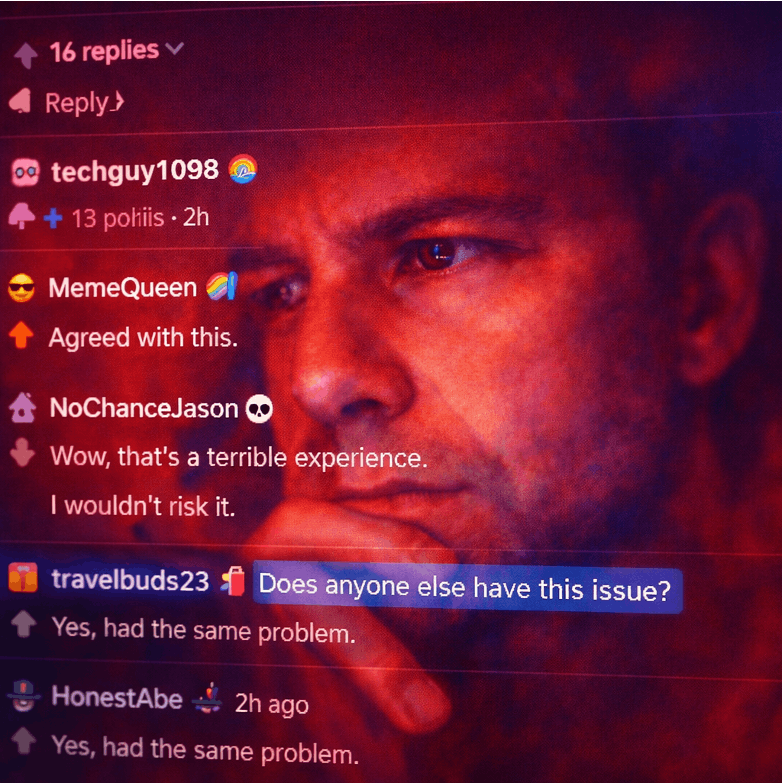
That’s why platforms like Reddit now influence purchase decisions more than many media plans. Reddit isn’t a media company in the traditional sense. It’s a network of topic-based communities where people argue in public, correct each other and call out exaggeration. In 2024, Reddit reported over 73 million daily active users. The value isn’t polish. It’s visible disagreement. Consumers read that as credibility.
Brands speak with one voice. Strangers speak with many. And many now feels more believable than one. Reviews feel messier than ads—and therefore more honest
Consumers don’t trust strangers because strangers are experts. They trust them because strangers don’t sound managed. BrightLocal’s 2024 Local Consumer Review Survey found that 87 percent of consumers trust online reviews as much as personal recommendations. That doesn’t mean reviews are always accurate. It means they feel less engineered.
This is why Amazon reviews still shape buying decisions despite years of fake-review scandals. The contradictions, the edge cases, the complaints about packaging or delivery delays—all the things brands would never include—read as authenticity. Imperfection has become a proxy for truth.
Marketing spent decades polishing away friction. Consumers now actively look for it.
Influencers didn’t replace brands. They replaced spokespeople
Trust didn’t move to creators because they’re aspirational. It moved because they’re accountable. Nielsen’s 2023 Trust in Advertising study shows influencer recommendations outperform brand ads across most age groups globally. When a creator exaggerates or misleads, the backlash is immediate and personal. When a brand does the same, responsibility dissolves into statements, disclaimers and carefully worded apologies.
This is why global fitness apparel brand, Gymshark, scaled globally without leaning on traditional celebrity endorsement. The brand built its following through a distributed network of fitness creators who spoke in their own voices. Trust wasn’t transferred from the brand to the influencer. It was borrowed repeatedly—and could be withdrawn just as quickly. That fragility is precisely what makes it credible.
Algorithms trained consumers to doubt brand intent
Performance marketing didn’t just optimize conversion. It educated consumers.
Meta’s own disclosures show users are exposed to thousands of ads per day across platforms. Over time, consumers learned that messaging is engineered to persuade, retarget and close—not to inform.
As a result, discovery moved sideways. People now consult WhatsApp groups or TikTok comment threads before they ever visit a brand site. Brand content is no longer the starting point. It’s corroboration, and sometimes a red flag. Marketing taught consumers how persuasion works. They adjusted faster than we did.

Younger consumers learned trust socially, not institutionally
Gen Z didn’t grow up trusting institutions. They grew up navigating them.
McKinsey’s 2023 Gen Z research shows younger consumers rely heavily on peer validation and community input before making decisions. They don’t assume brands are lying. They assume brands are curated.
That dynamic is visible in how Shein is evaluated. China-based Shein is a global fast-fashion e-commerce brand known for ultra-cheap clothing sold almost entirely online. Despite persistent criticism around sustainability and labor practices, Shein’s customers openly share sizing warnings, quality caveats and sourcing concerns with each other. Trust isn’t built on the brand’s narrative. It’s built inside the community that surrounds it.
Brands didn’t lose control of the conversation. They surrendered it by insisting on perfection.
Transparency theater backfired
When trust started slipping, brands responded with slick transparency. Consumers noticed the choreography.
PwC’s 2024 Consumer Trust Survey shows that while consumers say transparency matters, trust only increases when transparency includes trade-offs and limitations. Perfect sustainability stories now trigger skepticism rather than reassurance.
This is why Patagonia continues to stand out. Patagonia doesn’t just promote values. It openly discusses environmental costs, supply-chain limits and the tension between growth and responsibility. The lack of polish makes the message believable.
Transparency that feels rehearsed erodes trust faster than silence.
Trust is now earned in the comments, not the campaign
Campaigns still matter. They just don’t close the trust gap on their own.
Sprout Social’s 2024 Index shows over 70 percent of consumers expect brands to engage authentically in comments and conversations, not just post content. Silence now reads as avoidance. Corporate tone reads as evasion.
This is why Ryanair, despite its intentionally abrasive tone, maintains credibility with its audience. A clear example is their social media habit of publicly mocking complaints instead of soothing them. When passengers complain about legroom, fees or delays, Ryanair regularly replies with blunt, sarcastic posts like “You booked the cheapest flight in Europe. What exactly were you expecting?” or memes that openly joke about charging for “extra legroom” or “breathing.” The brand leans into blunt honesty, which paradoxically makes it feel more trustworthy to its audience than airlines that apologize politely while doing the same things.
For many consumers, trust isn’t shaped by marketing at all. It’s shaped by what happens when something breaks. Zendesk’s 2024 CX Trends Report found that 75 percent of consumers judge a brand’s trustworthiness based on how it handles problems, not how it sells solutions.
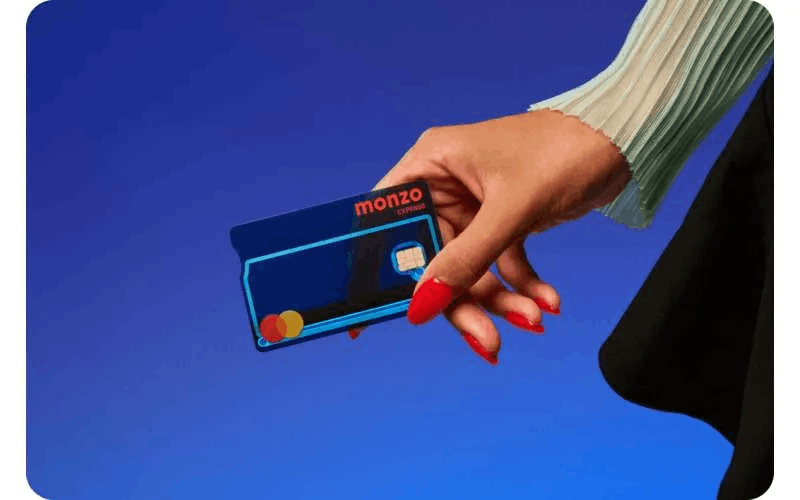
This helps explain the rise of Monzo. The UK-based digital bank built trust through fast responses, plain language and visible humans. The brand didn’t claim transparency. It practiced it, publicly and repeatedly.
Strangers feel safer because they have no obvious incentive
Consumers understand incentives better than marketers sometimes give them credit for.
The Harvard Business Review noted that people increasingly evaluate motive as much as message when assessing credibility. Strangers online may be wrong. But they usually aren’t paid to persuade at scale.
This is why communities around Tesla often shape perception more than the company itself. Owners, critics and enthusiasts debate openly. That messiness feels more honest than any brand narrative.
What this means for marketers who still want to be trusted
Trust can’t be reclaimed with better messaging. It has to be redistributed.
Marketers who rebuild trust stop trying to sound authoritative and start designing for scrutiny. They allow third parties to surface flaws first. They make it easier for customers to correct them than to complain. They understand that control is no longer the currency—credibility is.
They don’t compete with strangers. They empower them.
Because once consumers trust strangers more than brands, the smartest move isn’t to shout louder. It’s to make sure the strangers are telling a story you can live with—and learn from.
Sources: Edelman Trust Barometer 2024, Bright Local Consumer Review Survey 2024, Nielsen Trust in Advertising Study 2023, McKinsey Gen Z Consumer Research 2023, PwC Consumer Trust Survey 2024, Sprout Social Index 2024, Zendesk CX Trends Report 2024, Harvard Business Review – Trust and Incentives (2023), Company filings and platform disclosures (Amazon, Reddit, Meta).