



Why the UAE May Be the World’s Most Advanced Test Market
Most brands test in safe, familiar markets and then wonder why global rollouts fail. The UAE does the opposite: it exposes weak assumptions early, rewards clarity over cleverness and turns marketing theory into operational truth.
I love Dubai.
I love the wider region. The lifestyle works. The business climate is among the most dynamic in the world. Things actually happen. People show up on time (mostly). Decisions get made (usually). And for the first time since I left the US, I feel genuinely at home.
That surprised me.
I lived in Russia long enough to know I would never be Russian. I lived in Cuba long enough to know I would never be Cuban. No matter how fluent you get, no matter how long you stay, there are places where you are always a guest.
Dubai isn’t one of them.
As an American from an Italian neighborhood in East Boston, I grew up on the idea of the melting pot—where different identities sit side by side without being flattened into one. The UAE is a melting pot on boil. Almost everyone here is from somewhere else. That’s not a flaw in the system. It is the system. The local population is a minority—roughly 10 to 12 percent—and that single fact rewires how culture, business and identity function here.
One moment this year crystallized that for me. We were developing a communications strategy for a major new brand launch and, because we are well aware that a single “audience” simply doesn’t exist here, we ended up running a dozen different focus groups—by nationality, by language, by cultural reference points—just to make sure we weren’t building a plan for a fictional average consumer.
And somewhere during the process it hit me: the UAE may be the best test market in the world.
Not the easiest. But the best.

A Market of Decision-Makers, Not Passersby
The UAE compresses the global consumer into a single, unforgiving environment. Around 88 to 90 percent of residents are expatriates representing more than 200 nationalities. The median age is about 33, younger than the US and Europe. Over 70 percent of the population is working-age professionals, many in regional or global roles. This isn’t a country of passive consumers. It’s a country of decision-makers.
From a marketing perspective, this matters more than population size. You’re not testing on retirees or legacy brand loyalists. You’re testing on people who move countries, change jobs, reassess value and abandon brands without nostalgia. McKinsey’s 2024 Middle East research shows roughly 40 percent of UAE consumers switch brands within a year if experience disappoints. Loyalty here isn’t emotional. It’s earned weekly.
Language as a Stress Test
Language alone tells much of the story. English is the default language in Dubai—not a second language. The official language, Arabic, anchors government, culture and national identity, while South Asian languages dominate daily life across construction, services and retail, reflecting the largest expatriate populations like Indian and Pakistani. In recent years, Russian has become noticeably more common in business, hospitality and real estate—not because it rivals English or Arabic in scale, but because shifts in migration and capital flows have increased its visibility. When daily conversations move comfortably across English, Arabic, Hindi or Urdu and an expanding mix of other languages, your marketing assumptions get stress-tested very quickly.
This forces a unique discipline upon brands. You can’t rely on cultural shorthand. You can’t hide behind irony. You can’t assume shared references. If your value proposition isn’t legible across cultures, it doesn’t survive here.
High Income, Low Tolerance for Nonsense
Then layer in money. UAE GDP per capita sits north of $50,000—higher than the UK or Japan. Disposable income is significant, especially in categories like travel, dining, wellness and tech. Yet this is not a careless market. PwC’s 2024 Middle East consumer research shows more than 60 percent of UAE consumers compare prices digitally before buying, even in premium categories. They’re willing to pay—they just don’t like being played.
This is where many luxury and DTC brands get it wrong. They confuse opacity with prestige. In the UAE, value transparency builds trust faster than mystique. Apple understands this. It doesn’t discount here. It wins on ecosystem reliability and service consistency. Amazon.ae and Noon, the region’s homegrown e-commerce platform built to compete with Amazon, don’t compete on romance. They compete on logistics, delivery speed and returns. Prestige without performance doesn’t last long in this market.
Digital Intensity
Digitally, the UAE is highly mature. Smartphone penetration is effectively universal at around 99 percent. Internet penetration sits around 95 percent. Residents average more than seven social platforms per month, among the highest globally. This isn’t digital-first. It’s digital-always.
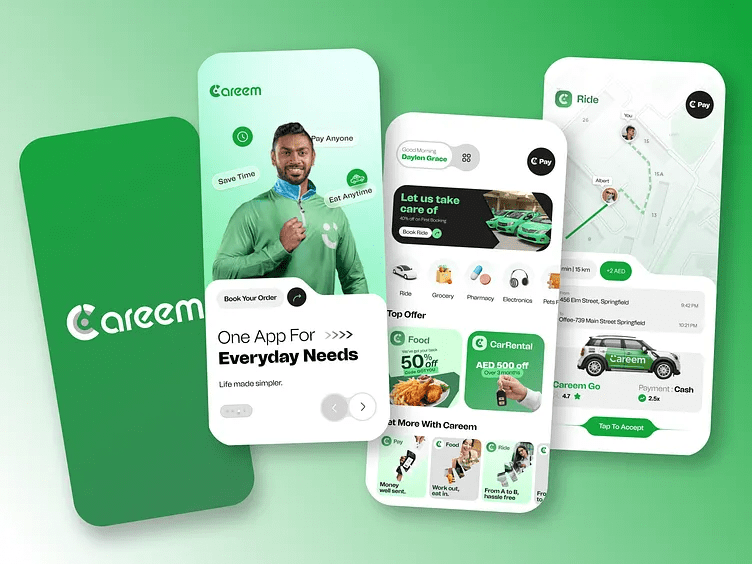
For marketers, this means two things. First, your weakest touchpoint defines your brand. If your app onboarding fails, screenshots travel faster than apologies. Second, testing here exposes operational truth. Careem—originally a ride-hailing app that evolved into a regional “super-app” spanning transport, payments and services—didn’t become indispensable because it was clever. It became indispensable because it removed friction across daily life. Talabat—the Middle East’s dominant food delivery and quick-commerce platform—didn’t win hearts. It won habits. Brands that succeed here obsess over execution, not just campaign cleverness.
The Environment You Feel Before You Measure
There’s also something you feel before you ever see a statistic. The UAE is famously safe. Crime rates are among the lowest in the world. You don’t see a heavy police presence because it doesn’t need one. People leave laptops on café tables. Kids walk unaccompanied. Late-night meetings don’t create anxiety.
That safety is paired with unusually high trust in government competence. Services work. Rules are clear. Problems get fixed. There is an entire ministry focused on happiness and wellbeing—not as a slogan, but as an operating principle. For marketers, this matters more than it sounds. High-trust environments reduce friction, speed adoption and create a baseline confidence that makes consumers more willing to try, test and switch.
Cultural Sensitivity Is Performance Marketing
But here’s where the UAE really stands out: cultural sensitivity isn’t optional.
Edelman’s 2024 Trust Barometer for MENA shows more than 70 percent of consumers in the region say cultural respect directly affects brand trust, significantly higher than Western markets. During Ramadan, engagement data from Meta and TikTok shows noticeable drop-offs for brands that maintain business-as-usual posting behavior. Not because anyone is offended—because it’s tone deaf and feels discourteous.
Nike consistently gets this right. Its Ramadan storytelling isn’t louder. It’s quieter, more deliberate, more human. On the other side, multiple global fashion and lifestyle brands pulled campaigns in 2023 and 2024 after misreading regional sentiment during sensitive geopolitical moments.
Regulation as a Brand Filter
Regulation adds another pressure test. The UAE moves fast. Whether it’s data protection, tax, crypto or digital commerce, regulatory frameworks evolve quickly but clearly. Crypto firms that navigated Dubai’s VARA regime—the Virtual Assets Regulatory Authority created to govern digital assets—are now better prepared for Europe’s MiCA than many European startups. Brands that test here are forced to operationalize compliance early rather than bolt it on later.
This has a direct implication for marketers: governance is now part of brand. Transparency, audit readiness and data discipline are no longer back-office issues.
Why Success Here Travels
Success in the UAE tends to travel unusually well. Not because the market is representative in a demographic sense, but because it compresses global expectations into a single operating environment. Brands that work here have already been forced to reconcile scale with nuance, speed with sensitivity and global consistency with local precision. When those tensions are resolved early, expansion elsewhere becomes less about reinvention and more about execution.
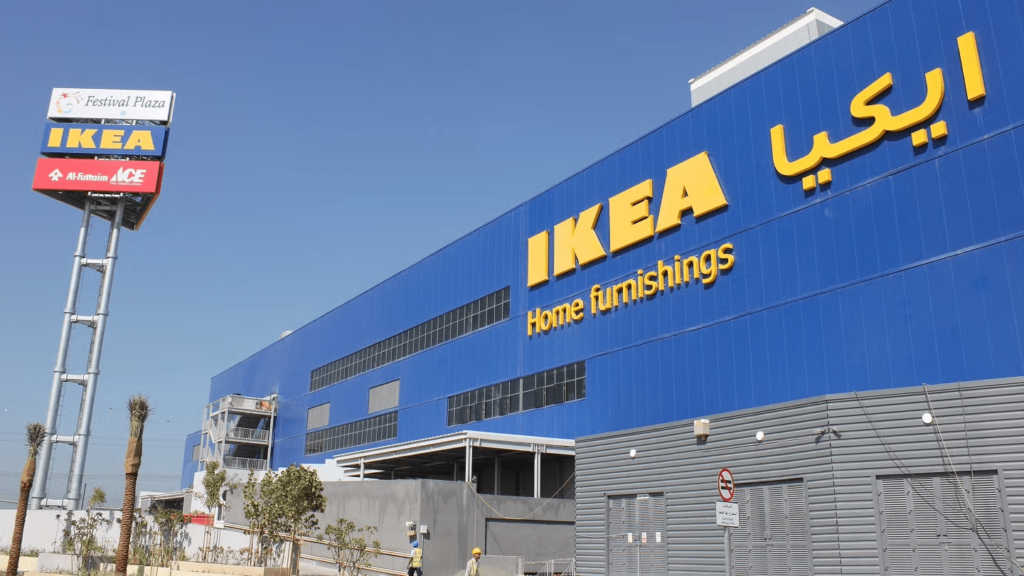
Carrefour remains dominant because it balances global scale with local relevance. IKEA tests compact urban formats in the UAE before rolling them into dense Asian cities. Luxury hotel groups pilot service innovations in Dubai before exporting them to London and New York. Fintechs that earn trust here adapt faster in Southeast Asia and Africa than those raised exclusively in Silicon Valley.
This is where the UAE becomes brutal in the best possible way.
If your value proposition survives this environment—multicultural, multilingual, digitally ruthless, culturally sensitive, regulation-aware and impatient—it travels better. Brands that succeed here don’t just scale geographically. They scale intelligently.
So why should brands care?
Because the UAE exposes weak assumptions early. It punishes lazy segmentation. It rewards clarity, restraint and execution. It forces marketers to think globally without losing cultural precision. Testing here doesn’t just answer whether something works. It tells you why.
Which brings us back to why this place feels like home.
Dubai works because it’s built on adaptation, not assimilation. Respect, not rigidity. Shared ambition, not shared background. The same traits that make it livable make it lethal as a test market.
If your brand can make it here, it can probably make it anywhere.
Sources: Federal Competitiveness and Statistics Centre UAE, World Bank, IMF, McKinsey Middle East Consumer Research 2024, PwC Middle East Consumer Insights Survey 2024, Edelman Trust Barometer MENA 2024,, DataReportal UAE Digital Report 2024, Telecommunications and Digital Government Regulatory Authority UAE, Meta MENA Ramadan Engagement Benchmarks, Dubai Virtual Assets Regulatory Authority (VARA)